


President William Lai’s (賴清德) vision for Taiwan to become an “AI island” has three conditions: constructing advanced data centers, ensuring a stable and green energy supply, and cultivating AI talent. However, the energy issue supply is the greatest challenge.
To clarify, let’s reframe the problem in terms of the Olympics. Given Taiwan’s OEM (original equipment manufacturer) roles in the technology sector, Taiwan is not an athlete in the AI Olympics, or even a trainer, but rather a training ground for global AI athletes (AI companies).
In other words, Taiwan’s semiconductor ecosystem provides world-class training facilities and equipment that have already attracted top AI athletes like Google, Microsoft, Amazon, Nvidia and AMD. But for these athletes to train effectively, Taiwan also needs to provide a proper diet to literally power them. They need a balanced diet of quality electricity that Taiwan may not be able to provide.
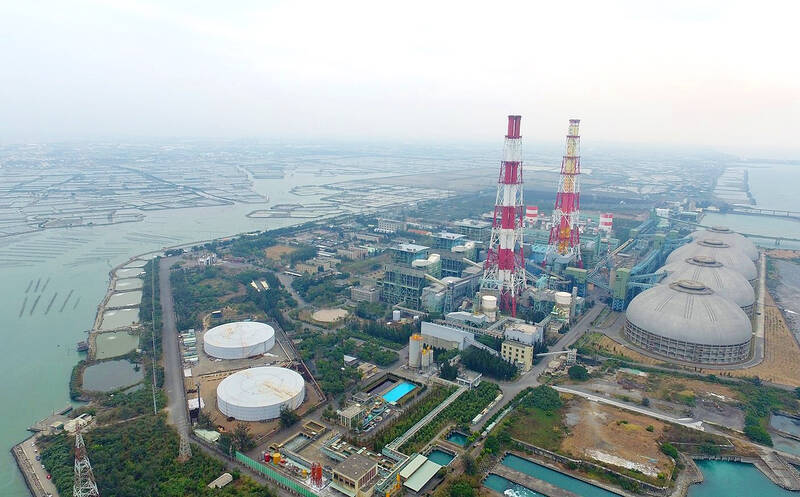
Photo courtesy of Citizen of the Earth, Taiwan
AI IS POWER HUNGRY
AI systems are like elite athletes with insatiable appetites. Training AI models, particularly complex ones like large language models, requires immense computational power, which in turn requires vast amounts of electricity.
For example, Nvidia’s H100 GPU — a chip that performs around four quadrillion calculations per second — consumes about 700 watts under full load, roughly equivalent to the power usage of an average US household occupant. A data center typically uses 10,000 to 100,000 GPUs. The new Vantage 16MW Data center in Taipei probably has about 20,000 GPUS, and when running 24/7, this smaller data center will consume the power of a small town of 13,000 households.
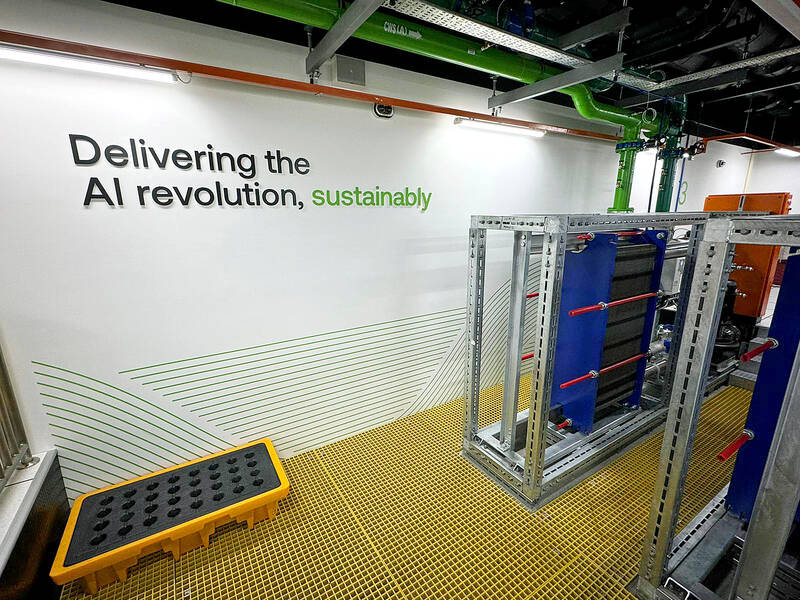
Photo: CNA
Complex AI models, like large language models, require an incredible amount of computation power and electricity. It has been estimated that in 2020, OpenAI trained its 175-billion parameter GPT3 model on 10,000 Nvidia V100 GPUS over a few months at a cost of around US$4.6 million.
TAIWAN (INDUSTRY) IS POWER HUNGRY
Taiwan is already a power-hungry island. With a population of 23.42 million, the country consumed 276.52 terawatt-hours (TWh) of electricity in 2022, translating to 11,807 kilowatt-hours (kWh) per capita. This is close to the US consumption of 12,702 kWh per capita and significantly higher than Japan’s 7,799 kWh. This high per-capita usage is due to Taiwan’s industrial sector that consumes about 56 percent of Taiwan’s power. TSMC alone consumed 25 TWh last year, which is 9.04 percent of Taiwan’s total power consumption. Greenpeace projects that TSMC will consume 74 TWh by 2030, which is how much energy New Zealand consumed in 2021.

Photo: CNA
Taiwan’s expanding IT and AI industries will increase energy demand by 13 percent by 2030, though Yeh Tsung-kuang (葉宗洸) of the Institute of Nuclear Engineering and Science at National Tsing Hua University challenges this government projection and suggests that a more reasonable estimate is 15 percent growth by 2028.
So, what would a healthy power diet look like?
“To make Taiwan the Silicon Valley of Asia,” Minister of Economic Affairs (MOEA) JW Kuo (郭智輝) recently said, “we need a stable power supply, reasonable electricity prices, and adequate green electricity for companies.”
Photo: CNA
This power diet sounds very aspirational given Taiwan’s unstable power supply, unsustainable pricing, and inadequate progress in green energy development.
TAIWAN’S POWER DIET IS UNHEALTHY
Last year, Taiwan’s power generation was primarily thermal at 83.09 percent (coal 42.2 percent, liquid natural gas (LNG) 39.5 percent, and oil 1.34 percent), nuclear at 6.3 percent, and renewable at 9.5 percent (solar, wind, hydro, and biomass), according to the MOEA.
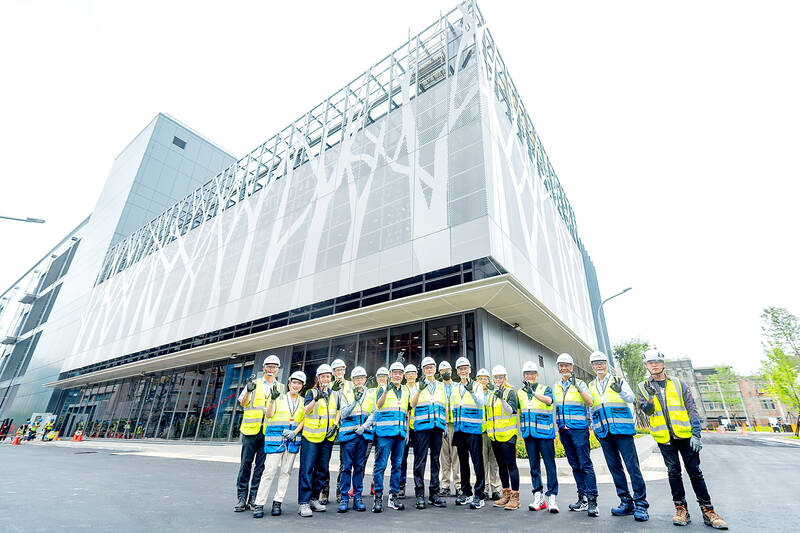
Photo: CNA
Taiwan’s power supply is inherently unstable. Since more than 96 percent of Taiwan’s energy is imported, its power supply is vulnerable to global market fluctuations and geopolitical risks. Outdated equipment and an overstressed power grid already prompt calls for both citizens and industry to reduce electricity consumption during peak times in the summer. And let’s not forget the power failures. In 2021, a failure at the Hsinta coal-fired power plant caused a massive blackout affecting TSMC and 6.2 million households. Another outage in 2022 disrupted power for over 5 million households.
The excessive reliance on imported coal and gas also puts the island at risk. In the worst case scenario of a naval blockade, Taiwan would have enough LNG reserves to last eight days in the summer and enough coal for about six weeks, according to Taiwan energy and climate specialist Angelica Oung (翁華志).
Taiwan’s electricity is unsustainably priced. The government heavily subsidizes energy costs to keep prices low, but this strategy is becoming increasingly unsustainable especially given the soaring oil and gas prices since Russia invaded the Ukraine. In 2022, for example, Taipower suffered losses of US$8.39 billion and last year US$6.26 billion, even after receiving a US$1.57 billion government subsidy.
Finally, Taiwan green energy development is lagging far behind projections. Despite ambitious goals to increase renewable energy to 20 percent of the energy mix by 2025, the actual contribution of renewables last year was only 9.5 percent. Infrastructure delays, regulatory hurdles, and the intermittent nature of renewable sources like solar and wind have slowed progress. Meanwhile, the phasing-out of nuclear power by next year will further exacerbate the situation because Taiwan will need to import even more fossil fuels like LNG, which will boost carbon emissions.
Currently, Taiwan is offering a junk food diet.
IMPROVING THE POWER DIET
For Taiwan to become an AI hub, the energy issue needs to be practically addressed. Some industry leaders, like Pegatron Corp chairman Tung Tzu-hsien (童子賢), suggest a healthier, more realistic and balanced diet of 30 percent renewable energy and 30 percent nuclear power to reduce Taiwan’s dependence on fossil fuels.
But the ruling Democratic Progressive Party has made a “no-nuclear homeland” a non-negotiable ideological principle, even if it means using more subsidized fossil fuels that generate more Taipower debt, more national security risk, and more pollution. Even Sam Kimmins of the Climate Group RE100 noted at a recent Taipei climate meeting, “We would rather that economies, given the choice, would retire their fossil fuel plant rather than their nuclear plant.”
If Taiwan continues to offer a junk food power diet, it risks losing its competitive edge in the global AI Olympics. The government needs understand and resolve the trade-offs to its green energy initiatives, reconsider its energy mix, and build a more resilient and updated power infrastructure that can support its power-hungry AI future.
Only by offering a healthier power diet can Taiwan truly fulfill its potential as the premier AI training ground and retain the world’s top AI athletes. Only then will it sustainably become an “AI island.”

Just after 6am, I walked up to the ticket gate at Taipei Main Station and entered the Taiwan Railway platform without scanning any ticket; instead, I flashed the Sanrio Fun Rail pass on my phone to the gate worker and was admitted. I found my train and prepared to board. My destination? This very same station. I was embarking on a 13-hour journey on one of two round-the-island trains operated by ezTravel. They run each day, one counterclockwise around the island and one clockwise. They differ in a number of ways from an ordinary Taiwan Railway train and can make for
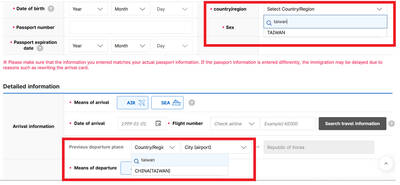
Jason Han says that the e-arrival card spat between South Korea and Taiwan shows that Seoul is signaling adherence to its “one-China” policy, while Taiwan’s response reflects a reciprocal approach. “Attempts to alter the diplomatic status quo often lead to tit-for-tat responses,” the analyst on international affairs tells the Taipei Times, adding that Taiwan may become more cautious in its dealings with South Korea going forward. Taipei has called on Seoul to correct its electronic entry system, which currently lists Taiwan as “China (Taiwan),” warning that reciprocal measures may follow if the wording is not changed before March 31. As of yesterday,

The Portuguese never established a presence on Taiwan, but they must have traded with the indigenous people because later traders reported that the locals referred to parts of deer using Portuguese words. What goods might the Portuguese have offered their indigenous trade partners? Among them must have been slaves, for the Portuguese dealt slaves across Asia. Though we often speak of “Portuguese” ships, imagining them as picturesque vessels manned by pointy-bearded Iberians, in Asia Portuguese shipping between local destinations was crewed by Asian seamen, with a handful of white or Eurasian officers. “Even the great carracks of 1,000-2,000 tons which plied
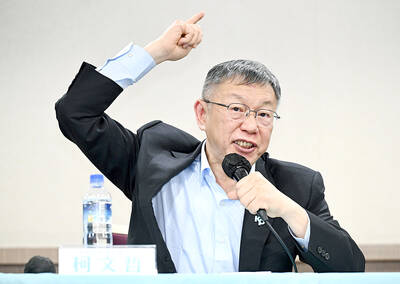
On Thursday, former Taipei mayor and founder of the Taiwan People’s Party (TPP) Ko Wen-je (柯文哲) was sentenced to 17 years in prison and had his civil rights suspended for six years over corruption, embezzlement and other charges. Seven others related to the case were also handed prison sentences, while two were found not guilty. It has been a bad week for the TPP. On Tuesday, prosecutors charged Chinese immigrant Xu Chunying (徐春鶯) with suspicion of taking part in Beijing-directed election interference. Xu has strong links to the TPP, which once offered her a party list legislator nomination. Tuesday also


 RSS
RSS