


In Tainan’s Annan District (安南), a pond-pocked wedge of land juts out into the Yanshui Estuary (鹽水溪口). Salt scents the breeze and the soft slapping of water against mangroves is broken only by the occasional dinosaur squawk of an egret in flight.
Gazing seawards from the tip of this wedge, Sicao Bridge (四草大橋) separates the observer from the Taiwan Strait, while at the levee’s leeward base, an unassuming sign states, “Mountains to Sea Greenway — 0km.”
Casual visitors would likely cycle past without stopping, but for some, this spot marks the beginning of a multi-day adventure from the coast to the summit of the country’s highest peak — Jade Mountain (玉山).
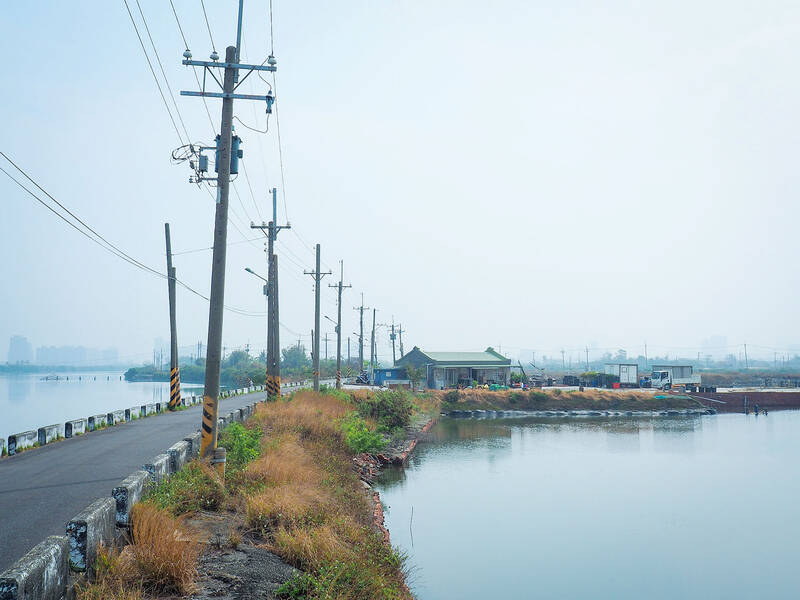
Photo: Ami Barnes
Covering 188km, the Mountains to Sea National Greenway (山海圳國際綠道), is a hiking and biking route linking two National Parks, three National Scenic Areas and several distinct forest biomes.
Along its footpaths and roads, visitors can find traces of Dutch colonial history, temples established by early Han Chinese settlers, ambitious Japanese-built infrastructure projects and indigenous villages.
In short, it offers a slow-travel window into the diverse natural and cultural forces that have shaped contemporary Taiwan.
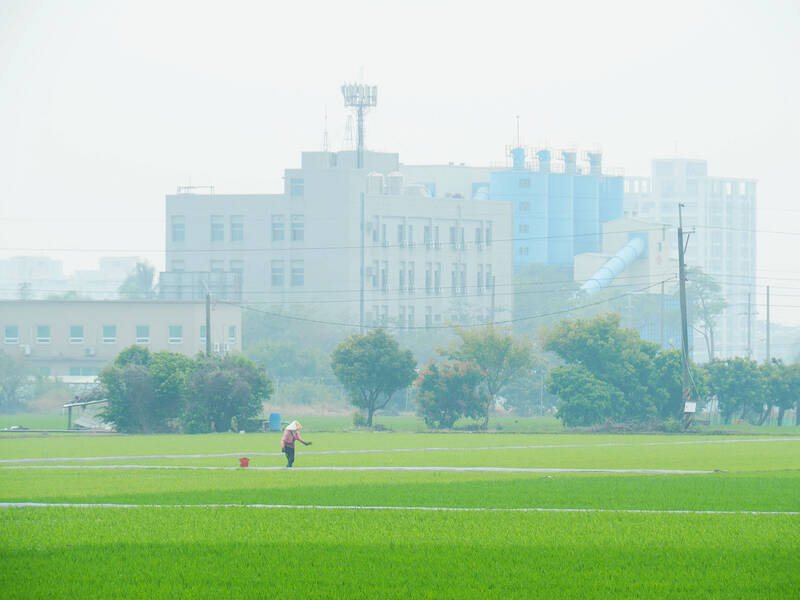
Photo: Ami Barnes
The route consists of four sections that can be completed either independently or as a through-hike. This piece is the first in a series of four and focuses on the first segment — the Inner Sea Trail (內海之路)
THE INNER SEA TRAIL
At 30.8km and with little elevation gain, the Inner Sea Trail can be completed in a day using YouBikes.
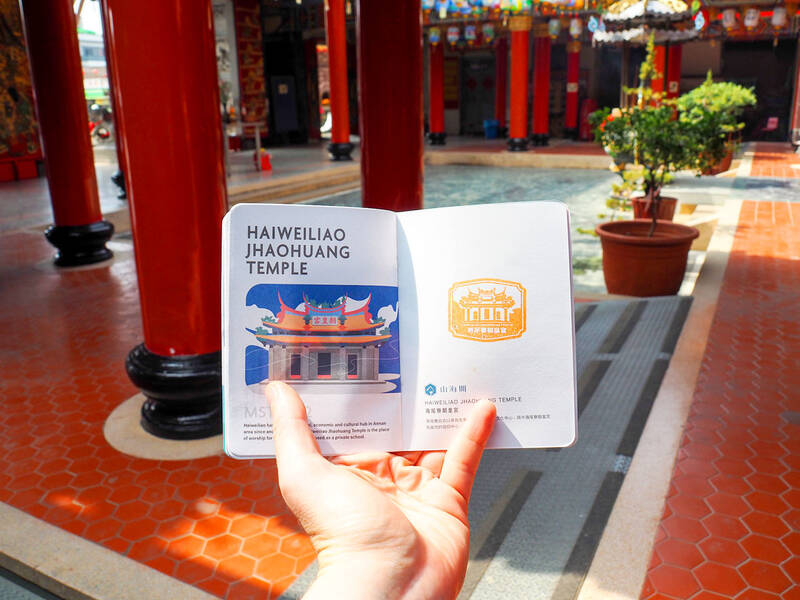
Photo: Ami Barnes
The scenery along the first stretch is distinctly littoral — think oyster beds bobbing gently in the tidal waters and waders stalking the muddy foreshore.
Indeed, Taijiang National Park’s wetlands are renowned for birdlife, with winters drawing flocks of avian aficionados hoping to sight the endangered black-faced spoonbill.
Four hundred years ago, around the time when the Dutch East India Company established a base in Taiwan, much of this area was submerged beneath an expansive lagoon called Taijiang Inner Sea (台江內海).
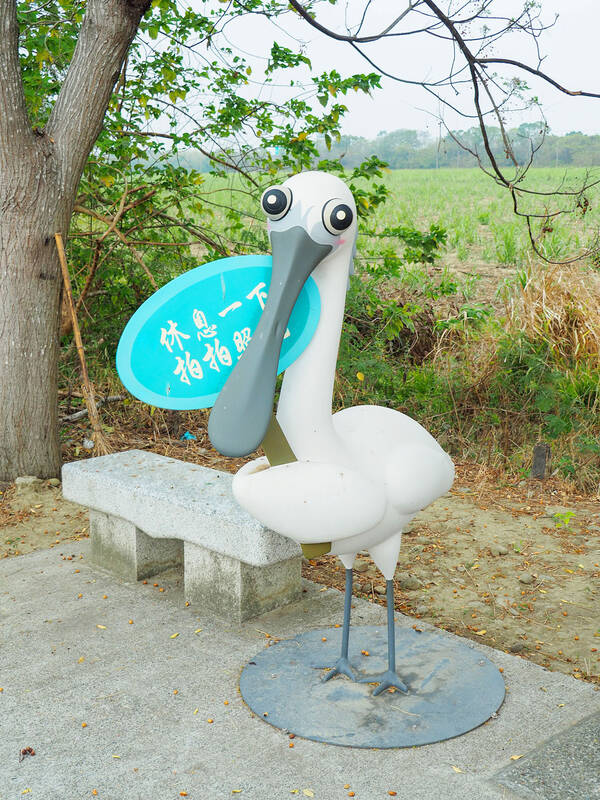
Photo: Ami Barnes
Transposed onto modern-day Tainan, this feature — from which the Inner Sea Trail draws its name — stretched south to Jhongsi District (中西), east to Anding (安定) District, and north beyond Jiangjun District (將軍).
Centuries of river-borne sediment and flooding events have nudged the coastline westward — a process compounded by the endeavors of farmers claiming parcels of land from the waters to raise Tainan’s prized milkfish.
As the fish ponds segue into food stalls and stores, turn left and take a detour towards Chaohuang Temple (朝皇宮).
Established in 1878, recent decades have seen Chaohuang Temple spearheading a movement to return temples to their role at the center of community life — proof of which abounds in the many photos displayed on its walls.
Travelers can pause here to fill their water bottles, pray for safe travels and collect one of the eight route’s trail passport stamps.
A GENERAL’S TEMPLE
Another brief detour leads to General Flying Tiger’s Temple (飛虎將軍廟).
Enshrined within is Sugiura Shigemine, an Imperial Japanese Navy pilot credited with saving many people at the cost of his own life when his plane sustained serious damage during a World War II dogfight.
Although Sugiura’s sacrifice was largely forgotten in the aftermath of the war, villagers reported sightings of a wandering spirit clad in a Japanese navy uniform.
Chaohuang Temple’s main deity was consulted and advised venerating the spirit with a shrine. This was evidently efficacious because sightings of the ghostly aviator have since ceased.
Back on the trail, the next point of interest is the National Museum of Taiwan History (國立臺灣歷史博物館), where a handily placed YouBike dock makes it easy to pause and enjoy the museum’s excellent bilingual displays.
From the museum, the route cuts through Southern Taiwan Science Park’s (南部科學園區) fabrication plants and banks of solar panels before passing first under the high-speed rail line and then over the TRA tracks.
Keep straight until reaching the fast-flowing waters of Chianan Irrigation Canal’s Southern Main Line (嘉南大圳南幹線). Here, the Inner Sea Trail turns left to follow the canal for a short way before terminating at Jiaba Tianhou Temple (茄拔天后宮).
A statue of the sea goddess Matsu (媽祖) presides over the temple’s main altar and has done so since 1661, when she accompanied a boatload of Fujian immigrants on their voyage to a new life.
Out in the courtyard, villagers sit in the shade of a sprawling twin-trunked banyan, beside a historic well that’s at least as old as the temple itself.
While no longer a communal water source, the well plays a central role in annual Dragon Boat Festival celebrations as hundreds participate in the custom of drawing lucky noontime water (打午時水).
At the end of the Inner Sea Trail, day trippers can ride back into Shanhua (善化) to catch the train, while those embarking on a longer journey have the option of spending the night in Shanhua or continuing on to Liujia (六甲).
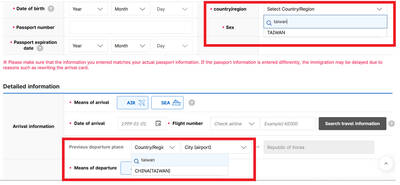
Jason Han says that the e-arrival card spat between South Korea and Taiwan shows that Seoul is signaling adherence to its “one-China” policy, while Taiwan’s response reflects a reciprocal approach. “Attempts to alter the diplomatic status quo often lead to tit-for-tat responses,” the analyst on international affairs tells the Taipei Times, adding that Taiwan may become more cautious in its dealings with South Korea going forward. Taipei has called on Seoul to correct its electronic entry system, which currently lists Taiwan as “China (Taiwan),” warning that reciprocal measures may follow if the wording is not changed before March 31. As of yesterday,

The Portuguese never established a presence on Taiwan, but they must have traded with the indigenous people because later traders reported that the locals referred to parts of deer using Portuguese words. What goods might the Portuguese have offered their indigenous trade partners? Among them must have been slaves, for the Portuguese dealt slaves across Asia. Though we often speak of “Portuguese” ships, imagining them as picturesque vessels manned by pointy-bearded Iberians, in Asia Portuguese shipping between local destinations was crewed by Asian seamen, with a handful of white or Eurasian officers. “Even the great carracks of 1,000-2,000 tons which plied

On Thursday, former Taipei mayor and founder of the Taiwan People’s Party (TPP) Ko Wen-je (柯文哲) was sentenced to 17 years in prison and had his civil rights suspended for six years over corruption, embezzlement and other charges. Seven others related to the case were also handed prison sentences, while two were found not guilty. It has been a bad week for the TPP. On Tuesday, prosecutors charged Chinese immigrant Xu Chunying (徐春鶯) with suspicion of taking part in Beijing-directed election interference. Xu has strong links to the TPP, which once offered her a party list legislator nomination. Tuesday also
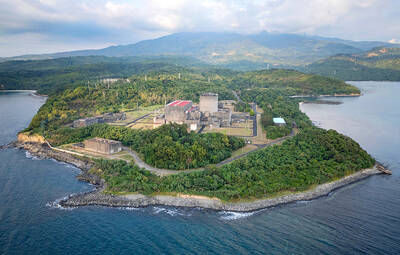
Nuclear power is getting a second look in Southeast Asia as countries prepare to meet surging energy demand as they vie for artificial intelligence-focused data centers. Several Southeast Asian nations are reviving mothballed nuclear plans and setting ambitious targets and nearly half of the region could, if they pursue those goals, have nuclear energy in the 2030s. Even countries without current plans have signaled their interest. Southeast Asia has never produced a single watt of nuclear energy, despite long-held atomic ambitions. But that may soon change as pressure mounts to reduce emissions that contribute to climate change, while meeting growing power needs. The


 RSS
RSS