


A recent report from the Environmental Management Administration of the Ministry of Environment highlights a perennial problem: illegal dumping of construction waste.
In Taoyuan’s Yangmei District (楊梅) and Hsinchu’s Longtan District (龍潭) criminals leased 10,000 square meters of farmland, saying they were going to engage in horticulture. They then accepted between 40,000 and 50,000 cubic meters of construction waste from sites in northern Taiwan, charging less than the going rate for disposal, and dumped the waste concrete, tile, metal and glass onto the leased land. Taoyuan District prosecutors charged 33 individuals from seven companies with numerous violations of the law. This criminal method is so common there is even a term for it: “fake leasing, real dumping.”
Criminals also carry out “fake leasing, real dumping” using abandoned factories and warehouses. Rural areas are especially hard hit, and the scale is sometimes shocking. A case last year in Miaoli resulted in the seizure of NT$24 million in cash, and 39 trucks across several firms. The area covered in waste equaled five football fields. Another recent case, also in Taoyuan, highlights the threats to Taiwan’s unique environments. The case involved a landowner in need of money, who let illegal waste dumpers backfill unique Taoyuan ponds with industrial and construction waste. The site was then covered with sediment from a gravel excavation business to hide the dumped waste.
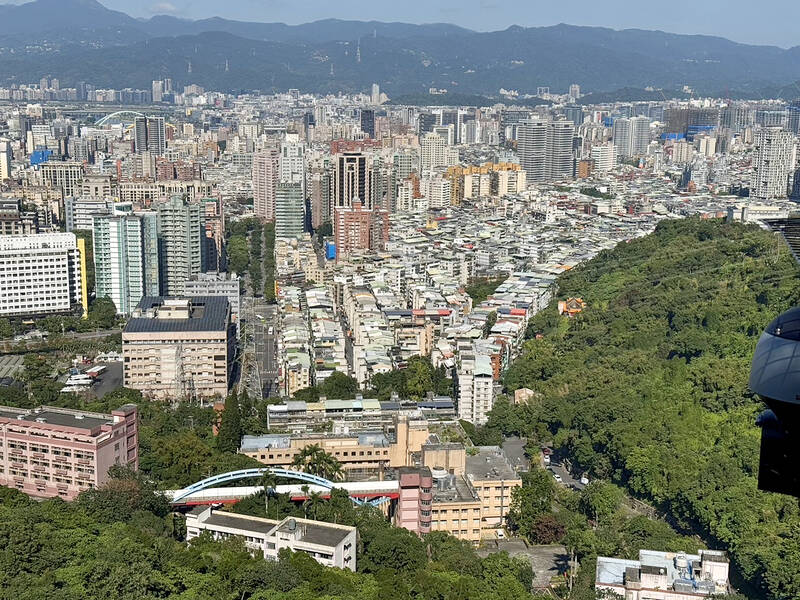
Photo: Hsu Yi-ping, Taipei Times
According to the National Land Management Agency, Taiwan had 5,859 illegal dumping cases between 2016 and 2024. These numbers are only a tithe of the issue. According to local media reports, legal disposal of a cubic meter of construction waste costs NT$4,500, whereas illegal waste dumpers charge as little as NT$800.
CONSTRUCTION AND LANDFILLS
The construction waste issue and the resulting demand for landfill is critical across several domains. First, Taiwan’s building stock, like its stock of humans, is aging. The Ministry of Interior’s (MOI) Real Estate Information Platform in 2024 said that 34 percent of Taiwan’s buildings were over 40 years old. Since these are built largely of concrete, they will all come up for replacement in the next decade or so. According to a recent paper on construction sustainability issues from scholars at National University of Taipei’s Department of Civil Engineering, the nation is knocking down 2.5 million square meters of floor area annually, generating 2 million tons of construction waste. Where is all this waste to go?
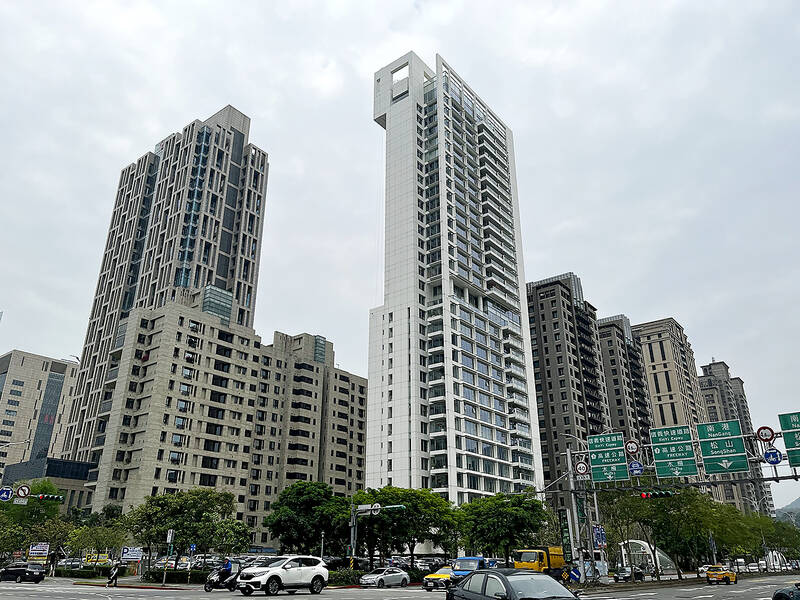
Photo: Hsu Yi-ping, Taipei Times
Construction waste generally falls under two agencies, according to the paper above. Waste materials such as brick, tile, concrete and bamboo are under the jurisdiction of the Ministry of Environment. Soil, bricks, concrete blocks and other materials removed or left unused during construction is not classified as waste, but instead is considered useful and is overseen by the Construction and Planning Agency of the MOI. Much waste disposal falls through the cracks as agencies lack focused laws, and jurisdictions compete and overlap.
Waste generated by construction faces three problems, according to the scholars above: the amount of waste is increasing, there are few cost-effective recycling technologies available and landfill space is limited and not being expanded. Inevitably, companies turn to illegal dumpers to rid themselves of construction waste.
A related waste issue is the perennial public construction and reconstruction in Taipei. The waste is piled neatly in large white bags and left by the side of the road, where it remains because the waste is often generated faster than the city can dispose of it, leading to public complaints.
Photo: TT file photo
Solid waste disposal is a well-recognized problem among the public with a long history of related activism, but other forms of construction waste remain outside public consciousness. Construction is a huge carbon emitter, a fact incessantly discussed in the academic world, but not among the public.
The calculus should be obvious: in the next couple of decades well over 40 percent of Taiwan’s building stock will have to be replaced, or at least, demolished and carted away. Government import and production figures give some idea of the scale of construction and the implied future waste production. In 2022 alone, millions of tons of sand was imported, and the nation produced another 66 million tons. Those figures will continue to rise.
LIMITING CONSTRUCTION
The government’s plan calls for addressing the carbon embodied in the construction of buildings, but does not appear to consider limits to construction. Even upgrading existing buildings, which the Net Zero plan calls for, will produce large quantities of emissions (though the plan calls for rating and oversight of building upgrades to turn them into low-carbon buildings). Rotting concrete does not emit much, but it does demand carbon-intensive repair and replacement.
Research gives various numbers for carbon emissions for construction. Globally, the building sector produces 37 percent of all carbon emissions, with cement production alone estimated to be 8 percent of all emissions. Estimates for apartment units typically fall between 500 and 600kgs of CO2/m2. For example, a 2012 Korean study concluded that constructing a single apartment unit produced 569.5 kg of CO2/m2 (according to the US EPA, a typical gasoline-powered car emits 4,600 kgs of CO2 annually).
The government’s expansive building programs and expected future demand call into question the nation’s ability to meet Net Zero goals. The construction never stops. Taipei city has designated 93 renewal areas, totaling 1,214 hectares, more than double the area so designated in 2018. Social housing programs are being launched across Taiwan outside the six major municipalities. Taoyuan Aerotropolis is also hosting a large social housing project. Last year developers were planning a record-high number of apartment development projects.
An economy driven by real estate expansion and speculation is a high-carbon economy. Switching the nation to renewables or nuclear power may be a key step toward Net Zero goals and energy independence, but it won’t mean much without massive reform of the construction industry and the building codes, along with hugely increased oversight and, above all, limits on the construction of new apartment buildings.
Yes, limits. Taiwan is already massively overbuilt. Green buildings are important, but not building new buildings is an even more effective way of reducing carbon emissions. The government also needs to address the complicated subsidy regime, from transferable development rights to local government winking at legal violations to non-tariff barriers to wood construction, that underpins the nation’s construction-industrial state. Moving away from apartments toward single-family homes made of wood would not only move the nation toward net zero faster, but boost our slumping birth rates.
The widespread illegal construction waste dumping in Taiwan signals a major problem the government will have to address: regulations are nice, but they have to be enforced. Based on their cavalier attitude toward regulations, it seems local construction firms will routinely circumvent net zero regulations and ratings, or, as so often happens, fulfill the letter but not the spirit of the regulations. That criminality will have to be addressed if net zero goals are to be reached.
Notes from Central Taiwan is a column written by long-term resident Michael Turton, who provides incisive commentary informed by three decades of living in and writing about his adoptive country. The views expressed here are his own.

Taiwan’s English education system is being pulled apart by three opposing forces. Bilingual Nation 2030 pulls students toward English and global communication. Artificial Intelligence (AI) readiness pulls them toward digital judgment, verification and AI-mediated work. But Taiwan’s old exam culture pulls them back toward memorization, grammar drills, timed reading and correct answers. If the education system keeps using old exams to define success, it risks producing graduates who are neither genuinely bilingual nor genuinely AI-ready, but trained for tasks machines can already perform. The first force is Bilingual Nation 2030. Launched in 2018, the policy aimed to “help Taiwan’s workforce connect
It seems every few days one bumps into one of those “real man” comments in which Taiwan is urged to “face reality” or similar, and “make a deal,” with the speaker implying that soon it will be too late. “Deal” advocates always present themselves as having a superior grip on reality, and the manly ability to make the “hard choice.” Their testosterone-laden language often echoes that of Taiwan sellout advocates. Note that such commentary always specifies a process (“make a deal, work with, make progress”), never the end state of what occupation by a violent authoritarian colonialist state will entail. In
June 1 to June 7 "If all Taiwanese were as afraid of dying as you, then what would happen?” Physician Shih Chiang-nan (施江南) reportedly said this to his wife Chen Chiao-tung (陳焦桐) after she urged him to stop intervening on behalf of Taiwanese soldiers stranded overseas after serving in the Japanese Army during World War II. Shih had clashed with high-ranking officials over the issue, engaged in several heated arguments with Taiwan governor-general Chen Yi (陳儀) and allegedly shouted at general Ko Yuan-fen (柯遠芬), chief of staff of the Taiwan Garrison Command, over

“Taiwan’s Opposition Leader Comes to US With a Message Straight Out of Beijing” read a May 31 headline in the Wall Street Journal. Top US administration officials and members of Congress almost certainly read the WSJ, and if there was a bullet point takeaway that people in Washington should absorb ahead of Chinese Nationalist Party (KMT) Chair Cheng Li-wun’s (鄭麗文) arrival in DC on June 9, that headline is it. The last few columns have discussed this very topic, and the timing is not coincidental. While those top officials likely do not read the Taipei Times, judging by the number


 RSS
RSS