


“Taiwan’s Opposition Leader Comes to US With a Message Straight Out of Beijing” read a May 31 headline in the Wall Street Journal.
Top US administration officials and members of Congress almost certainly read the WSJ, and if there was a bullet point takeaway that people in Washington should absorb ahead of Chinese Nationalist Party (KMT) Chair Cheng Li-wun’s (鄭麗文) arrival in DC on June 9, that headline is it.
The last few columns have discussed this very topic, and the timing is not coincidental. While those top officials likely do not read the Taipei Times, judging by the number of people from Washington who have contacted me and the high frequency with which this newspaper is cited, the experts in the field who advise or influence those people are readers.
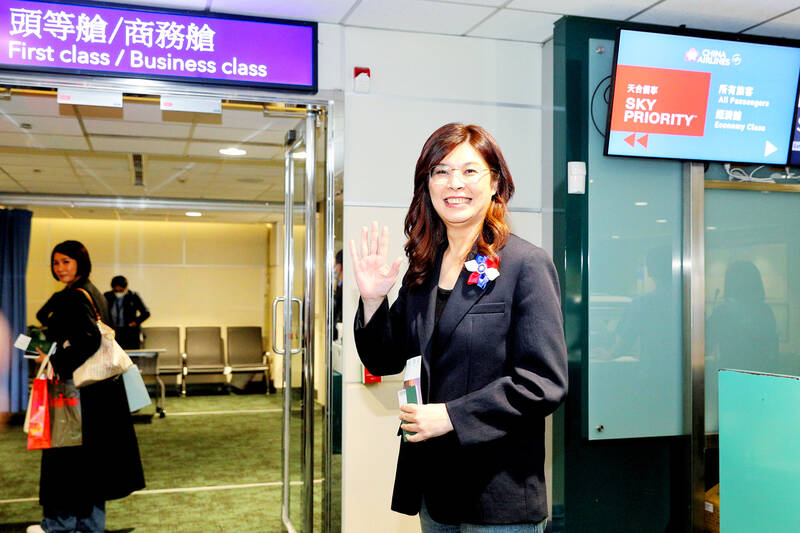
Photo: CNA
On the heels of Cheng’s recent meeting with Chinese Communist Party (CCP) Secretary-General Xi Jinping (習近平), the recent domestic battle over the special defense budget in the legislature and the meeting between US President Donald Trump and Xi, it is not surprising that Cheng’s 15-day trip to America is drawing considerable attention.
Cheng will be meeting with “members of the US Congress, executive branch officials, think tanks and media representatives,” according to her official itinerary.
What should they expect and look out for?
CHENG IS NOT NEW
Cheng’s predecessor as KMT Chair, Eric Chu (朱立倫), made a similar visit and tried to position the KMT as having always been pro-US, anti-Communist and not pro-China. He downplayed the “1992 Consensus” as a “non-consensus consensus.”
This message was as much for American audiences as it was for Taiwanese voters, who had by then handed the KMT two landslide defeats in a row in national elections. Chu desperately wanted to make the KMT electable again.
Now, consider this quote: “People on both sides of the Strait are the descendants of Yan and Huang (i.e. Chinese people). On the basis of the ‘1992 Consensus’ and ‘opposing Taiwan independence,’ we hope from now on that our parties can pursue consensus and respect differences, promote mutual trust and integration, enhance exchanges and cooperation, so that the peaceful development of cross-Strait relations can move forward. This is beneficial to the people across the Strait and the promotion of peace and stability across the Taiwan Strait.”
If you thought that quote was from Cheng, you would be wrong. That is from Chu’s response to Xi’s congratulatory message when he was elected party chair.
Some have recently suggested that Cheng’s frequent use of “on the basis of the ‘1992 Consensus’ and ‘opposing Taiwan independence’” is some groundbreaking new formulation, but it is hardly new. The key lesson here is that nothing Cheng is doing is new; she is simply more open about it and, as a devout Chinese ethnonationalist ideologue, is less shy about letting the electorate hear it.
Cheng is working to negotiate a “peace framework” she can present to voters in 2028, and which she expects her party to implement if voters return the party to power.
However, there are two questions that she is asked that she never denies, but rather deflects: “is your goal ‘reunification with the mainland’” and “do you intend to run for president.” She never outright says ‘no’ to either.
In an interview with British news channel Sky News, she was asked whether it might be overly naive to believe that a certain degree of diplomacy alone could prevent China from ultimately achieving what it wants — namely unification.
She replied: “I fully understand everyone’s concerns. But we cannot stop pursuing peace because of those concerns. As for the future — what people describe as the so-called ultimate arrangement — that may not be something I can determine or express a definitive view on.”
The CCP will only renounce the use of force against Taiwan in exchange for significant concessions on sovereignty, and Cheng surely knows this. Cheng suggests pursuing peace is the absolute priority. Does that mean accepting an “ultimate arrangement” is worthwhile in exchange for peace? “May not be something I can determine” implies “it is out of my hands.”
So, is she implying just roll over and accept it? Her answer is very unsettling.
Put that in the context of the recent battle over the special military budget proposed by the ruling Democratic Progressive Party (DPP) administration, which initially she entirely opposed. Eventually, only due to public opinion and opposition within her party from those who hope to remain viable at the ballot box, did she back down and support a pared-down budget with strings attached.
BLAME THE PEOPLE, NOT BEIJING
In her mind, the problem is not on the KMT side, nor the CCP’s.
“In the past three decades, between our two parties [KMT and CCP] cross-Strait relations through multi-level exchanges and cooperation at all levels yielded beneficial progress. In recent years, however, the DPP administration has changed the status quo across the Strait by adopting ‘desinification’ and ‘anti-China’ policies. That created a tough situation across the Strait and an extreme sense of insecurity among the people across the Strait.”
Again, those words are from the “moderate” Chu, but Cheng says the same things even more forcefully.
Cheng and her allies accuse the DPP of “provoking” the CCP, not the other way around — despite the increasingly aggressive and threatening behavior by Beijing militarily and diplomatically.
The DPP are doing what the voters put them in power to do for three straight terms now: ensure Taiwan remains free and independent of Beijing’s control.
Yet, the KMT sides with the enemy that is bent on annexing Taiwan over the country’s democratically elected government.
To achieve her ends, Cheng needs to convince the electorate that eventually being swallowed up and digested by China is somehow inevitable, when that is far from the case.
Beijing consistently makes this “inevitability” case, and Cheng implies it. Standing against this is Taiwanese public opinion and firm will to maintain their freedoms and way of life.
On her trip to Washington, she will attempt to convert as many Americans as possible to this “inevitability” view in order to convince Taiwanese that they stand alone.
In a KMT press release describing Cheng’s comments on her trip to America, it read: “Most importantly, she stressed, war must be avoided. If conflict were to erupt in the Taiwan Strait, the consequences would be disastrous not only for Taiwan but for the entire world, reducing decades of achievements to ruins. The United States and the global community would also suffer.”
This message is designed to appeal to three US audiences: isolationists on the far right, anti-war activists on the far left and those who describe themselves as “pragmatists” who want to “make a deal.” The key is to get those first two audiences to think a “peace framework” with Beijing is in everyone’s interests, and it is the “pragmatic” choice to “make a deal.”
Making any such deal is effectively surrender, no matter how artfully worded or what promises it contains. The CCP cannot under any circumstances be trusted to honor its word.
Such deals were made over Hong Kong and Tibet, with tragic consequences.
In Michael Turton’s “Notes from Central Taiwan: ‘Make a deal’ is just surrender by another name” (June 1, page 12) he strikes right to the point: “Note that such commentary always specifies a process (“make a deal, work with, make progress”), never the end state of what occupation by a violent authoritarian colonialist state will entail.”
To those in Washington, remember that the only inevitability is that the CCP’s appetite, once whetted with the concessions necessary to be made on Taiwan’s side to reach a “peace framework,” will only grow more insatiable, with repercussions that will reverberate across the planet — including in Washington.
Consider your choices carefully.
Donovan’s Deep Dives is a regular column by Courtney Donovan Smith (石東文) who writes in-depth analysis on everything about Taiwan’s political scene and geopolitics. Donovan is also the central Taiwan correspondent at ICRT FM100 Radio News, co-publisher of Compass Magazine, co-founder Taiwan Report (report.tw) and former chair of the Taichung American Chamber of Commerce. Follow him on X: @donovan_smith.

Taiwan’s English education system is being pulled apart by three opposing forces. Bilingual Nation 2030 pulls students toward English and global communication. Artificial Intelligence (AI) readiness pulls them toward digital judgment, verification and AI-mediated work. But Taiwan’s old exam culture pulls them back toward memorization, grammar drills, timed reading and correct answers. If the education system keeps using old exams to define success, it risks producing graduates who are neither genuinely bilingual nor genuinely AI-ready, but trained for tasks machines can already perform. The first force is Bilingual Nation 2030. Launched in 2018, the policy aimed to “help Taiwan’s workforce connect
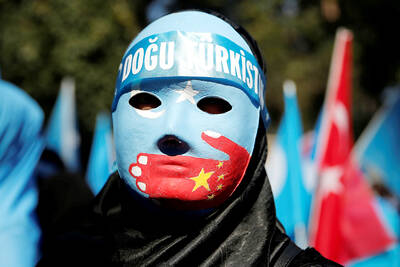
It seems every few days one bumps into one of those “real man” comments in which Taiwan is urged to “face reality” or similar, and “make a deal,” with the speaker implying that soon it will be too late. “Deal” advocates always present themselves as having a superior grip on reality, and the manly ability to make the “hard choice.” Their testosterone-laden language often echoes that of Taiwan sellout advocates. Note that such commentary always specifies a process (“make a deal, work with, make progress”), never the end state of what occupation by a violent authoritarian colonialist state will entail. In
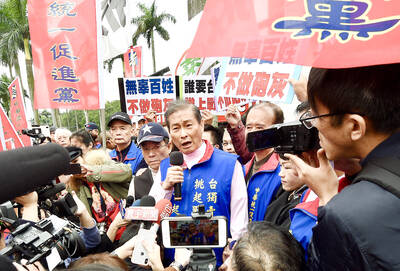
There are shadowy cabals plotting to sell out Taiwan to be annexed by China, by invasion if necessary. Fortunately, they are buffoons. In 2019, former Bamboo Union gangster and founder of the China Unification Promotion Party (CUPP), Chang An-le (張安樂, colorfully known as “White Wolf”), led a protest at the Legislative Yuan against comments made by then-premier Su Tseng-chang (蘇貞昌) that in the event of an attack by China, he would never surrender, but would protect the nation by fighting to the end, even if he only had a broom. Chang had party members bring a wooden casket that they
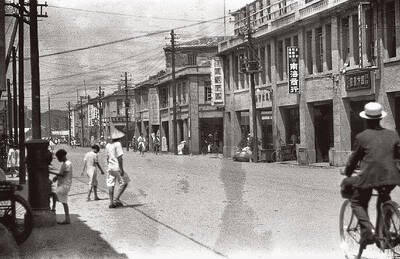
June 1 to June 7 "If all Taiwanese were as afraid of dying as you, then what would happen?” Physician Shih Chiang-nan (施江南) reportedly said this to his wife Chen Chiao-tung (陳焦桐) after she urged him to stop intervening on behalf of Taiwanese soldiers stranded overseas after serving in the Japanese Army during World War II. Shih had clashed with high-ranking officials over the issue, engaged in several heated arguments with Taiwan governor-general Chen Yi (陳儀) and allegedly shouted at general Ko Yuan-fen (柯遠芬), chief of staff of the Taiwan Garrison Command, over


 RSS
RSS