


More than half of the bamboo vipers captured in Tainan in the past few years were found in the city’s Sinhua District (新化), while other districts had smaller catches or none at all.
Every year, Tainan captures about 6,000 snakes which have made their way into people’s homes.
Of the six major venomous snakes in Taiwan, the cobra, the many-banded krait, the brown-spotted pit viper and the bamboo viper are the most frequently captured.
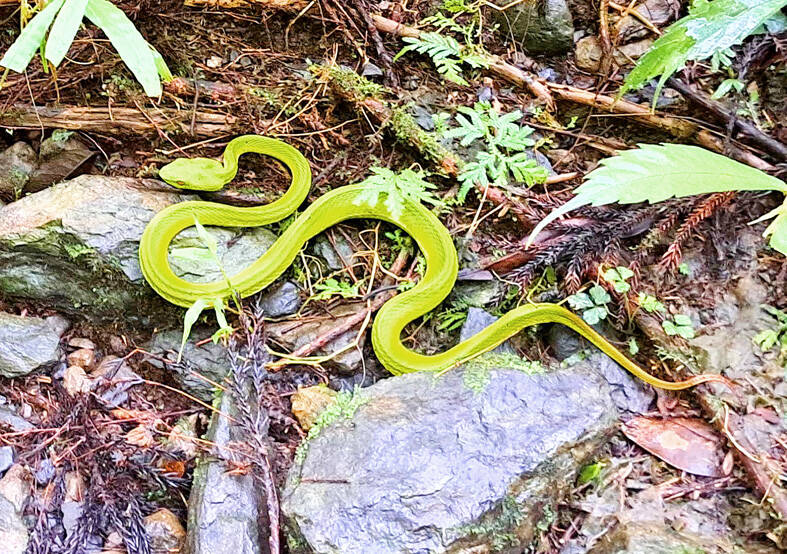
Photo: Tsai Wen-chu, Taipei Times
The high concentration of bamboo vipers captured in Sinhua District is puzzling.
Tainan Agriculture Bureau Forestry and Nature Conservation Division head Chu Chien-ming (朱健明) earlier this week said that the number of snakes captured fluctuates every year and that the data still need to be further explored.
The data do not specify where in the district the snakes were found or the circumstances of their capture, he said, highlighting the need for more detailed records to enable further analysis.
Data from the bureau showed that in 2024, 5,967 snakes of 20 different species were captured in Tainan, of which cobras were the most numerous of the six major venomous snakes at 1,319, followed by many-banded kraits at 522, brown-spotted pit vipers at 277 and bamboo vipers at 154.
Of the 154 bamboo vipers, 84 were captured in Sinhua District, followed by 17 caught in Guanmiao District (關廟), while other districts only had single-digit or zero catches, the data showed.
From January to August last year, 52 bamboo vipers were caught in the city and up to 27 of them were captured in Sinhua District, accounting for more than half, followed by Guanmiao District’s eight catches, it shows.
An adult bamboo viper, or Trimeresurus stejnegeri, can reach 90cm in length. The snake species features a bright green body, with a white line along the belly and a brick-red tail.
Most bamboo vipers in Taiwan are distributed across mountainous areas, cultivated land, bamboo groves or forests at an elevation of up to 1,500m, preferring to inhabit trees near ponds or ditches.
They are highly aggressive and often active at night.
Given its large population and broad distribution, the bamboo viper has become one of the most commonly seen venomous snake species in Taiwan.
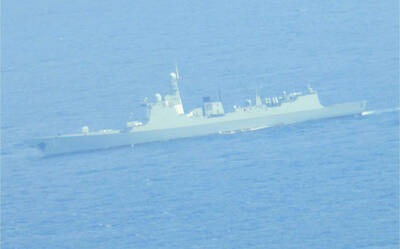
The military has spotted two Chinese warships operating in waters near Penghu County in the Taiwan Strait and sent its own naval and air forces to monitor the vessels, the Ministry of National Defense (MND) said. Beijing sends warships and warplanes into the waters and skies around Taiwan on an almost daily basis, drawing condemnation from Taipei. While the ministry offers daily updates on the locations of Chinese military aircraft, it only rarely gives details of where Chinese warships are operating, generally only when it detects aircraft carriers, as happened last week. A Chinese destroyer and a frigate entered waters to the southwest
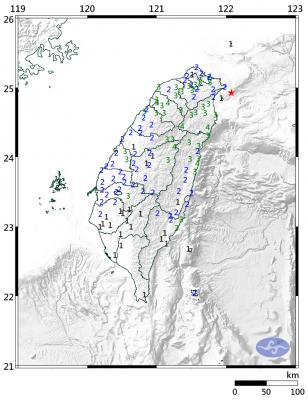
A magnitude 6.1 earthquake struck off the coast of Yilan County at 8:39pm tonight, the Central Weather Administration (CWA) said, with no immediate reports of damage or injuries. The epicenter was 38.7km east-northeast of Yilan County Hall at a focal depth of 98.3km, the CWA’s Seismological Center said. The quake’s maximum intensity, which gauges the actual physical effect of a seismic event, was a level 4 on Taiwan’s 7-tier intensity scale, the center said. That intensity level was recorded in Yilan County’s Nanao Township (南澳), Hsinchu County’s Guansi Township (關西), Nantou County’s Hehuanshan (合歡山) and Hualien County’s Yanliao (鹽寮). An intensity of 3 was

Japanese Prime Minister Sanae Takaichi’s comment last year on Tokyo’s potential reaction to a Taiwan-China conflict has forced Beijing to rewrite its invasion plans, a retired Japanese general said. Takaichi told the Diet on Nov. 7 last year that a Chinese naval blockade or military attack on Taiwan could constitute a “survival-threatening situation” for Japan, potentially allowing Tokyo to exercise its right to collective self-defense. Former Japan Ground Self-Defense Force general Kiyofumi Ogawa said in a recent speech that the remark has been interpreted as meaning Japan could intervene in the early stages of a Taiwan Strait conflict, undermining China’s previous assumptions
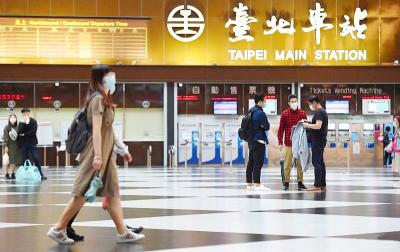
Taiwan Railways Corp (TRC) today announced that Shin Kong Mitsukoshi has been selected as the preferred bidder to operate the Taipei Railway Station shopping mall, replacing the current operator, Breeze Development Co Ltd. Among eight qualified firms that delivered presentations and were evaluated by a review committee, Shin Kong Mitsukoshi was ranked first, while Breeze was named the runner-up, the rail company said in a statement. Contract negotiations are to proceed in accordance with regulations, it said, adding that if negotiations with the top bidder fail, it could invite the second-ranked applicant to enter talks. Breeze in a statement today expressed doubts over


 RSS
RSS