


Pei-Ru Ko (柯沛如) says her Taipei upbringing was a little different from her peers.
“We lived near the National Palace Museum [north of Taipei] and our neighbors had rice paddies. They were growing food right next to us. There was a mountain and a river so people would say, ‘you live in the mountains,’ and my friends wouldn’t want to come and visit.”
While her school friends remained a bus ride away, Ko’s semi-rural upbringing schooled her in other things, including where food comes from.
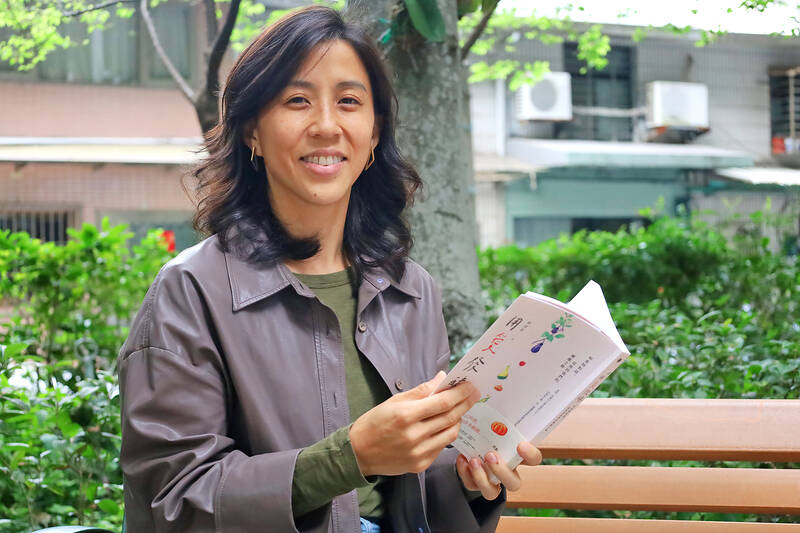
Photo: Thomas Bird, Taipei Times
“Most people living in Taipei wouldn’t have a neighbor that was growing food,” she says. “So I learned that food takes labor, it comes from people working hard. It doesn’t just show up in the market.”
Shopping at the local wet market was the setting for some of her happiest childhood memories, she tells Taipei Times.
“My mom would ask, what would you like and I could say I wanted to eat anything, and she would just say ‘let’s go get that.’”
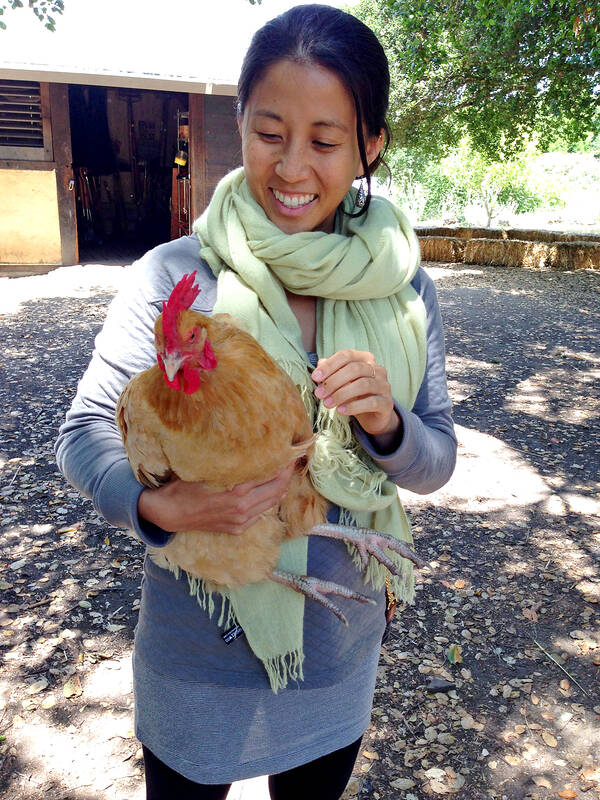
Photo courtesy of Ko Pei-ro
Ko’s childhood dinner table was eclectic too, as her father is of southern Taiwanese stock, her grandmother a vegetarian Buddhist, while her mother has North China heritage.
Despite a “normal” childhood doing regular things like “making dumplings with mom,” as Ko reached adolescence, distant horizons began to beckon.
“My older brother was studying in the US and I learned he was having a very different education from me. He did sports, art, music… I was really interested in art and there just wasn’t a lot of that in Taiwan at the time. I was curious. I wanted a more global experience.”
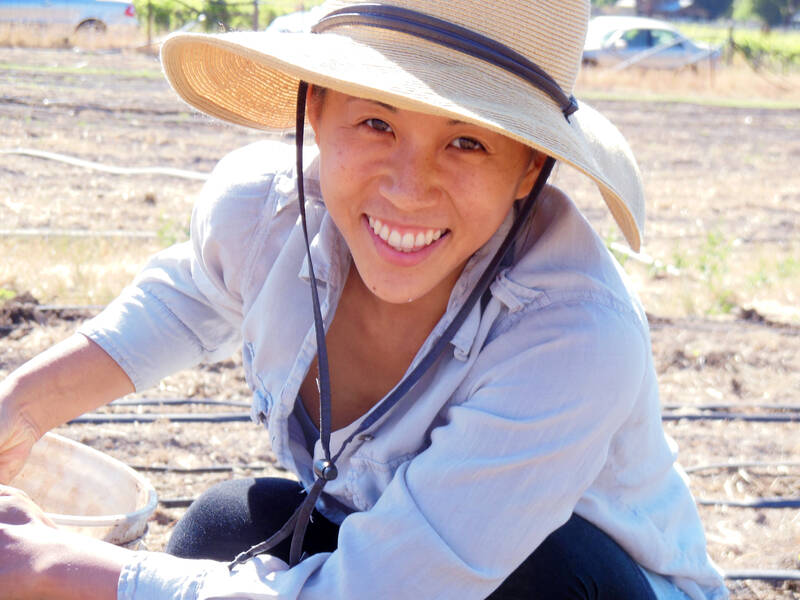
Photo courtesy of Ko Pei-ro
After badgering her parents, Ko was permitted to go study state-side, an experience she found enriching from the get-go.
“Everything was just different, tasting pizza, experiencing snow.”
After graduating high school, Ko stayed on to further her education, enrolling in Williams College. It was during her time in Massachusetts that they she would develop many of the skills she’d later use after founding a non-profit Real Food Real Stories in 2014 (later renamed Food Culture Collective.)
“I basically created my own major. It was called Art for Social Change. And I started a program called ‘let me tell you a story.’ I like working with people, skipping the superficial and having real conversations. To me, that’s a form of art, bringing people together to connect and talk about meaningful things.”
CURATIVE CUISINE
Ko returned to Taiwan in 2009 and was about to enter the job market when she suddenly fell ill.
“At first, we didn’t know what was wrong with me. Then a doctor did an MRI scan and found a blood clot in my brain. I learned I had antiphospholipid syndrome, which accounted for my fatigue and the other symptoms I was having.”
Various medicines were prescribed to treat Ko’s condition. But frustrated with her protracted recovery, she hopped a flight to California, this time to practice yoga at White Lotus Foundation in Santa Barbara.
“One day, I was crying because I couldn’t do some of the exercises and the chef there noticed me. She just floated in and was like, ‘what’s going on?’ I told her I was upset with my body, that I just wanted all the pain to stop. And she put her hands on my shoulders and said, ‘Honey, if you don’t accept it, how can you let it go?’ That was the beginning of me changing my relationship with myself. Because she was a chef, many of our conversations started to shift my relationship with food. I thought, maybe I can’t cure myself but at least I can learn to care for myself.”
This epiphany spurred Ko to enroll in a holistic culinary program in Bauman College, Berkley, which focused on “how you can prepare food for all kinds of different health conditions.”
After finishing the course, she enrolled in another program to further study nutrition.
She eventually found she was able to mitigate the symptoms caused by her autoimmune disease.
“I have an anti-inflammatory diet that is mostly organic, local, seasonal and just. I currently manage my condition with diet and lifestyle instead of medications,” she tells the Taipei Times.
FOOD FOR THOUGHT
Given Ko’s experience, you might imagine she’d come up with the ultimate cure-all recipe. Instead, she says, “I don’t believe there is one diet that fits everybody, that is perfect for every culture, season or age. I also don’t believe there’s just one way of thinking about a given body type. So I never give a prescription because I think everyone’s body is different.”
Ko also dislikes labels applied to her, be it “foodie,” “food mentor” or even “good food advocate.”
“What is good?” she asks, rhetorically.
Instead, what Ko advocates is “Food that feeds our collective wellness. It needs to be delicious. It needs to be joyous. And it needs to feed generations.”
To cultivate a better understanding of food, and nurture more positive relationships between people and what they consume, Ko and her “co-conspirators” in California created “a community of food workers, culture bearers and creatives,” who used “storytelling, art, and cultural experiences to reorient towards food as life source…”
Food Culture Collective ran for six years with Ko at the helm. Although it now has a new executive director, she remains on the board and committed to the cause.
Ko returned to Taiwan in 2020 just as the COVID-19 pandemic brought the curtain down on a lot of public activities the world over. She kept herself busy writing her first Chinese-language book, Ferment with Love: Healing through Food Collectively (用愛發酵), which, she says, includes much of the nutritional wisdom garnered over two decades studying and working in the US.
She is now helping Taipei residents “embark on a transformative journey towards collective well-being” and will be heading a discussion tomorrow evening hosted by the Taipei Salon titled Flavors For Change.
“I’m interested in talking to people who are curious about their relationship to food. They could be at the very beginning of the journey. They could be finding difficulty in finding a balance in life. It doesn’t matter.”
Ko is also continuing her own journey, currently getting reacquainted with the culinary and agricultural landscape of her homeland.
“I feel like there’s still so much I need to learn about Taiwan,” she says.
Although she recognizes food culture in Formosa is quite different from that in the US, the “general principles” remain.
“We need to eat in a way that’s good for us, for others and for our planet,” she says.

Just after 6am, I walked up to the ticket gate at Taipei Main Station and entered the Taiwan Railway platform without scanning any ticket; instead, I flashed the Sanrio Fun Rail pass on my phone to the gate worker and was admitted. I found my train and prepared to board. My destination? This very same station. I was embarking on a 13-hour journey on one of two round-the-island trains operated by ezTravel. They run each day, one counterclockwise around the island and one clockwise. They differ in a number of ways from an ordinary Taiwan Railway train and can make for
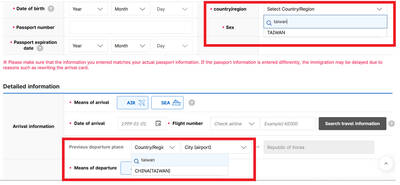
Jason Han says that the e-arrival card spat between South Korea and Taiwan shows that Seoul is signaling adherence to its “one-China” policy, while Taiwan’s response reflects a reciprocal approach. “Attempts to alter the diplomatic status quo often lead to tit-for-tat responses,” the analyst on international affairs tells the Taipei Times, adding that Taiwan may become more cautious in its dealings with South Korea going forward. Taipei has called on Seoul to correct its electronic entry system, which currently lists Taiwan as “China (Taiwan),” warning that reciprocal measures may follow if the wording is not changed before March 31. As of yesterday,
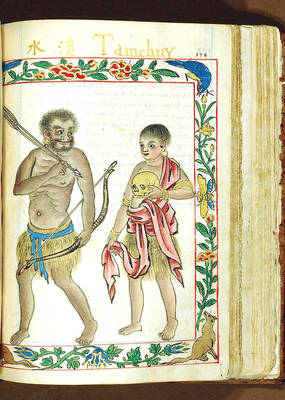
The Portuguese never established a presence on Taiwan, but they must have traded with the indigenous people because later traders reported that the locals referred to parts of deer using Portuguese words. What goods might the Portuguese have offered their indigenous trade partners? Among them must have been slaves, for the Portuguese dealt slaves across Asia. Though we often speak of “Portuguese” ships, imagining them as picturesque vessels manned by pointy-bearded Iberians, in Asia Portuguese shipping between local destinations was crewed by Asian seamen, with a handful of white or Eurasian officers. “Even the great carracks of 1,000-2,000 tons which plied
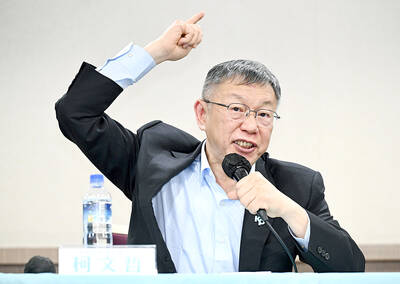
On Thursday, former Taipei mayor and founder of the Taiwan People’s Party (TPP) Ko Wen-je (柯文哲) was sentenced to 17 years in prison and had his civil rights suspended for six years over corruption, embezzlement and other charges. Seven others related to the case were also handed prison sentences, while two were found not guilty. It has been a bad week for the TPP. On Tuesday, prosecutors charged Chinese immigrant Xu Chunying (徐春鶯) with suspicion of taking part in Beijing-directed election interference. Xu has strong links to the TPP, which once offered her a party list legislator nomination. Tuesday also


 RSS
RSS