


Brook Morgan surveyed booths at the “Survival & Prepper Show” in Colorado that were stocked with boxes of ammunition, mounds of trauma medical kits, and every type of knife imaginable. A self-described “30-year-old lesbian from Indiana,” Morgan is one of a new breed of Americans getting ready to survive political upheaval and natural catastrophes, a pursuit that until recently was largely associated with far-right movements such as white nationalists since the 1980s. Researchers say the number of preppers has doubled in size to about 20 million since 2017. Much of that growth is from minorities and people considered left-of-center politically, whose sense of insecurity was heightened by Donald Trump’s 2016 election, the COVID-19 pandemic, more frequent extreme weather and the 2020 racial justice protests following the murder of George Floyd.
“I’m really surprised by the number of people of color here,” Morgan said. “I always went to these shows with my family in Indiana and it was just white people who were my parents’ age. There are a lot of younger people here, too. It’s a real change.”
DEMOGRAPHIC SHIFT
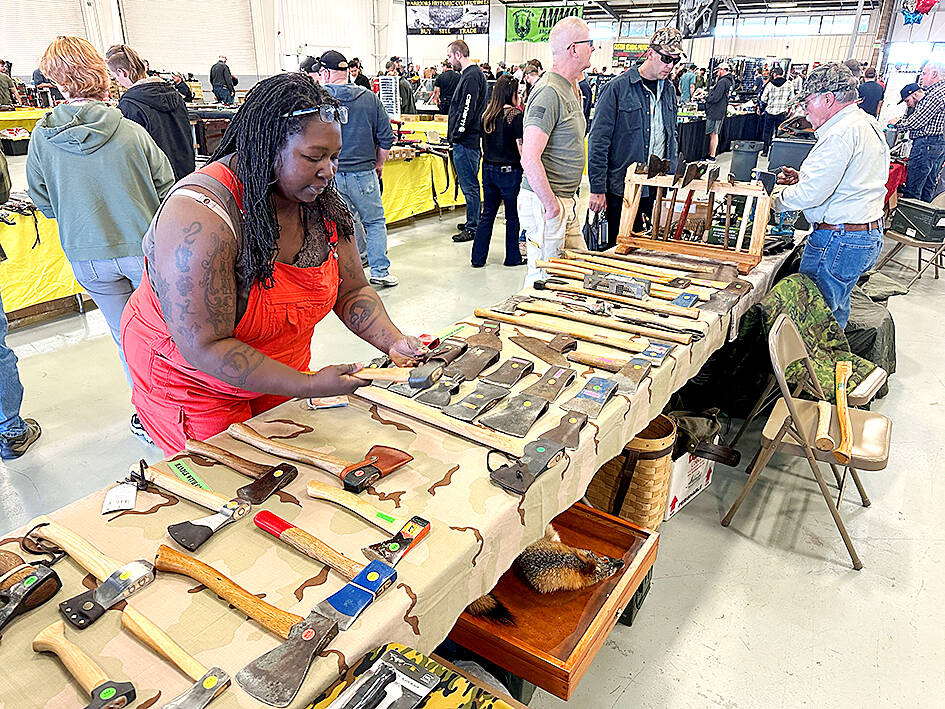
Photo: Reuters
Morgan grew up in a prepper family and still considers herself self-reliant and ready to handle a disaster but she left the prepper world of her youth behind in part to escape the conservatism associated with the movement.
The diversification of prepping was clear last weekend at the Survival & Prepper show at the fairgrounds in Boulder County, a liberal district which President Joe Biden won in 2020 by nearly 57 percentage points over Trump. Over 2,700 people paid US$10 each to attend the show, organizers said, and attendees were varied. Bearded white men with closely cropped hair and heavily tattooed arms were there. But so were hippy moms carrying babies in rainbow colored slings and chatting about canning methods, Latino families looking over greenhouses and water filtration systems and members of the local Mountain View Fire Rescue team, who in 2021 battled a devastating fire in the region, giving CPR demonstrations and encouraging citizens to be more prepared for extreme events.
Attendees and those running the booths said the show reflected the concerns of millions of Americans who no longer feel that they can always count on the government or private industry to provide the basics, like electricity, water and food. They cited the pandemic disruption of supply chains, the 2021 power grid crisis in Texas that left millions without power, and the recent outages for thousands of AT&T mobile users.
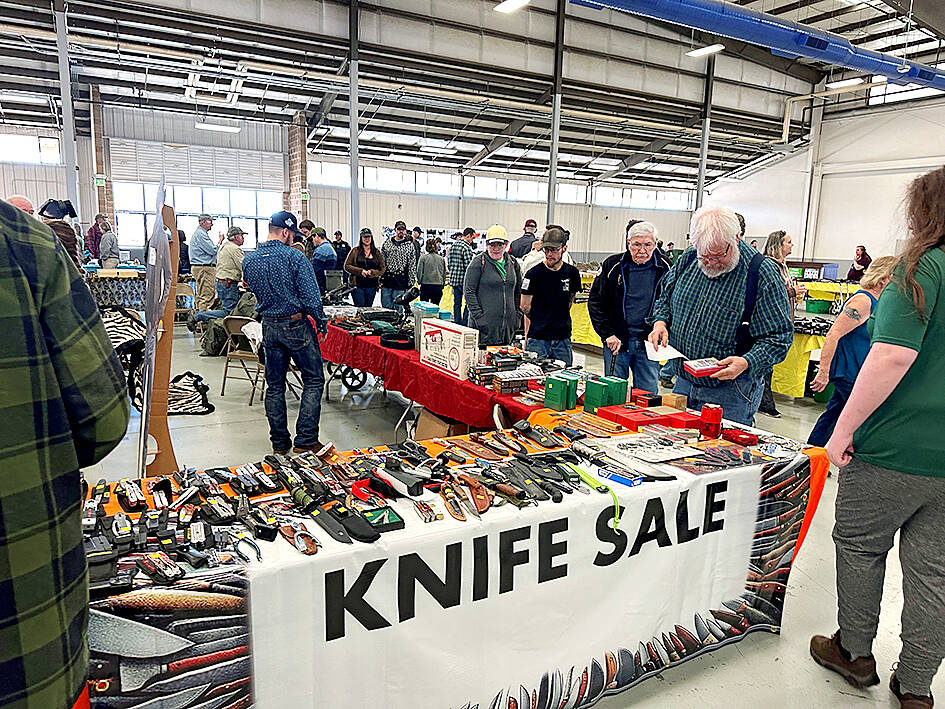
Photo: Reuters
Chris Ellis is a colonel in the US Army who works on disaster preparedness and recovery and is a leading researcher into the prepper movement who has tracked its growth to 20 million people based on household resiliency data from the Federal Emergency Management Agency. He said that what shapes individual preppers — which he defines as someone who can live for a month with no outside support — is how they react to a single question: “Do I feel safe?”
“People want to regain their agency, their sense of control, and do something to match their fears to their actions,” said Ellis, who underscored that he did not speak on behalf of the Department of Defense. People motivated by climate change, Ellis said, tend to be homesteaders who grow their own food and move to more “climate proof” locations, such as the mild summer haven of Duluth, Minnesota.
Others whose main fear is lawlessness are frequently the gun enthusiasts stereotypically associated with the prepper movement. The super rich often respond to their fears by spending millions to build bunkers in remote spots.
AMERICANA
For John Ramey, a former innovation advisor to the Obama administration and creator of the prepper website The Prepared, the community has grown to reflect American society at large in terms of political beliefs and demographic categories.
“The only real unifying denominator among preppers these days is people who are smart enough to be aware of what the world is like … and they have the gumption to do something about it,” Ramey said.
Back at the prepper show at the Boulder County fairgrounds, Jennifer Council strummed her thumb against the edge of an ax, balanced it in her hand and said it was perfect for both cutting down small trees and doing the delicate shaving work needed to create tinder.
Council, a 50-year-old mom of three adult children and self-described Black urban farmer, lives in a suburban home northwest of Denver.
“Preppers used to be seen as extreme weirdos,” Council said. “Then the pandemic happened and grocery stores were short on food. Then you had the unrest of protests around the police killings of young Black men. Then you had the storming of the Capitol in Washington.”
“People are realizing that it’s important to be able to depend on what you can do for yourself.”

The Directorate-General of Budget, Accounting and Statistics (DGBAS) told legislators last week that because the Chinese Nationalist Party (KMT) and Taiwan People’s Party (TPP) are continuing to block next year’s budget from passing, the nation could lose 1.5 percent of its GDP growth next year. According to the DGBAS report, officials presented to the legislature, the 2026 budget proposal includes NT$299.2 billion in funding for new projects and funding increases for various government functions. This funding only becomes available when the legislature approves it. The DGBAS estimates that every NT$10 billion in government money not spent shaves 0.05 percent off
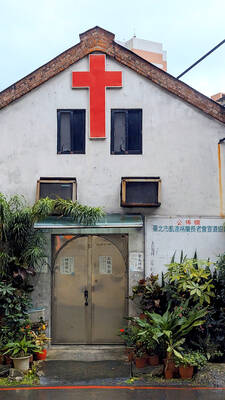
Dec. 29 to Jan. 4 Like the Taoist Baode Temple (保德宮) featured in last week’s column, there’s little at first glance to suggest that Taipei’s Independence Presbyterian Church in Xinbeitou (自立長老會新北投教會) has Indigenous roots. One hint is a small sign on the facade reading “Ketagalan Presbyterian Mission Association” — Ketagalan being an collective term for the Pingpu (plains Indigenous) groups who once inhabited much of northern Taiwan. Inside, a display on the back wall introduces the congregation’s founder Pan Shui-tu (潘水土), a member of the Pingpu settlement of Kipatauw, and provides information about the Ketagalan and their early involvement with Christianity. Most

The People’s Republic of China (PRC) was out in force in the Taiwan Strait this week, threatening Taiwan with live-fire exercises, aircraft incursions and tedious claims to ownership. The reaction to the PRC’s blockade and decapitation strike exercises offer numerous lessons, if only we are willing to be taught. Reading the commentary on PRC behavior is like reading Bible interpretation across a range of Christian denominations: the text is recast to mean what the interpreter wants it to mean. Many PRC believers contended that the drills, obviously scheduled in advance, were aimed at the recent arms offer to Taiwan by the

It is a soulful folk song, filled with feeling and history: A love-stricken young man tells God about his hopes and dreams of happiness. Generations of Uighurs, the Turkic ethnic minority in China’s Xinjiang region, have played it at parties and weddings. But today, if they download it, play it or share it online, they risk ending up in prison. Besh pede, a popular Uighur folk ballad, is among dozens of Uighur-language songs that have been deemed “problematic” by Xinjiang authorities, according to a recording of a meeting held by police and other local officials in the historic city of Kashgar in


 RSS
RSS