


When this book was published in July, few could have foreseen the resurgence of violence in Gaza.
The Hamas attacks of Oct. 7 and Israel’s reprisals have rendered the dim prospects of long-term peace even fainter. With the death toll accelerating at a terrifying pace, academic discussions of Palestine’s statehood based on points of international law might seem an irrelevance or an insensitive misfocus.
But, at a time when extremists on both sides are siphoning the last residues of empathy from a parched well of moderation, creating what Israeli historian Yuval Noah Harari calls a “tribalism” of suffering, the relevant chapters of this book offer insights on potential escape routes.
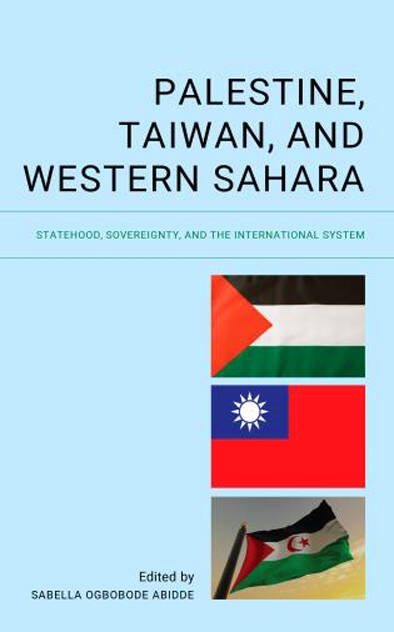
Not that the single-state solution advocated by Italian social movement scholar Federica Stagni is generally recognized as a viable option.
Focusing on a campaign to save the village of Susiya in Palestine’s West Bank from destruction, Stagni examines coalition-building between Palestinians, Israelis and “International Jews.” (Given the historical associations of that latter term, including the title of antisemitic screed published by Henry Ford in 1920, we must assume that its use resulted from clumsy translation and/or editing.)
The effectiveness of these small activist groups, writes Stagni, is premised on acknowledgment of the inherent power asymmetry between the participants and efforts to redress this by underlining “the need to listen to and follow Palestinian leadership when organizing and structuring collective actions.”
While the intentions are laudable, a British war correspondent friend of mine is hardly alone in the view that, “in practice, it’s a recipe for horrific civil war.”
For Konstantinos Magliveras and Gino Naldi, Palestine’s efforts to achieve sovereignty have been relatively successful. The legal scholars assert that a three-pronged strategy of partaking in treaties, joining UN-affiliated agencies and pursuing actions through international courts and quasi-judicial bodies has bolstered Palestine’s status. However, the authors acknowledge rebuttals from critics who insist that Palestine’s capacity as a sovereign actor does not confer statehood.
One must also wonder what such advances by the State of Palestine — represented by the Palestine Liberation Organization — really amount to in the face of an intransigent and fanatical Israeli government and a Hamas administration, representing around 40 percent of Palestinians, prone to catastrophic decisionmaking.
Elsewhere, Zimbabwean political scientist Lawrence Mhandara compares the strategies of Hamas and Irgun, the pre-1948 Israeli terrorist organization. The sections on “outbidding” and “spoiling” — which describe Hamas’ efforts to discredit its competitor Fatah and sabotage the peace process — are particularly astute.
COGENT ARGUMENTS
Conspicuous by it absence is mention of the infamous Deir Yassin massacre of 1948 in which at least 107 Palestinian civilians were murdered by Irgun. Since the Oct. 7 attacks, which also saw mass atrocities against defenceless civilians, the incident has resurfaced as an example of purported Israeli hypocrisy.
While Mhandara stresses that he is “not suggesting that Hamas’ resistance strategies are justified,” he contends that the organization’s designation as a terrorist group is “highly politicized.” There is an “inherent tendency in Western political discourses and literature to use demeaning tropes that are never applied to [Hamas’] historical equal — the Irgun.”
Whether one agrees or not, the arguments in the chapters on Palestine are cogently expressed and well-informed. There are some exceptions: Idowu Johnson’s call for renewed international commitments to resolving the conflict is admirable, if not substantively formulated, but his observation that the creation of a Jewish state stemmed from “the need to escape further embarrassment as experienced in the Holocaust,” is winceworthy.
As for the Taiwan-focused analysis — where to begin? Let’s start with the positive: a fascinating comparative study of Kurdish and Taiwanese identity and nation-building from Dean Karalekas, editor-at-large of Strategic Vision, the journal of the Taiwan Center for Security Studies (台灣安全研究中心) at National Chengchi University (國立政治大學).
INSPIRATIONAL NARRATIVES
At a recent event in Taipei, Karalekas spoke of difficulties in finding an outlet for this paper. It’s easy to see why — niche is an understatement, and his chapter doesn’t exactly fit with its surroundings. But that’s part of the attraction .
Employing Benedict Anderson’s concept of imagined communities, Karalekas describes the emergence of a shared sense of community in a population, “regardless of the preexisting historical or cultural factors mitigating against such a union.”
While some such communities claim an ancient genesis, others hinge on a relatively contemporary identity formation. This, Karalekas argues, is irrelevant, “as the national symbols, celebrations and a rich localized tradition of literature all contribute to making newly constructed traditions feel primordial and creating the narrative that inspires the loyalty and patriotism so necessary to building a nation.”
Elsewhere, another comparative study is attempted in the opening chapter. Examining the claims of the three contested states through the criteria of Montevideo Convention, Priye S. Torulagha concludes that Palestine, Taiwan and Western Sahara each past muster. Aside from the analysis, which again reads more like a laundry list of facts, rather than an attempt to discover commonalities in the three cases, the chapter is littered with typos and grammatical mistakes.
OBSCURE REFERENCES
Far worse, though, are basic factual errors and inaccuracies. The term “one China principle” is used interchangeably with “one China policy,” the so-called “1992 consensus” treated as a historical fact and, at one stage, referred to as occurring in 1999; and, more generally, Torulagha’s grasp of Taiwanese politics — as evidenced by such oddities as a present-tense reference to the obscure and long-defunct Taiwan Independence Party — appears shaky at best.
One has to wonder why editor Sabella Ogbobode Abidde — whose introduction and conclusion are also marred by numerous mistakes — couldn’t bring some of his knowledge and experience to bear. Having finished a period as a researcher and a visiting professor in Taiwan this year, he should have been able to resolve some of the issues.
The weaknesses on Taiwan contrast with the chapters on Western Sahara, which — for this relatively uniformed reader — neatly elucidated the pivotal issues in the African nation’s struggle for statehood. Stephen Zunes’ paper on US support for the illegal annexations of Palestinian and Sahrawi land by Israel and Morocco respectively falls under the Palestine portion of the book; as a perennial critic of Washington’s policies in both cases, Zunes expertly presents evidence of American complicity.
Given the unfolding crisis in Gaza, this collection is timely and — at its best — worthwhile. Unfortunately too much of the content is far below the standard one would expect from this level of publication.
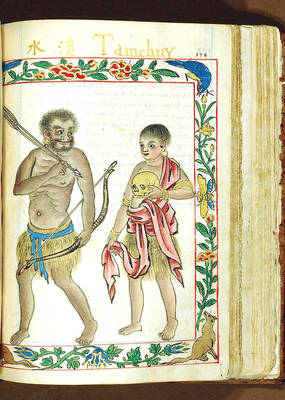
The Portuguese never established a presence on Taiwan, but they must have traded with the indigenous people because later traders reported that the locals referred to parts of deer using Portuguese words. What goods might the Portuguese have offered their indigenous trade partners? Among them must have been slaves, for the Portuguese dealt slaves across Asia. Though we often speak of “Portuguese” ships, imagining them as picturesque vessels manned by pointy-bearded Iberians, in Asia Portuguese shipping between local destinations was crewed by Asian seamen, with a handful of white or Eurasian officers. “Even the great carracks of 1,000-2,000 tons which plied

It’s only half the size of its more famous counterpart in Taipei, but the Botanical Garden of the National Museum of Nature Science (NMNS, 國立自然科學博物館植物園) is surely one of urban Taiwan’s most inviting green spaces. Covering 4.5 hectares immediately northeast of the government-run museum in Taichung’s North District (北區), the garden features more than 700 plant species, many of which are labeled in Chinese but not in English. Since its establishment in 1999, the site’s managers have done their best to replicate a number of native ecosystems, dividing the site into eight areas. The name of the Coral Atoll Zone might

On Monday morning, in quick succession, the Chinese Communist Party (CCP) and the Chinese Nationalist Party (KMT) released statements announcing “that the Central Committee of the Communist Party of China and General Secretary Xi Jinping (習近平) have invited KMT Chairwoman Cheng Li-wun (鄭麗文) to lead a delegation on a visit to the mainland” as the KMT’s press release worded it. The KMT’s press release added “Chairwoman Cheng expressed her gratitude for the invitation and has gladly accepted it.” Beijing’s official Xinhua news release described Song Tao (宋濤), head of the Taiwan Work Office of the CCP Central Committee, as
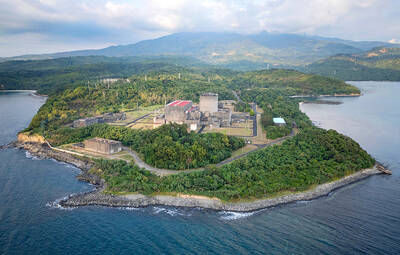
Nuclear power is getting a second look in Southeast Asia as countries prepare to meet surging energy demand as they vie for artificial intelligence-focused data centers. Several Southeast Asian nations are reviving mothballed nuclear plans and setting ambitious targets and nearly half of the region could, if they pursue those goals, have nuclear energy in the 2030s. Even countries without current plans have signaled their interest. Southeast Asia has never produced a single watt of nuclear energy, despite long-held atomic ambitions. But that may soon change as pressure mounts to reduce emissions that contribute to climate change, while meeting growing power needs. The


 RSS
RSS