


Following the rollercoaster ride of 2025, next year is already shaping up to be dramatic. The ongoing constitutional crises and the nine-in-one local elections are already dominating the landscape.
The constitutional crises are the ones to lose sleep over. Though much business is still being conducted, crucial items such as next year’s budget, civil servant pensions and the proposed eight-year NT$1.25 trillion (approx US$40 billion) special defense budget are still being contested.
There are, however, two glimmers of hope. One is that the legally contested move by five of the eight grand justices on the Constitutional Court’s ad hoc move to reconstitute themselves might prove functionally effective, if still controversial.
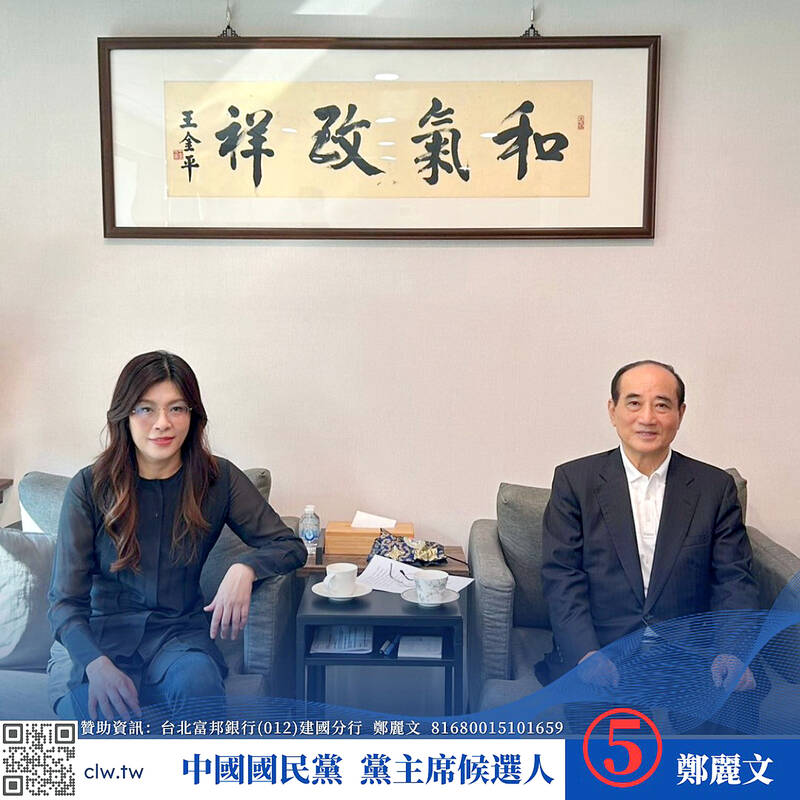
Photo taken from Cheng Li-wen’s Facebook
As political scientist Nathan Batto points out on Frozen Garlic: “Taiwan has a very bureaucratic government. If you have the right documents, things almost always go through smoothly.” He adds: “The reactions to (by) the [Chinese Nationalist Party] KMT and [Taiwan People’s Party] TPP also suggest to me that they don’t know how to oppose this decision.”
Though the KMT has filed a lawsuit against the five grand justices, in all likelihood, the court will continue to function, and the lawsuit will fail. This incentivizes the KMT and the TPP, to negotiate with the ruling Democratic Progressive Party (DPP) to find a mutually acceptable list of nominees to fill the open seats on the court and fully restore its credibility.
Doing so would give the KMT and the TPP some influence over who is added to the court, which would allow them to justify their previous blocking of the administration’s nominees as a strategic move to ensure “acceptable” justices. Whether they will, or whether the DPP is willing to negotiate, are still open questions — but the political opening is there.
CHENG’S BIG MOVE
The other glimmer of hope is that while finalizing our previous column, “The battle over the constitution veers sharply into the farcical” (Thursday, Dec. 25, page 12), where I suggested that former legislative speaker Wang Jin-pyng (王金平) should be drafted as a potential negotiator to break the constitutional deadlocks, KMT Chairwoman Cheng Li-wen (鄭麗文) was announcing plans to declare Wang the party’s “supreme advisor” (最高顧問). She specifically cited Wang’s comments that his “missions and desires” are first to promote “domestic harmony and unity” and second to “promote cross-strait peace.”
If Wang accepts (Cheng will visit his office early next month), that is only a start. Wang does not have the power of the legislative speakership and is today more of an elder statesman than an active political figure. Still, there is no one with Wang’s reputation and stature, and he might be the only one the DPP will be willing to listen to.
Party insiders quoted in the press suggest that Cheng’s plan is to back Wang in promoting harmony; there are some potential hurdles, both within the party and outside it.
Cheng’s announcement came just days after Wang held a big 172-table party to celebrate his 50th anniversary in politics. It was held in his home base of Kaohsiung.
At the event, which got noticeable press coverage, Wang mentioned his hopes for political unity and harmony, but also mentioned he did not invite Cheng. Her deputy, Lee Chien-lung (李乾龍), was there. Wang referred to Kaohsiung mayoral candidate Ko Chih-en (柯志恩), in her role as head of the KMT’s Kaohsiung office, as the representative of the party.
This was widely viewed as a slap in the face to Cheng. However, in the press, “senior White Faction figures” were quoted as saying that, as a Kaohsiung political figure, Wang was emphasizing locals, and Lee is Wang’s longstanding personal friend. Wang was once the leader of the White Faction.
In Cheng’s announcement she planned to recruit Wang; she was also at pains to dispel those rumors and addressed his anniversary party, saying he was “avoiding extravagance” by keeping his party for local figures, and that they have a good relationship.
That he held a 172-table event does not suggest he was avoiding extravagance, and combined with his open comments about not inviting her, strongly smells like a power move on his part. This is his style. He also has not publicly commented since; only his proxies have.
So it is possible this is a power move by Cheng to attempt to sideline Wang and silence critics with a sham appointment. The real test will come after she visits Wang with her formal proposal. If Wang suspects she is anything but sincere, he will decline her offer — and he is wily enough to ensure her full backing with significant political costs to failing to do so before he signs on.
Theoretically, his relationship with his successor as legislative speaker, Han Kuo-yu (韓國瑜), could be a problem. Wang was the brains behind Han’s improbable win as Kaohsiung mayor in 2018, creating the “Han wave” sensation that swept the country and landed the KMT a stunning landslide sweep of local elections that year.
This sidelined then-KMT chairman Wu Den-yih (吳敦義), who got his revenge months later by changing the rules to allow for Han to be nominated as their presidential candidate — stabbing Wang in the back and derailing his dream of running for president.
Though there is bad blood, I doubt it will be a problem. Han likely feels deeply contrite about his betrayal, especially considering his landslide loss in the presidential campaign and his own recall as Kaohsiung mayor. Wang knows this and will press the advantage.
KMT legislative caucus convener Fu Kun-chi (傅崐萁) could theoretically also be a problem. His character is swaggeringly confident, stubborn and deeply hostile to the DPP — especially since the failed recall attempt on him.
However, the KMT’s presumed 2028 presidential candidate, Taichung Mayor Lu Shiow-yen (盧秀燕), is likely to back Wang, and with Cheng and Han’s backing, Fu will be backed into a corner. Fu, like Wang, is also a patronage faction figure, so Wang will know how to appeal to him.
PISSED OFF VOTERS
Wang will also need to win over TPP Chairman Huang Kuo-chang (黃國昌). This should be interesting, as it was Wang who prevented police action against the Sunflower Movement protestors occupying the legislature in 2014. Huang was one of the Sunflower leaders negotiating with him, and it would be interesting to know what they think of each other. Regardless, with the KMT fully backing Wang and Huang’s base wanting a way out of the national crisis, Huang will be under pressure to fall in line.
On the DPP side, party caucus convener Ker Chien-ming (柯建銘) will be an interesting one to watch. After Wang, Ker is the most famous legislative insider and wheeler-dealer, and the two have a long history.
However, in recent months, Ker has gone silent and may be effectively sidelined. Ker was an early and loud proponent of the DPP officially backing the recall campaigns, which were a disaster. Despite the decision to fully commit the party being made by party Chairman William Lai (賴清德) and it ultimately being his fault, Lai and many in the party tried to scapegoat Ker for Lai’s mistake.
Ker called Lai’s bluff by using his knowledge of legislative procedure to keep his job until February 1, but his silence suggests diminished influence. This is a shame, as Ker would be an effective counterpart in negotiating with Wang.
With many voters frustrated and angry at the current partisan brinkmanship and political dysfunction, there are risks to all parties this election year — and it is not clear which side, if any, the voters will blame more. This incentivizes Lai to negotiate with Wang.
There are many hurdles, starting with whether Wang even accepts the challenge. But if he does, that will indicate he thinks it is doable.
In that, there is hope.
Donovan’s Deep Dives is a regular column by Courtney Donovan Smith (石東文) who writes in-depth analysis on everything about Taiwan’s political scene and geopolitics. Donovan is also the central Taiwan correspondent at ICRT FM100 Radio News, co-publisher of Compass Magazine, co-founder Taiwan Report (report.tw) and former chair of the Taichung American Chamber of Commerce. Follow him on X: @donovan_smith.

Yesterday, the Democratic Progressive Party (DPP) nominated legislator Puma Shen (沈伯洋) as their Taipei mayoral candidate, the Chinese Nationalist Party (KMT) put their stamp of approval on Wei Ping-cheng (魏平政) as their candidate for Changhua County commissioner and former legislator Tsai Pi-ru (蔡壁如) of the Taiwan People’s Party (TPP) has begun the process to also run in Changhua, though she has not yet been formally nominated. All three news items are bizarre. The DPP has struggled with settling on a Taipei nominee. The only candidate who declared interest was Enoch Wu (吳怡農), but the party seemed determined to nominate anyone
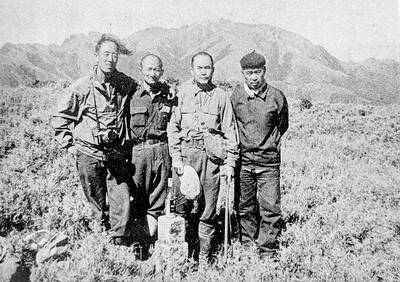
May 18 to May 24 Gathered on Yangtou Mountain (羊頭山) on Dec. 5, 1972, Taiwan’s hiking enthusiasts formally declared the formation of the “100 Peaks Club” (百岳俱樂部) and unveiled the final list of mountains. Famed mountaineer Lin Wen-an (林文安) led this effort for the Chinese Alpine Association (中華山岳協會). Working with other experienced climbers, he chose 100 peaks above 10,000 feet (3,048m) that featured triangulation points and varied in difficulty and character. The list sparked an alpine hiking craze, inspiring many to take up mountaineering and competing to “conquer” the summits. A common misconception is that the 100 Peaks represent Taiwan’s 100 tallest
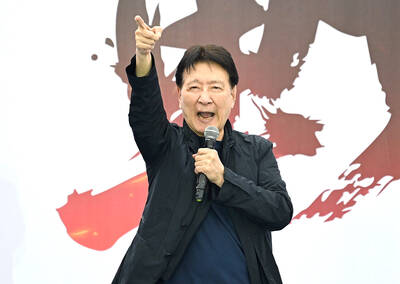
In a sudden move last week, opposition lawmakers of the Chinese Nationalist Party (KMT) and Taiwan People’s Party (TPP) passed a NT$780 billion special defense budget as a preemptive measure to stop either Chinese leader Xi Jinping (習近平) or US President Donald Trump from blocking US arms sales to Taiwan at their summit in Beijing, said KMT heavyweight Jaw Shaw-kong (趙少康), speaking to the Taipei Foreign Correspondents Club on Wednesday night in Taipei. The 76-year-old Jaw, a political talk show host who ran as the KMT’s vice presidential candidate in 2024, says that he personally brokered the deal to resolve
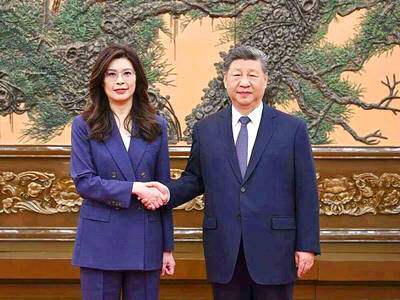
The Chinese Nationalist Party (KMT), alongside their smaller allies the Taiwan People’s Party (TPP), are often accused of acting on behalf of the Chinese Communist Party (CCP). Some go so far as to call them “traitors.” It is not hard to see why. They regularly pass legislation to stymie the normal functioning of the ruling Democratic Progressive Party’s (DPP) administration, and they have yet to pass this year’s annual budget. They slashed key elements of the government’s proposed NT$1.25 trillion (US$40 billion) special military budget, and in the smaller NT$780 billion package they did pass, it is riddled with provisions that


 RSS
RSS