


Institutions signalling a fresh beginning and new spirit often adopt new slogans, symbols and marketing materials, and the Chinese Nationalist Party (KMT) is no exception. Cheng Li-wun (鄭麗文), soon after taking office as KMT chair, released a new slogan that plays on the party’s acronym: “Kind Mindfulness Team.”
The party recently released a graphic prominently featuring the red, white and blue of the flag with a Chinese slogan “establishing peace, blessings and fortune marching forth” (締造和平,幸福前行). One part of the graphic also features two hands in blue and white grasping olive branches in a stylized shape of Taiwan. Bonus points for the white hand also doubling as a symbol of their allies, the Taiwan People’s Party (TPP).
That graphic could also be misinterpreted as symbolizing domestic division, two fists clashing, suggesting Taiwan fighting with itself internally, surrounded by a sea of Chinese Communist Party (CCP) red.

It could also symbolize the internal dissension within the party over the various special defense budget proposals.
In November, President William Lai (賴清德) proposed an eight-year NT$1.25 trillion (US$39.66 billion) special defense budget. Included in the plan were large-scale arms purchases from the US, a ramping up of domestic defense production capacity and capabilities, and the building of a “T-dome” missile defense shield.
COMPETING PROPOSALS
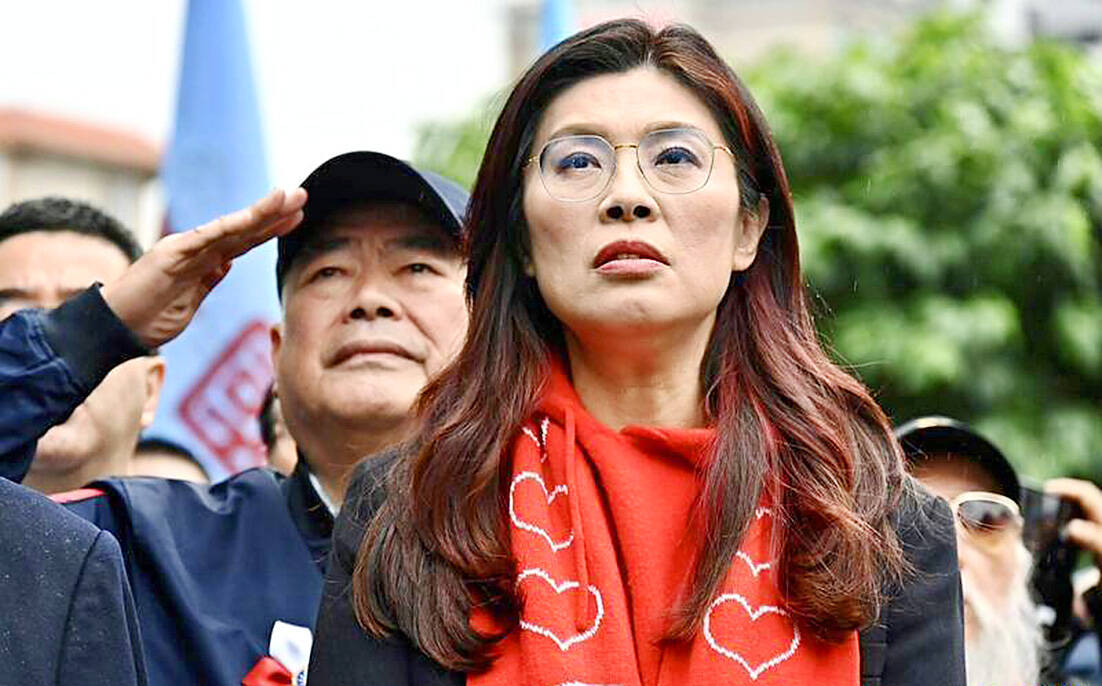
Photo: TT
The KMT and TPP legislative caucuses have since then repeatedly blocked any discussion of the proposal. They object to the plan’s lack of detail — a valid criticism — and have given the impression they want to kill the plan entirely despite their protestations otherwise.
That changed as pressure from both the public and concerns within both parties that they were playing political games over national security while facing existential threats from the CCP — a bad look in an election year. The tone began to shift, and the first to act was TPP Chairman Huang Kuo-chang (黃國昌), who emphasized the party’s commitment to defense, and visited Washington on a fact-finding mission.
Upon his return, the TPP put forward their own significantly smaller NT$400 billion package that stripped out much of Lai’s proposed domestic defense industry plans and left little money to service and maintain the arms platforms purchased from the Americans.
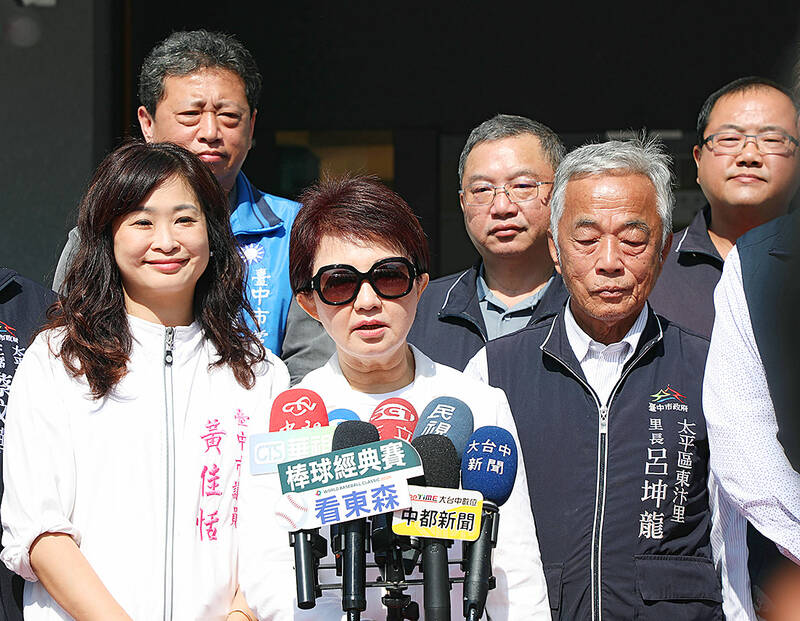
Photo: Chen Chien-chih, Taipei Times
Then word began to circulate that a group of younger KMT lawmakers were backing an NT$810 billion draft proposal by Hsu Chiao-hsin (徐巧芯).
LU MAKES MOVES
Meanwhile, Taichung Mayor Lu Shiow-yen (盧秀燕) was making moves of her own. Though recently she has dropped somewhat in the polls, she remains one of the most popular politicians in the country. Highly respected, popular and a viable potential future president, she has considerable weight in the party.
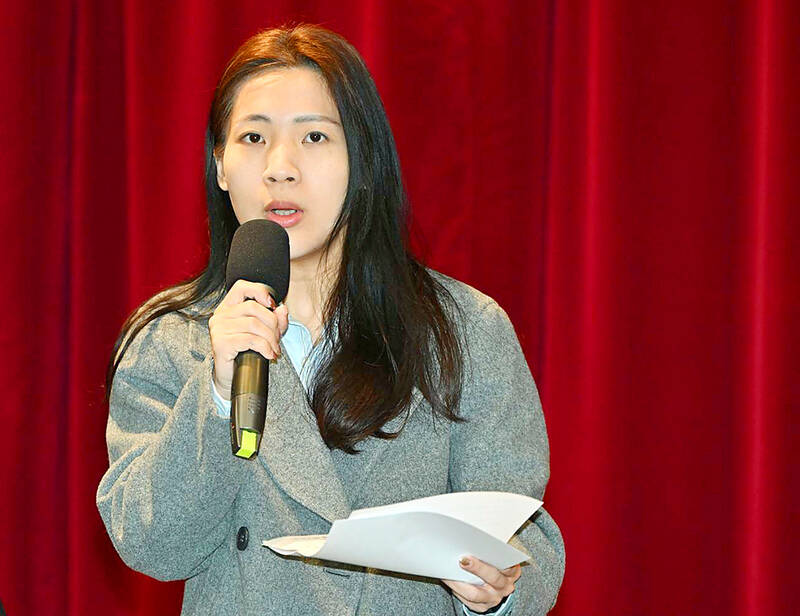
Photo: Tien Yu-hua, Taipei Times
Since roughly her second year as mayor she has successfully worked to build a positive, practical, pragmatic and moderate image. She frequently uses language and takes stances that differ from her more China-friendly peers, and sometimes even party leaders.
This has been especially true under Chairwoman Cheng, who is a pro-China ideologue who downplays the importance of national defense. She claims Taiwan does not need to “take sides” between the US and China and wants Taiwanese to be proud of their Chinese heritage.
As she wrote in Foreign Affairs: “Deterrence is important, but over-reliance on amassing weapons risks distorting national priorities, making Taiwan no safer while diverting resources from economic growth and social development.”
Cheng is hoping to meet with CCP General-Secretary Xi Jinping (習近平) in the next few months, as well as US officials. Local news reports say that the CCP had demands, including blocking defense budgets, but Cheng has vehemently denied this and has sued.
By contrast, Lu has been consistently strong on defense, critical of Chinese military intimidation tactics and pro-American. However, to be clear, Lu remians a Republic of China (ROC) nationalist, not a pro-Taiwan nationalist in the mold of the DPP.
ENTER AIT
In January, Lu had three meetings with top officials from the American Institute in Taiwan (AIT). AIT Director Raymond Greene has been unusually blunt in his support for Lai’s special defense budget, which makes these visits by Lu less than subtle diplomacy.
She then announced that starting on March 11 she will begin an 11-day trip to the US, but has been unusually quiet on where she will go and who she will meet. Unlike her past trips abroad, when she emphasized city diplomacy, she has been clear that she is considering a national perspective. Just like a presidential candidate would.
“I want Washington to have a better understanding of Taiwan, and through deeper cooperation, both sides can move forward,” she said.
She also said the US trip will provide her with an opportunity to clarify the KMT’s position and discuss defense procurement issues with American “friends.”
That’s right, she is taking it upon herself to “clarify the KMT’s position” and to “clear up misunderstandings.” She has been meeting privately with key KMT figures to canvass opinions from within the party, including the young lawmakers backing Hsu’s proposed budget. One of those lawmakers, Lo Ting-wei (羅廷瑋), referring to a conversation with Lu, mentioned that the Americans hoped for a NT$900 billion budget.
Which begs the question: where did that NT$900 billion figure come from? Lo seemed to imply Lu mentioned it, but if so, where did she get it from? Did Greene communicate this to her? Is Lu conducting a parallel KMT foreign policy track on her own, separate from Cheng?
Lu insists her relationship with Cheng is “like sisters,” but so far her listening tour on the KMT’s thinking has not included her. She may yet meet with Cheng prior to her departure to the US, but that Lu has been doing these actions beforehand sends a clear message she is not acting like a subordinate.
Then the KMT released the party’s official special military budget proposal, which currently stands at NT$380 billion. Notably, this strips out supply and maintenance, demands the US provide an official Letter of Offer before approving any future arms purchases and domestic military industry expansion, which the KMT wants included in the regular defense budget instead so the legislature can provide adequate oversight.
The DPP has countered that this would bog everything down in endless bureaucracy both domestically and in Washington. Considering the current wrangling over both the regular and special defense budgets, the DPP is likely correct. Many are convinced that the KMT intends to use these methods to effectively tie everything up in knots to strangle defense spending growth.
KMT caucus convener Fu Kun-chi (傅?萁) is reportedly going to move ahead with the official KMT draft legislation, and block any other KMT caucus proposals, which likely refers to Hsu’s.
The fists are colliding not just between the KMT and DPP, but within the KMT itself.
Donovan’s Deep Dives is a regular column by Courtney Donovan Smith (石東文) who writes in-depth analysis on everything about Taiwan’s political scene and geopolitics. Donovan is also the central Taiwan correspondent at ICRT FM100 Radio News, co-publisher of Compass Magazine, co-founder Taiwan Report (report.tw) and former chair of the Taichung American Chamber of Commerce. Follow him on X: @donovan_smith.
Yesterday, the Democratic Progressive Party (DPP) nominated legislator Puma Shen (沈伯洋) as their Taipei mayoral candidate, the Chinese Nationalist Party (KMT) put their stamp of approval on Wei Ping-cheng (魏平政) as their candidate for Changhua County commissioner and former legislator Tsai Pi-ru (蔡壁如) of the Taiwan People’s Party (TPP) has begun the process to also run in Changhua, though she has not yet been formally nominated. All three news items are bizarre. The DPP has struggled with settling on a Taipei nominee. The only candidate who declared interest was Enoch Wu (吳怡農), but the party seemed determined to nominate anyone
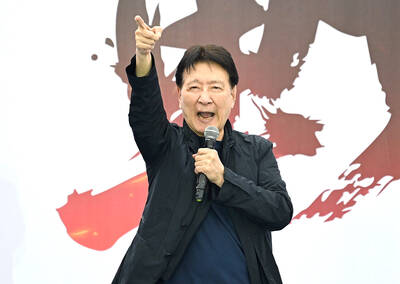
In a sudden move last week, opposition lawmakers of the Chinese Nationalist Party (KMT) and Taiwan People’s Party (TPP) passed a NT$780 billion special defense budget as a preemptive measure to stop either Chinese leader Xi Jinping (習近平) or US President Donald Trump from blocking US arms sales to Taiwan at their summit in Beijing, said KMT heavyweight Jaw Shaw-kong (趙少康), speaking to the Taipei Foreign Correspondents Club on Wednesday night in Taipei. The 76-year-old Jaw, a political talk show host who ran as the KMT’s vice presidential candidate in 2024, says that he personally brokered the deal to resolve
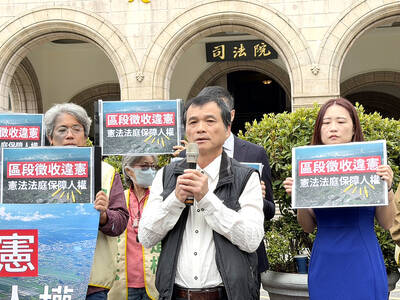
What government project has expropriated the most land in Taiwan? According to local media reports, it is the Taoyuan Aerotropolis, eating 2,500 hectares of land in its first phase, with more to come. Forty thousand people are expected to be displaced by the project. Naturally that enormous land grab is generating powerful pushback. Last week Chen Chien-ho (陳健和), a local resident of Jhuwei Borough (竹圍) in Taoyuan City’s Dayuan District (大園) filed a petition for constitutional review of the project after losing his case at the Taipei Administrative Court. The Administrative Court found in favor of nine other local landowners, but
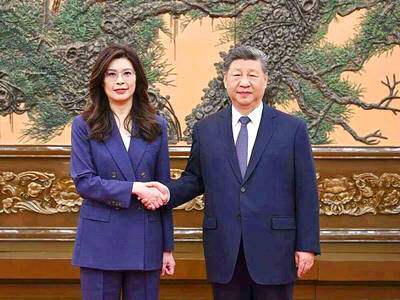
The Chinese Nationalist Party (KMT), alongside their smaller allies the Taiwan People’s Party (TPP), are often accused of acting on behalf of the Chinese Communist Party (CCP). Some go so far as to call them “traitors.” It is not hard to see why. They regularly pass legislation to stymie the normal functioning of the ruling Democratic Progressive Party’s (DPP) administration, and they have yet to pass this year’s annual budget. They slashed key elements of the government’s proposed NT$1.25 trillion (US$40 billion) special military budget, and in the smaller NT$780 billion package they did pass, it is riddled with provisions that


 RSS
RSS