


March 9 to March 15
“This land produced no horses,” Qing Dynasty envoy Yu Yung-ho (郁永河) observed when he visited Taiwan in 1697. He didn’t mean that there were no horses at all; it was just difficult to transport them across the sea and raise them in the hot and humid climate.
“Although 10,000 soldiers were stationed here, the camps had fewer than 1,000 horses,” Yu added.
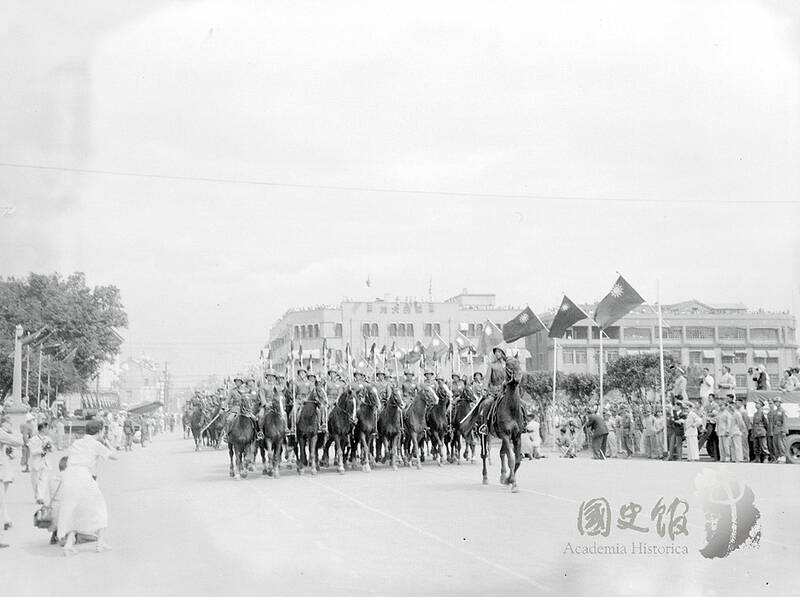
Photo courtesy of Taiwan Historica
Starting from the Dutch in the 1600s, each foreign regime brought horses to Taiwan. But they remained rare animals, typically only owned by the government or by prominent families. In 1875, a prized white horse that strayed into its neighbor’s rice paddies in Yunlin County’s Siluo Township (西螺) triggered a violent feud between three local clans that lasted two years.
The Japanese later established ranches across Taiwan. Still, on the eve of Taipei’s first formal horse races in November 1928, newspapers noted the shortage of local steeds and expressed hope that racing could spark more interest in breeding.
With the Year of the Fire Horse now underway, this week’s “Taiwan in Time” takes a brief look at the history of horses in Taiwan.
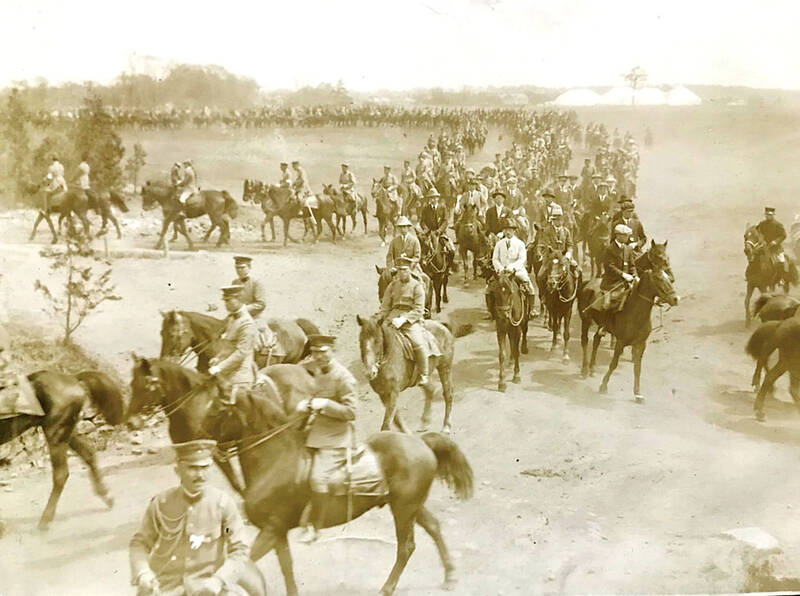
Photo courtesy of Kuo Shuang-fu
PRIZED ANIMAL
According to a National Museum of Natural Science article, horse fossils have been found in what was once a land bridge between Taiwan and Penghu, dating from 10,000 to 40,000 years ago. However, this population eventually disappeared.
The Dutch East India Company introduced a small number during its rule in the 17th century. When Ming loyalist Koxinga (also known as Cheng Cheng-kung, 鄭成功) attacked the Dutch in 1661, his trusted general Ma Hsin (馬信) — whose surname fittingly means “horse” — led a cavalry brigade from northwestern China. The area in Tainan where these mounts were stabled came to be known as Mabingying (馬兵營, “cavalry barracks”). A stone stele outside the Tainan Judicial Museum marks this past.
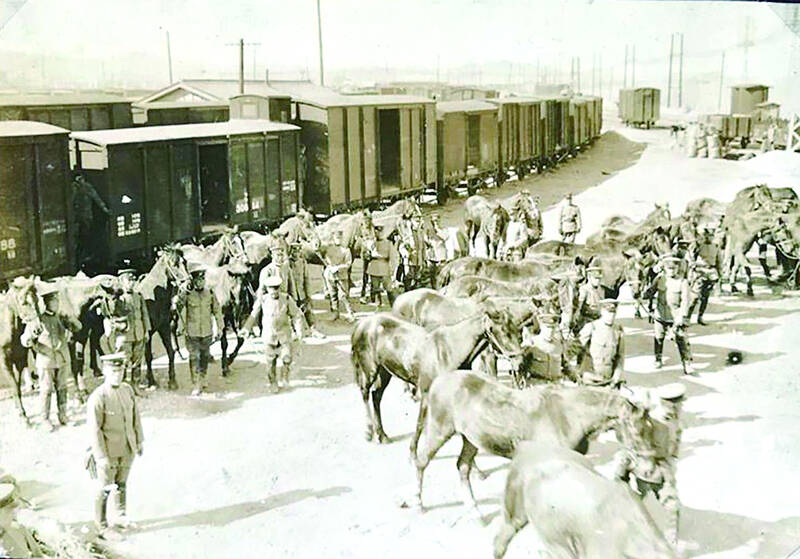
Photo courtesy of Kuo Shuang-fu
Some of these horses made it into local hands. In 1722, imperial commissioner Huang Shu-ching (黃叔敬) noted that Pingpu (plains Indigenous) groups in today’s Yunlin and Changhua counties were fond of raising horses and riding them bareback with remarkable speed and skill.
“Seeking the finest mares, they trade for them at double the price to increase their stock,” Huang wrote.
Prominent Han families in the area also kept horses. Later known as the “White Horse Incident,” the 1875 blood feud began when Lee Lung-hsi’s (李龍溪) beloved steed wandered into Liao Chueh-hui’s (廖雀輝) rice paddy and trampled on his crops. Liao’s son injured the animal while trying to chase it away, sparking an argument over compensation, states the Siluo Township Annals (西螺鎮志).
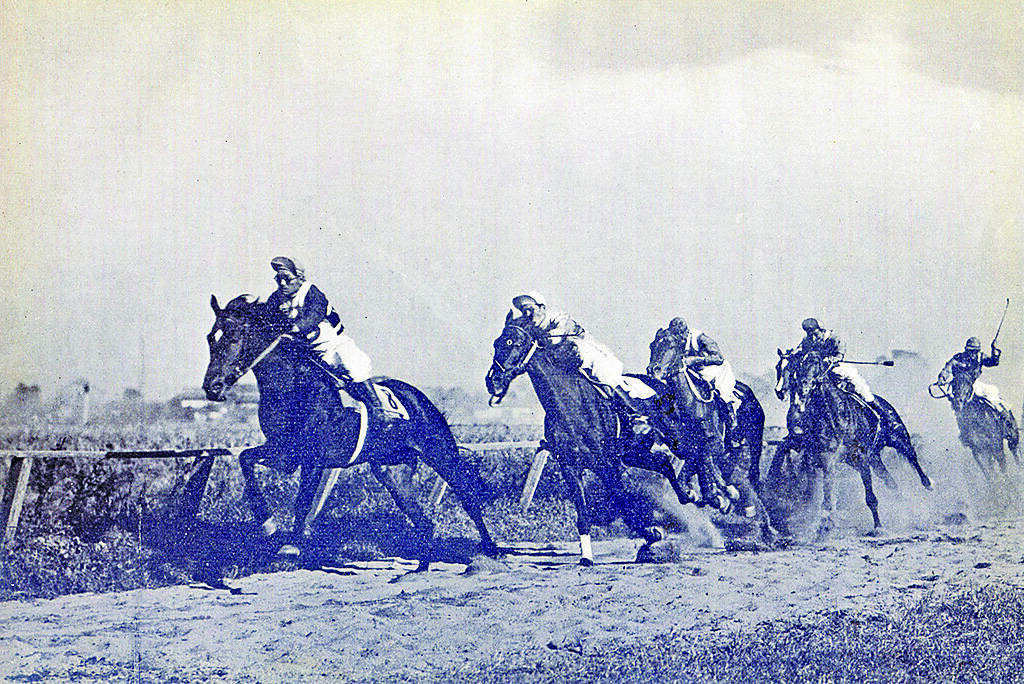
Photo courtesy of Kuo Shuang-fu
Unable to resolve the issue, Lee first killed Liao’s son, and Liao retaliated against Lee’s son. Lee then enlisted his in-laws, the Chungs (鍾), to help, while Liao summoned relatives from Nantou. Over two years, the two sides clashed dozens of times with several hundred people on each side. Only after the Chung headman was killed did officials intervene, arresting Lee and Liao and sentencing them both to death. The remaining Lees and Chungs then left the area.
EARLY JAPANESE EFFORTS
The Japanese brought about 300 warhorses to Taiwan in 1895 to secure their newly acquired colony. Many of these perished as they could not adapt to Taiwan’s climate and environment.
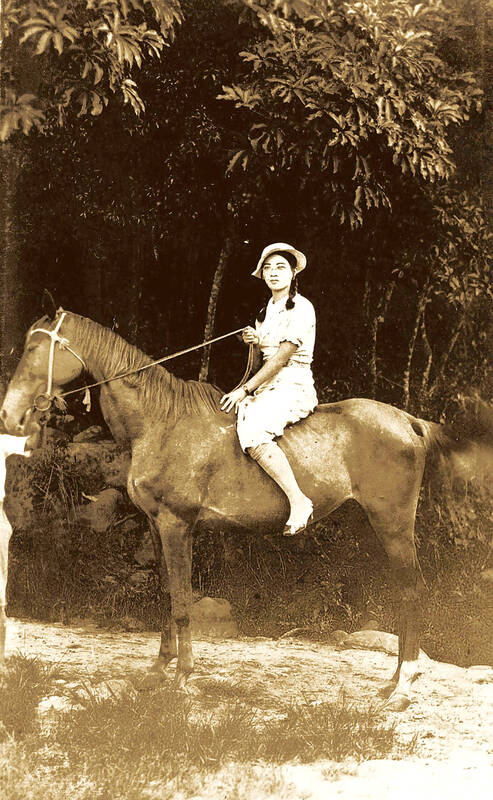
Photo courtesy of Kuo Shuang-fu
Additional mounts were later imported for military, police and transportation use, and a total of nine ranches were established across Taiwan. The elaborate 1935 Taiwan Expo even featured a horse exhibition hall, its facade adorned with two flying horses. About 10,000 visitors reportedly tried horseback riding there.
Early breeding efforts met with limited success, and as water buffalo and cattle were widely used for plowing, there was little demand for large numbers of horses in the colony — at least until Japan’s imperial ambitions intensified in the 1930s.
In 1936, the government launched a plan to breed 9,000 horses resistant to tropical conditions within a decade. They also staged “Horse Day” parades and other horse-themed patriotic events to promote the cause. However, they ended up reaching about a third of this target, according to an article by academic Shigeki Okazaki.
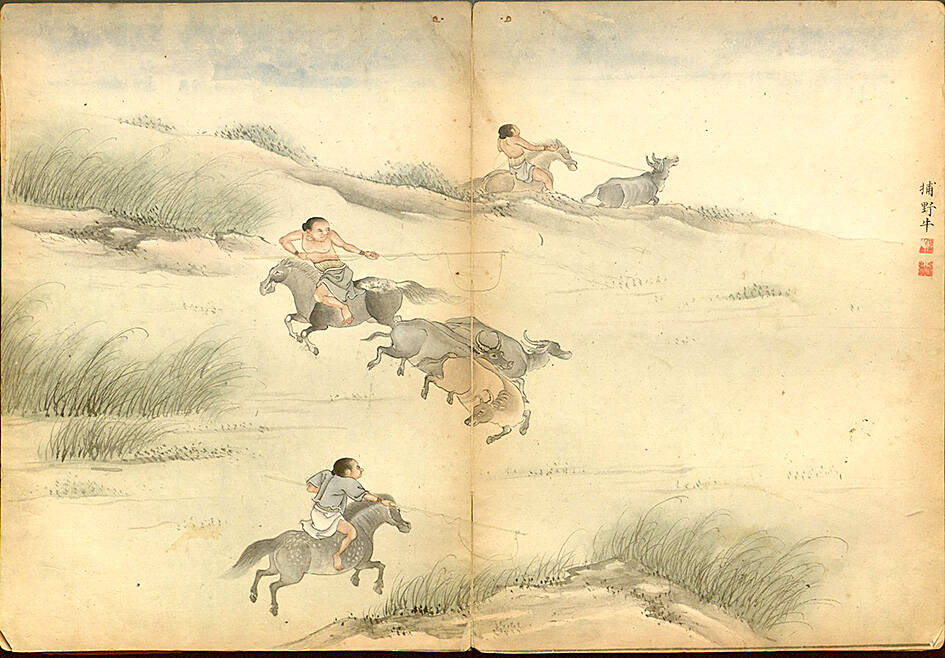
Photo courtesy of US Library of Congress
Riding competitions and equestrian displays were held during the first few decades of colonial rule, but not on formal tracks and without organized betting, writes Nahomi Wada in “Horse racing in Taipei during Japanese rule.” These were organized by the military and the butokai martial arts association.
One popular format, first staged in 1905, had riders gallop through the streets of Taipei following a trail of scattered paper. The trail would cut off at certain points and they had to search for clues to resume the route.
In 1907, two groups led by Japanese aristocrats proposed introducing formal horse racing to Taiwan, but the governor general rejected their bid. The following year, betting on horses was banned in Japan due to rising social problems stemming from gambling.
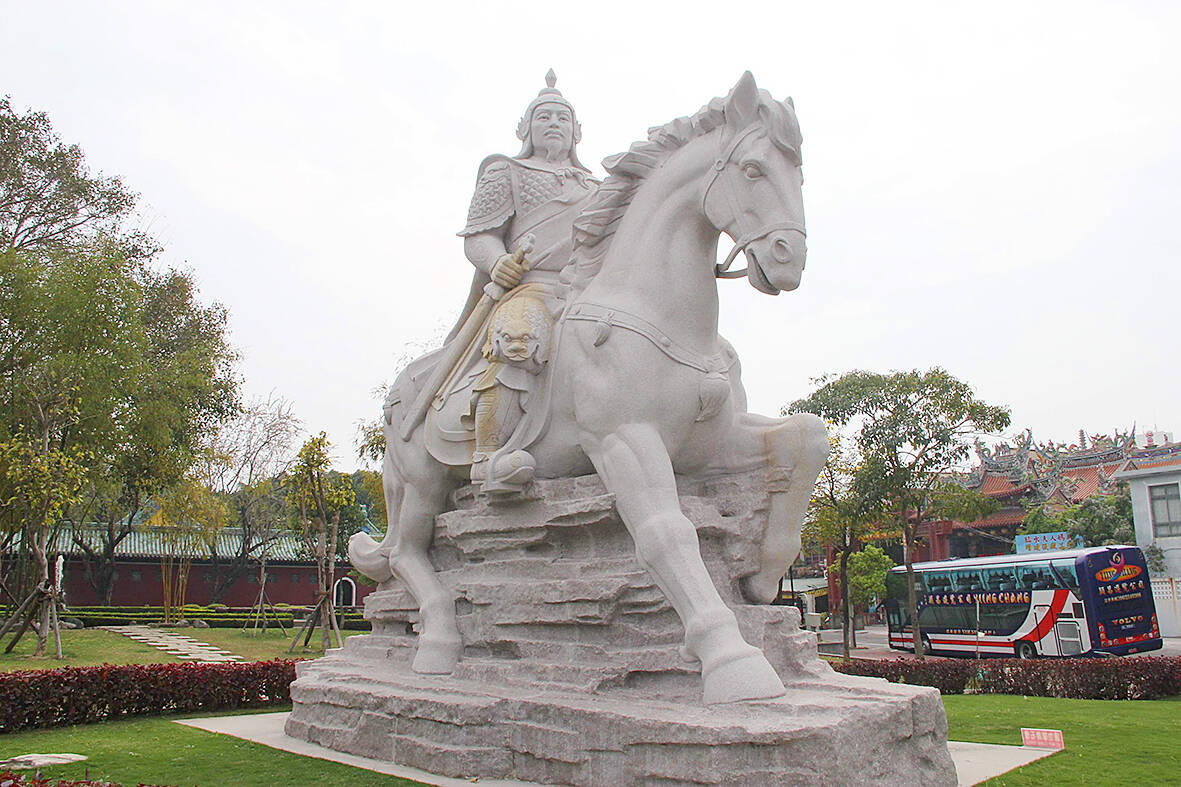
Photo: Huang Wen-chin, Taipei Times
RISE AND FALL OF HORSE RACING
The ban was lifted in 1923, and in November 1928 the first formal races were held in Taipei. About 15,000 spectators turned out on the second day, placing 3,548 wagers.
The Taipei Equestrian Association was established in December 1929 and decided to hold races twice a year, beginning on March 9, 1930. A total of 33,133 bets were made during that meet, and this number continued to grow in the following years.
The first designated racetrack was opened in 1934 by the Xindian River in today’s Guting (古亭) area, and additional facilities were built in Hsinchu, Taichung, Chiayi, Tainan, Kaohsiung and Pingtung. Social problems did arise from gambling, but the races continued.
Early riders borrowed or purchased older horses from the military, but younger racehorses were also imported from Japan. In 1938, the Horse Racing Act codified unified regulations, including racetrack specifications. The last races were held in 1943 as World War II intensified and equestrian resources were redirected to military use.
The Chinese Nationalist Party (KMT) never resumed horseracing after the war. They reportedly brought more than 500 warhorses to Taiwan after losing the Chinese Civil War 1949, and used the Japanese-built ranch at Houli (后里), Taichung for breeding and training. In 1981, the military began phasing out the use of horses, and the ranch opened to the public in 1984.
Today it remains the last of nine Japanese-era ranches still operating as a horse facility, now serving recreational and competitive purposes.
Taiwan in Time, a column about Taiwan’s history that is published every Sunday, spotlights important or interesting events around the nation that either have anniversaries this week or are tied to current events.
The arithmetic is straightforward and uncomfortable. By the end of 2025, Taiwan had committed itself to a 50-30-20 electricity mix — half natural gas, 30 per cent coal, 20 per cent renewables. The Ministry of Economic Affairs’s (MOEA) own monthly energy reports tell a different story. Natural gas reached 47.8 per cent of generation last year. Coal stood at 35.4 per cent, comfortably above its target ceiling. Renewables came in at 13.1 per cent, well short of the 20 per cent Taipei had pledged a decade earlier. Installed renewable capacity reached roughly half of the 12 gigawatts (GW) the government
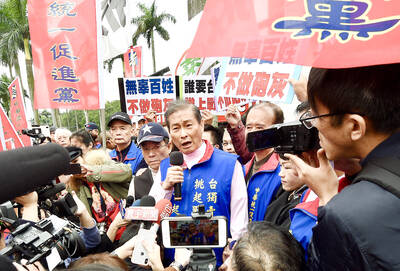
There are shadowy cabals plotting to sell out Taiwan to be annexed by China, by invasion if necessary. Fortunately, they are buffoons. In 2019, former Bamboo Union gangster and founder of the China Unification Promotion Party (CUPP), Chang An-le (張安樂, colorfully known as “White Wolf”), led a protest at the Legislative Yuan against comments made by then-premier Su Tseng-chang (蘇貞昌) that in the event of an attack by China, he would never surrender, but would protect the nation by fighting to the end, even if he only had a broom. Chang had party members bring a wooden casket that they
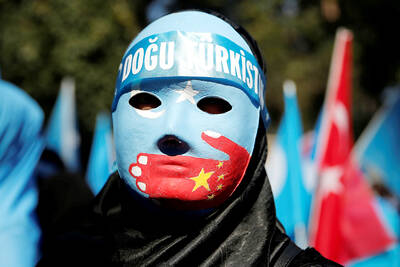
It seems every few days one bumps into one of those “real man” comments in which Taiwan is urged to “face reality” or similar, and “make a deal,” with the speaker implying that soon it will be too late. “Deal” advocates always present themselves as having a superior grip on reality, and the manly ability to make the “hard choice.” Their testosterone-laden language often echoes that of Taiwan sellout advocates. Note that such commentary always specifies a process (“make a deal, work with, make progress”), never the end state of what occupation by a violent authoritarian colonialist state will entail. In
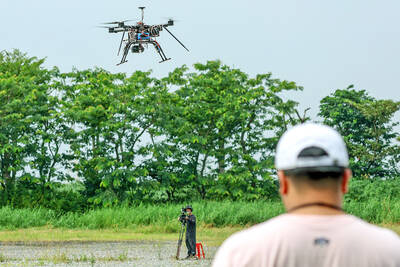
Taiwan’s drone exports are taking off, fuelled by the war in Ukraine, as Taiwanese companies seek a stake in the fast-growing global market for unmanned aerial vehicles (UAV). Low-cost drones used for reconnaissance and strikes are in high demand as governments around the world boost defense spending in the face of intensifying conflicts. A relative new player in the increasingly competitive industry, Taiwan’s pitch is to be an “Asian hub” for the production of UAVs and components free of Chinese materials, or “non-red.” That means its UAVs can be up to three times more expensive than their Chinese competitors, like the world’s biggest


 RSS
RSS