


Pamela Anderson was always a bit of an open book in interviews. No one ever told her not to be, or that because she talked about some things that she didn’t have to talk about everything. She didn’t know that she could draw her own line in the sand if a question made her feel uncomfortable.
And so she answered all manner of questions about her breasts, her body, her image, her boyfriends — partially because she was gracious and self-deprecating, partially because her body was, in some ways, her meal ticket and partially because the people asking these questions were more often than not respected journalists working for respected outlets.
From the moment that audience camera zoomed in on her in the Labatt T-shirt at a Canadian football game in 1989, the image of Pamela Anderson was, essentially, no longer her own. It belonged to everyone else.
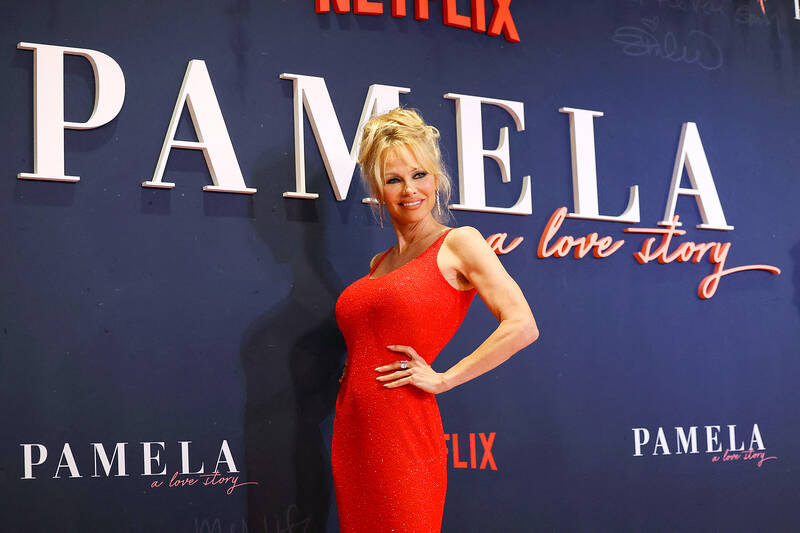
Photo: Reuters
By the time private home videos showing her and husband Tommy Lee having sex were stolen, reproduced and distributed for sale globally, no one seemed all that horrified on her behalf. They couldn’t even fake it when speaking to her. She wasn’t a person; She was just an object. And then, in some ways, it was done all over again many years later when the Hulu series Pam & Tommy was made without her involvement or consent.
Pamela, a Love Story, a new documentary from filmmaker Ryan White, gives Anderson the chance to tell her story her own way, from her earliest days to her Playboy debut, her Baywatch fame, her many marriages and up through her recent run on Boardway. She is still that open book, disarmingly funny and candid and uncynical, sitting there beautifully makeup free, letting the filmmakers and audience peer into her soul through many pages of journals going back to her childhood. It is a captivating watch, especially for those who never thought much about her at all.
Anderson’s life was and is immensely complex. Her parents’ relationship was volatile and sometimes violent. They lived on welfare for a time and she still remembers the taste of the powdered milk. She had a female babysitter who molested her for years. At age 12 she was raped by a 25-year-old. She learned early to leave her body and make her own little world, she says, and she knew from a young age that she had to get off of that island.
Like many women before and after her, Anderson didn’t feel beautiful growing up and after the sexual trauma, her body was a source of secret shame. Ironic that it was her body that would be her ticket out, ultimately. But modeling felt like playing a character, she said. Even when mostly nude, it didn’t feel like herself. Sometimes it was even fun.
There is a breeziness to Anderson, who, despite everything, does not think of herself as a victim. She doesn’t regret marrying Tommy Lee after four days of knowing him — her account of the quick courtship is quite amusing. At a certain point, though sick of always having to talk about her breasts, she used her image for a cause she cared about: PETA. She even sat through a roast under the condition that a sizable donation be made to the organization. She is a hopeful romantic who is hard not to root for.
She has made peace with many, many things, some simply by refusing to dwell, but one thing that still stings is the tape — such a clear violation of her privacy that you wonder what sort of culture and legal system would allow it to get as out of control as it did. That a series would attempt to make entertainment out of it just reopened old wounds and traumas. Even if it was done out of some altruistic motive to reframe the recent past, for Anderson, it was another group of people making money off of, what her son calls, the worst thing that’s ever happened to her.
As this documentary reminds, Anderson is still right here. She’s not some distant, deceased figure who needs to be speculated about or saved by miniseries. You can just ask her how she felt about it then, how she feels about it now: She’ll tell you.
You wonder if no one thought to ever ask her the right questions before, if we just weren’t listening carefully enough, or the wrong people were in the position to ask the questions. But I’m glad that this era of the biographical documentary is going strong, allowing for people like Anderson to correct the record themselves.
Besides, at 54 she’s moved on and has surprises yet, including a well-received Broadway run as Roxie Hart in Chicago. Nowadays would have been a canny choice for a closing montage for a documentary like this, but hearing it in Anderson’s perfectly imperfect voice is simply revelatory.
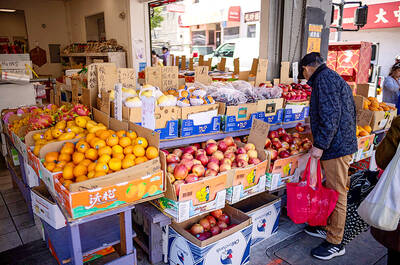
Ajay Verma, a consultant gastroenterologist at Kettering general hospital in Northamptonshire, says our gut is a “complex machine.” “It is constantly providing us with the nutrition we need, initially to grow and develop, and then for us to survive, thrive and repair from injury and illness.” How can we keep it functioning well? Put simply: “Make sure what you put into it is balanced, and that you clear out its waste products adequately,” Verma says. “In a general gastroenterology clinic, the most common conditions we see are irritable bowel syndrome (IBS), gastroesophageal reflux disease, inflammatory bowel disease and constipation,” says Nisha
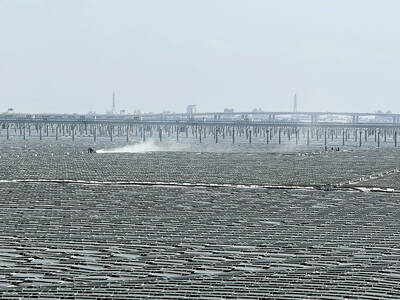
The arithmetic is straightforward and uncomfortable. By the end of 2025, Taiwan had committed itself to a 50-30-20 electricity mix — half natural gas, 30 per cent coal, 20 per cent renewables. The Ministry of Economic Affairs’s (MOEA) own monthly energy reports tell a different story. Natural gas reached 47.8 per cent of generation last year. Coal stood at 35.4 per cent, comfortably above its target ceiling. Renewables came in at 13.1 per cent, well short of the 20 per cent Taipei had pledged a decade earlier. Installed renewable capacity reached roughly half of the 12 gigawatts (GW) the government
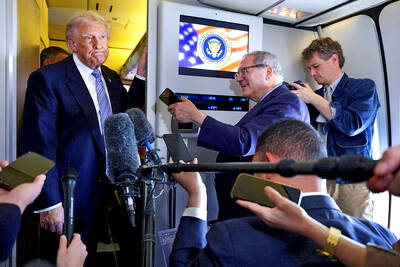
Last week US President Donald Trump was asked by a reporter whether he would speak on the phone to the President of Taiwan. “l’ll speak to him. I speak to everybody. We have that situation very well in hand,” Trump said. This marked the second time in a couple of weeks he had said he would talk to the President of Taiwan. In 2016 he famously took a call from then-president Tsai Ing-wen (蔡英文), when he was president-elect. Despite warnings that the apocalypse was nigh because of a phone call, the world quickly forgot about the conversation between two democratically-elected presidents.
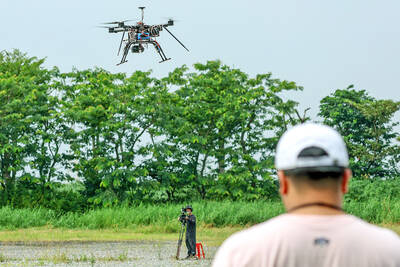
Taiwan’s drone exports are taking off, fuelled by the war in Ukraine, as Taiwanese companies seek a stake in the fast-growing global market for unmanned aerial vehicles (UAV). Low-cost drones used for reconnaissance and strikes are in high demand as governments around the world boost defense spending in the face of intensifying conflicts. A relative new player in the increasingly competitive industry, Taiwan’s pitch is to be an “Asian hub” for the production of UAVs and components free of Chinese materials, or “non-red.” That means its UAVs can be up to three times more expensive than their Chinese competitors, like the world’s biggest


 RSS
RSS