


Some of the world’s most prized works of contemporary Western art have been unveiled for the first time in decades — in Tehran.
Iranian President Ebrahim Raisi, a hard-line cleric, rails against the influence of the West. Authorities have lashed out at “deviant” artists for “attacking Iran’s revolutionary culture.” And the Islamic Republic has plunged further into confrontation with the US and Europe as it rapidly accelerates its nuclear program and diplomatic efforts stall.
But contradictions abound in the Iranian capital, where thousands of well-heeled men and hijab-clad women marveled at 19th and 20th-century American and European minimalist and conceptual masterpieces on display this summer for the first time at the Tehran Museum of Contemporary Art.
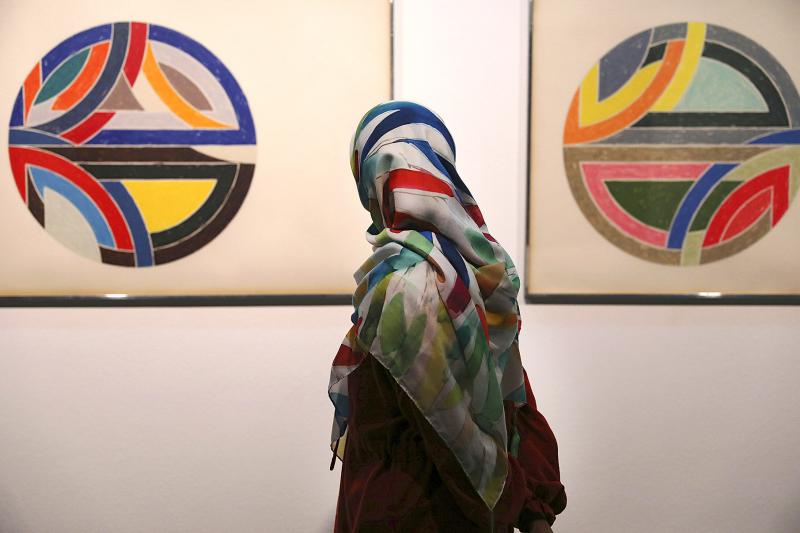
Photo AP
On a recent afternoon, art critics and students were delighted by Marcel Duchamp’s see-through 1915 mural, The Large Glass, long interpreted as an exploration of erotic frustration.
They gazed at a rare 4m untitled sculpture by American minimalist pioneer Donald Judd and one of Sol Lewitt’s best-known serial pieces, Open Cube, among other important works. The Judd sculpture, consisting of a horizontal array of lacquered brass and aluminum panels, is likely worth millions of dollars.
“Setting up a show with such a theme and such works is a bold move that takes a lot of courage,” said Babak Bahari, 62, who was viewing the exhibit of 130 works for the fourth time since it opened in late June. “Even in the West, these works are at the heart of discussions and dialogue.”
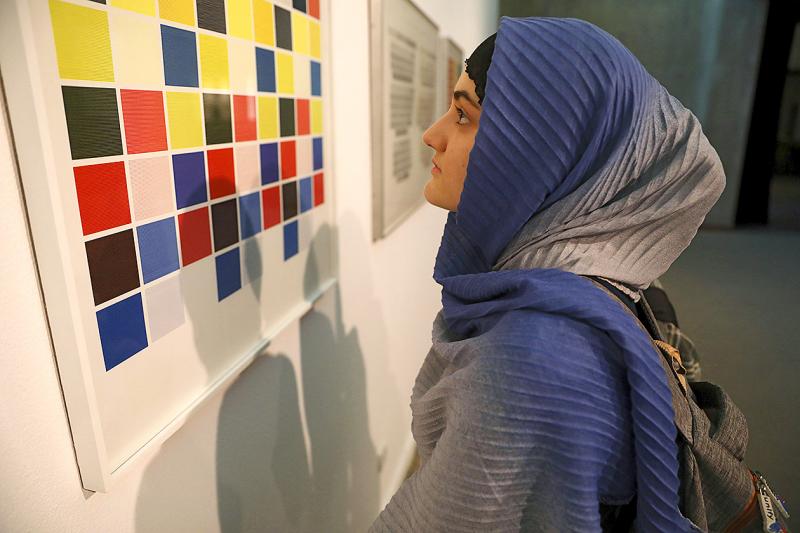
Photo: AP
The government of Iran’s Western-backed shah, Mohammad Reza Pahlavi, and his wife, the former Empress Farah Pahlavi, built the museum and acquired the multibillion-dollar collection in the late 1970s, when oil boomed and Western economies stagnated. Upon opening, it showed sensational works by Pablo Picasso, Mark Rothko, Claude Monet, Jackson Pollock and other heavyweights, enhancing Iran’s cultural standing on the world stage.
But just two years later, in 1979, Shiite clerics ousted the shah and packed away the art in the museum’s vault. Some paintings — cubist, surrealist, impressionist, even pop art — sat untouched for decades to avoid offending Islamic values and catering to Western sensibilities.
But during a thaw in Iran’s hard-line politics, the art started to resurface. While Andy Warhol’s paintings of the Pahlavis and some choice nudes are still hidden in the basement, much of the Warhol collection has been brought out to great fanfare as Iran’s cultural restrictions have eased.
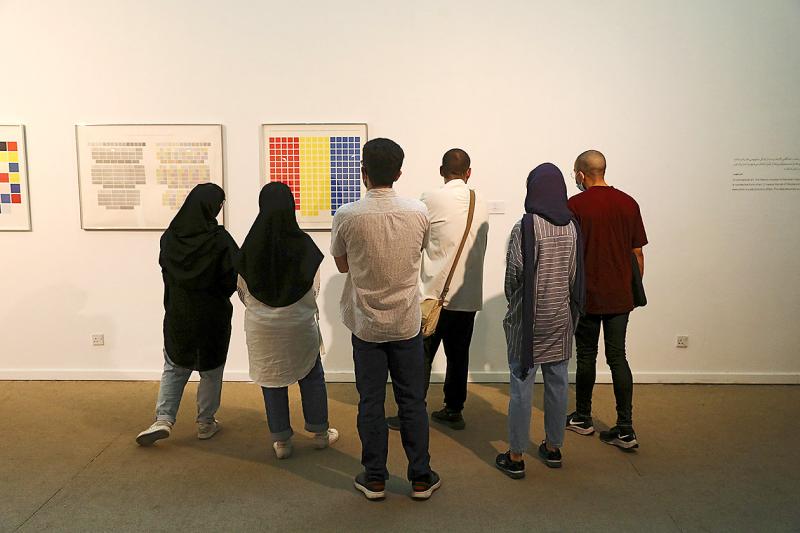
Photo AP
The ongoing exhibit on minimalism, featuring 34 Western artists, has captured particular attention. Over 17,000 people have made the trip since it opened, the museum said — nearly double the footfall of past shows.
Curator Behrang Samadzadegan credits a recent renewed interest in conceptual art, which first shocked audiences in the 1960s by drawing on political themes and taking art out of traditional galleries and into the wider world.
The museum’s spokesperson, Hasan Noferesti, said the size of the crowds coming to the exhibition, which lasts until next month, shows the thrill of experiencing long-hidden modern masterpieces.
It also attests to the enduring appetite for art among Iran’s young generation. Over 50 percent of the country’s roughly 85 million people are under 30 years old.
Despite their country’s deepening global isolation, and fears that their already limited social and cultural freedoms may be further curtailed under the hard-line government elected a year ago, young Iranians are increasingly exploring the international art world on social media. New galleries are buzzing. Art and architecture schools are thriving.
“These are good works of art, you don’t want to imitate them,” said Mohammad Shahsavari, a 20-year-old architecture student standing before Lewitt’s cube structure. “Rather, you get inspiration from them.”
Just after 6am, I walked up to the ticket gate at Taipei Main Station and entered the Taiwan Railway platform without scanning any ticket; instead, I flashed the Sanrio Fun Rail pass on my phone to the gate worker and was admitted. I found my train and prepared to board. My destination? This very same station. I was embarking on a 13-hour journey on one of two round-the-island trains operated by ezTravel. They run each day, one counterclockwise around the island and one clockwise. They differ in a number of ways from an ordinary Taiwan Railway train and can make for
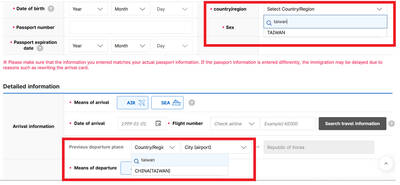
Jason Han says that the e-arrival card spat between South Korea and Taiwan shows that Seoul is signaling adherence to its “one-China” policy, while Taiwan’s response reflects a reciprocal approach. “Attempts to alter the diplomatic status quo often lead to tit-for-tat responses,” the analyst on international affairs tells the Taipei Times, adding that Taiwan may become more cautious in its dealings with South Korea going forward. Taipei has called on Seoul to correct its electronic entry system, which currently lists Taiwan as “China (Taiwan),” warning that reciprocal measures may follow if the wording is not changed before March 31. As of yesterday,
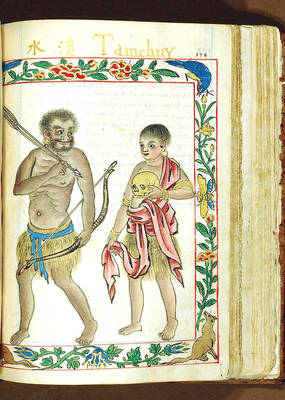
The Portuguese never established a presence on Taiwan, but they must have traded with the indigenous people because later traders reported that the locals referred to parts of deer using Portuguese words. What goods might the Portuguese have offered their indigenous trade partners? Among them must have been slaves, for the Portuguese dealt slaves across Asia. Though we often speak of “Portuguese” ships, imagining them as picturesque vessels manned by pointy-bearded Iberians, in Asia Portuguese shipping between local destinations was crewed by Asian seamen, with a handful of white or Eurasian officers. “Even the great carracks of 1,000-2,000 tons which plied
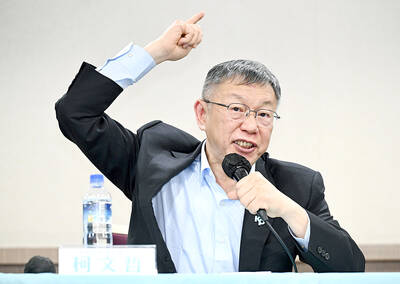
On Thursday, former Taipei mayor and founder of the Taiwan People’s Party (TPP) Ko Wen-je (柯文哲) was sentenced to 17 years in prison and had his civil rights suspended for six years over corruption, embezzlement and other charges. Seven others related to the case were also handed prison sentences, while two were found not guilty. It has been a bad week for the TPP. On Tuesday, prosecutors charged Chinese immigrant Xu Chunying (徐春鶯) with suspicion of taking part in Beijing-directed election interference. Xu has strong links to the TPP, which once offered her a party list legislator nomination. Tuesday also


 RSS
RSS