


In the world of Chinese-speaking media, “Sydney Daddy” is an Australian YouTube phenomenon: a kind of Alan Jones for Mandarin-speakers, who has found unexpected success, not just in Australia but throughout the diaspora.
From his home in Sydney, Edgar Lu, 41, does a talk-back style program two or three times a week, interviewing politicians and local community figures or ranting on issues he cares about.
“I think by Australian standards, I’m center-right,” he says.
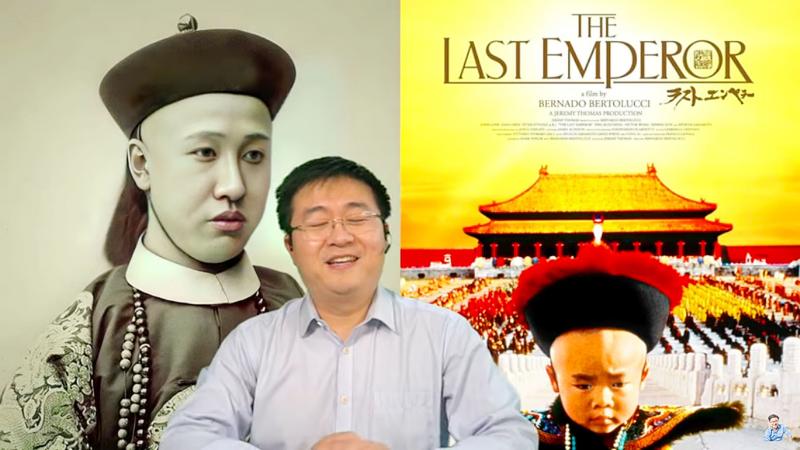
Photo: Screenshot
He says he’s not “anti-CCP [Chinese Communist Party], but at the same time, I don’t particularly care what they think.”
YouTube offers a platform that is free from the censorship that applies to the popular China-based WeChat, allowing Lu to build his rightwing profile and earning him a sizable audience.
But some are less than enamored of Lu and his pro-Trump views, accusing him of confecting a rightwing stance in order to attract eyeballs.
On Twitter, the Chinese-Australian dissident artist and political cartoonist Badiucao (巴丟草) has engaged in vigorous criticism of Lu, despite both parties being less than enamored of the CCP. Recently it has boiled over into threats of legal action by Badiucao over Lu using his artwork on his channel.
ECLECTIC TOPICS
Lu’s topics are an eclectic mix.
During the election he has aired a commentary video about politician Gladys Liu, stating that although Liu had been accused of being “a CCP spy” (something she denies) he would suggest voting for her in comparison to Labor’s Carina Garland who “allegedly supported Black Lives Matter.”
He has done an interview with former Chinese diplomat Han Yang, who is a Labor supporter. As they discussed why Yang was supporting Labor, Sydney Daddy made it clear he was a Liberal supporter.
More controversially on Twitter, he has resurrected allegations made by a former member of Young Labor, Kathy Sherriff, about an alleged historical rape by former leader Bill Shorten at a camp when she was 16.
The allegations were strenuously denied by Shorten and have been investigated, but not pursued by the Victorian police due to inadequate evidence.
Lu has accused “the leftist media” of failing to take up this issue with sufficient vigor.
In the past, Lu regularly commentated on Donald Trump (he’s a supporter of his policies on the economy, immigration and foreign policy, though not of the Jan. 6 Capitol Hill riot). Domestically the topics that are hot within the community include the influence of the CCP, racism, COVID-19 lockdowns and security issues.
He has interviewed the veteran Liberal senator Eric Abetz about his questions to Chinese-Australian witnesses in a parliamentary committee in October 2020. During the inquiry, which was investigating issues affecting diaspora communities in Australia, Abetz demanded the witnesses unconditionally condemn “the Chinese Communist party dictatorship.”
While Abetz was lashed by the English-speaking media for the comments, which condemned by some as racist and McCarthyist, Lu supported Abetz’s position. In the interview, Abetz explained that he had been told by Chinese community members about the CCP influence and that he thought it was important leaders should condemn the CCP to prove that they were not acting in the CCP’s interests.
Opinionated, chatty and, at times, probing and provocative are the words that best sum up Lu.
YouTube does not censor most topics, meaning Lu’s audience are getting a very different take on the Ukraine war or Australia-China relations to those relying on the China-based WeChat platform.
“I have been covering COVID from the very rumor about it in China. I think the Chinese government’s cover-up and reluctance to cooperate in the inquiry of its origin is despicable, and the main cause of any discrimination towards the Asian community worldwide,” he said.
“The #stopasianhate campaign, which suppresses criticism of this elephant in the room in the name of anti-racism, is hijacked and something I strongly disagree [with] and campaign against.”
WHY ‘SYDNEY DADDY’?
Why “Sydney Daddy”? Because that’s what he is.
Lu took on parenting responsibilities full-time after his wife returned to her career, and decided to start his own YouTube channel in 2019.
“Back then, I didn’t think I could make this a full-time job, but right now, with 170,000 subscribers, yes, you can definitely have a middle class life with that,” he says.
Lu has a background in the media. Before he had kids, he worked as a translator for the Discovery Channel and migrated to Australia in 2014.
About 20 percent of his viewers are in Australia, about 17 percent in the US, 15 percent in Canada, and more in Japan, Taiwan and Europe. In Australia he seems to be popular with middle-aged Chinese-speaking men, who are increasingly getting their news from YouTube rather than WeChat.
Lu says he doesn’t know that much about his Australian audience but he believes his program resonates with Chinese-Australians who have concerns about national security as well as with people in business.
Sydney Daddy says his main competitors for eyeballs are overseas YouTubers, as there are few in Australia.
“My dream was, like, having a lot of people who get talking, so we can do public debates on our platforms,” he says.
Being a Mandarin-speaking shock-jock has its risks, however. Recently he received a concerns notice — the first step in a defamation action — from someone in the community in Australia. It has clearly rattled him.
PLAYING IT SAFE
Lu says he tries to limit his interaction with his audience to online exchanges because of security issues.
“Two days ago, some guy in a 7-11, he’d recognised me, asked me if I’m Sydney Daddy, and I was like, running away from him as quickly as I can, because I don’t want people to recognise where I live.”
“When I go out anywhere I wear a mask even before this pandemic,” he adds.
“Behind my fear is the actual fear. To be honest, it’s quite hard to actually define what’s going to happen to me but this fear — I think everyone from China mainland [feels it]. Whether you just voice your opposition or voice your political view they all have this concern — they will get to you sooner or later.”
Lu says he’s worried about retaliation from the CCP. While he has received no direct messages from official Chinese government sources, he said people who have experience with the Chinese government have warned him not to go back to China.
But it’s not just the Chinese government he fears; it’s “anyone who is pro-Chinese government who would like to make me an example”, he says.
“If someone wants to get a promotion, they will get you.”

Just after 6am, I walked up to the ticket gate at Taipei Main Station and entered the Taiwan Railway platform without scanning any ticket; instead, I flashed the Sanrio Fun Rail pass on my phone to the gate worker and was admitted. I found my train and prepared to board. My destination? This very same station. I was embarking on a 13-hour journey on one of two round-the-island trains operated by ezTravel. They run each day, one counterclockwise around the island and one clockwise. They differ in a number of ways from an ordinary Taiwan Railway train and can make for
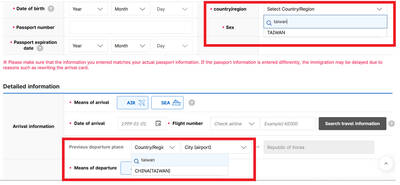
Jason Han says that the e-arrival card spat between South Korea and Taiwan shows that Seoul is signaling adherence to its “one-China” policy, while Taiwan’s response reflects a reciprocal approach. “Attempts to alter the diplomatic status quo often lead to tit-for-tat responses,” the analyst on international affairs tells the Taipei Times, adding that Taiwan may become more cautious in its dealings with South Korea going forward. Taipei has called on Seoul to correct its electronic entry system, which currently lists Taiwan as “China (Taiwan),” warning that reciprocal measures may follow if the wording is not changed before March 31. As of yesterday,
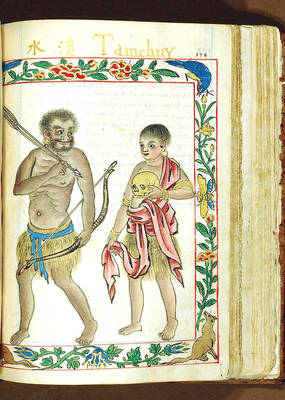
The Portuguese never established a presence on Taiwan, but they must have traded with the indigenous people because later traders reported that the locals referred to parts of deer using Portuguese words. What goods might the Portuguese have offered their indigenous trade partners? Among them must have been slaves, for the Portuguese dealt slaves across Asia. Though we often speak of “Portuguese” ships, imagining them as picturesque vessels manned by pointy-bearded Iberians, in Asia Portuguese shipping between local destinations was crewed by Asian seamen, with a handful of white or Eurasian officers. “Even the great carracks of 1,000-2,000 tons which plied

On Thursday, former Taipei mayor and founder of the Taiwan People’s Party (TPP) Ko Wen-je (柯文哲) was sentenced to 17 years in prison and had his civil rights suspended for six years over corruption, embezzlement and other charges. Seven others related to the case were also handed prison sentences, while two were found not guilty. It has been a bad week for the TPP. On Tuesday, prosecutors charged Chinese immigrant Xu Chunying (徐春鶯) with suspicion of taking part in Beijing-directed election interference. Xu has strong links to the TPP, which once offered her a party list legislator nomination. Tuesday also


 RSS
RSS