


The license plate BMW-8888 went for NT$890,000 (US$30,333) in a 2016 auction, while VVV-8888 fetched NT$881,000 in 2019. Now, the Directorate-General of Highways is trying to figure out the next winning letter combination through an online survey — popular South Korean boy band BTS is a no-brainer, but what’s up with BUG and BUM?
So far, the BMW and VVV series are the only “special” plate letters that are available outside of the regular alphabetical order, and they are periodically distributed to local motor vehicle offices to be auctioned off.
Mandarin and Hoklo (also known as Taiwanese) are both rich in numeronyms — numbers used to approximate certain words and phrases. Some are traditional (in Mandarin “four” sounds like “death” and “nine” sounds like “longevity”), but Internet users have created a whole vocabulary of new combinations that are popular with license plate bidders.
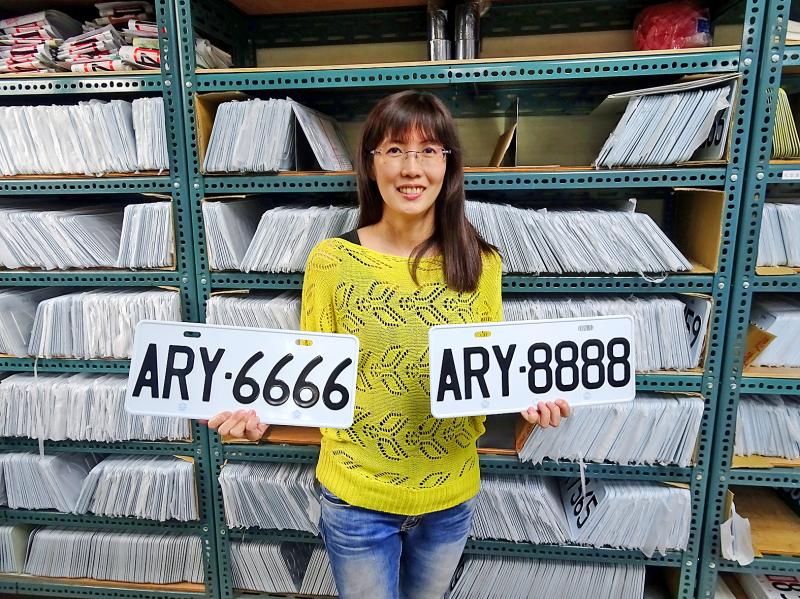
Photo courtesy of Changhua Motor Vehicles Office
A string of four eights — the number sounds like “get rich” in Mandarin — is consistently the most coveted combination, but people also like sixes (good fortune). VVV-6688 was sold in November last year for NT$121,000 and BMW-0520 (which is meant to sound like “I love you” in Mandarin) netted NT$110,000 in February.
Obviously, the number four is omitted from the system entirely.
The remainder of the plates are distributed in the usual order — the Taipei City Motor Vehicles Office is now at BQQ for private cars and trucks, for example, but even these plates are put up for auction first, says Huang Chun-ping (黃俊評), the office’s vehicle management section chief.
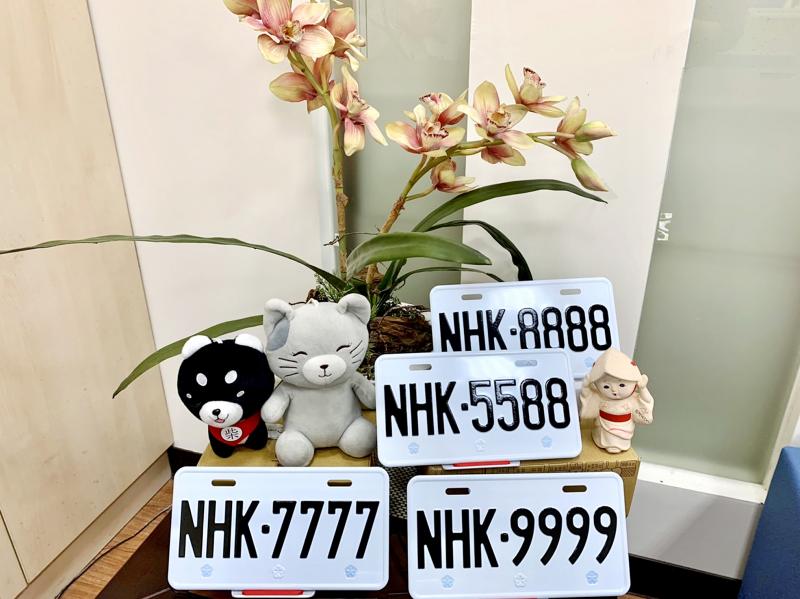
Photo: Han Cheung, Taipei Times
Last Tuesday, BQQ-8888 sold for NT$300,000 on 159 bids, while BQQ-7777 went for NT$137,000 on 67 offers. In third place was BQQ-1888 for NT$122,000. This is a bit of an anomaly, Huang says, as usually the four-in-a-row numbers go higher.
“It’s hard to predict what people will like,” he says.
About 800 plates were auctioned off for BQQ, and the rest are being handed out normally. The next auction for BMW and VVV at the Taipei office will take place next month, while the survey will close on May 6.
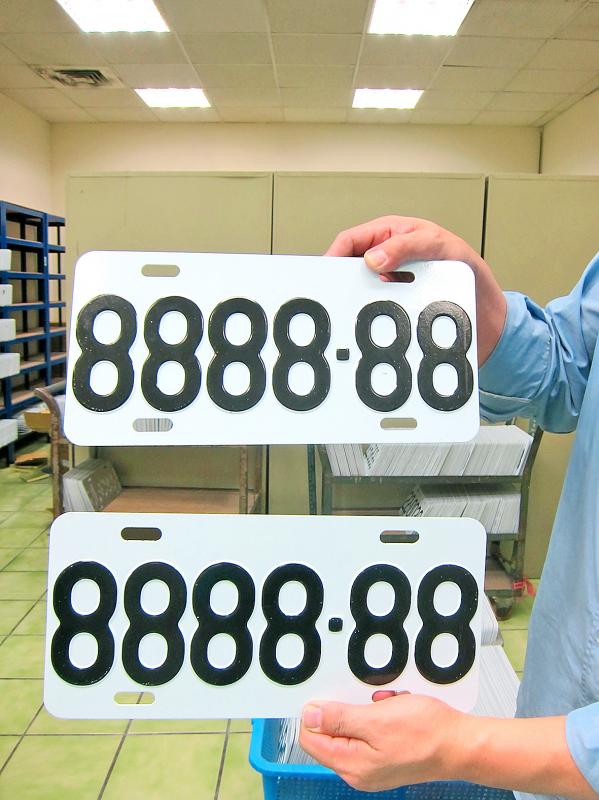
Photo: Tsai Wei-chi, Taipei Times
ASTOUNDING PRICES
The government first started auctioning special license plate numbers during the late 1980s, and the sale of AC-8888 in 1992 for NT$600,000 remained a national record for 19 years until 88-8888 fetched an astounding NT$3,589,000 in 2011.
People used to arrive early at the local motor vehicle office to bid in person, but now everything is done online. The Directorate-General of Highways has been releasing BMW and VVV plates in small increments for the past five years or so. In November, they gave the Taipei office VVV-0359 to VVV–0390 plus the much more attractive VVV-6688. VVV-0388 was the second-most popular of this batch, though it sold for just NT$21,000.
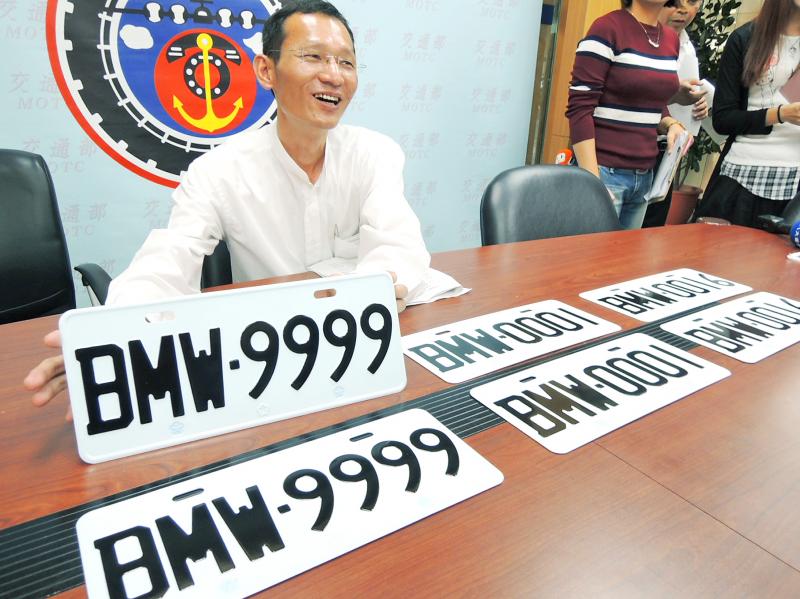
Photo: Huang Li-hsiang, Taipei Times
Huang says the starting price for the numbers are divided into three tiers. Tier one is four identical numbers in a row, while the second tier is two-and-two (6688) or consecutive numbers (5678). The rest are tier three. After the auction, people can pay NT$2,000 to choose from the leftover tier three numbers.
The Taipei office alone made more than NT$246 million last year through this venture.
Other recently popular numbers have been 0857 (“your daddy has money” in Taiwanese), 5168 (“I’ll make money all the way,” in Mandarin), as well as more off-the-wall ones such as 9527, a reference to the 1993 Stephen Chow (周星馳) classic comedy The Flirting Scholar (唐伯虎點秋香).
Popular letter combinations in the past include AMG (a Mercedes Benz model) and AMY (for the given name), Huang says. AMG-8888 was originally sold for a record-breaking NT$3.8 million in 2015, but the winner failed to pay; it went for NT$889,000 in the re-auction. AMG-6666 fetched NT$299,900.
Huang says a number that some avoid is 87 — which sounds like “idiot” in Taiwanese, but media reports show that some younger people are embracing the number. When pronounced in Mandarin, it sounds more like baqi (霸氣), which roughly translates to “aura of dominance.”
Motorcycle plates currently start with the letter N, and in December the Chiayi motor vehicle office touted its NHK (initials for Japan Broadcasting Corporation) plates to celebrate the friendship between the two countries, especially for Japan’s help with COVID-19 vaccines last year.
There have been attempts to game the system — last month, a technician at Kaohsiung’s motor vehicle office was caught rigging the auction so that a client could win an 8888 plate. Otherwise, the plate is already bound to the bidder’s vehicle, and there’s no way they can resell it.
Furthermore, plate numbers are not reused in Taiwan, making them even more valuable.
“You’ll never be able to get the number again,” Huang says. “That’s why they release them slowly, so everyone gets a chance.”
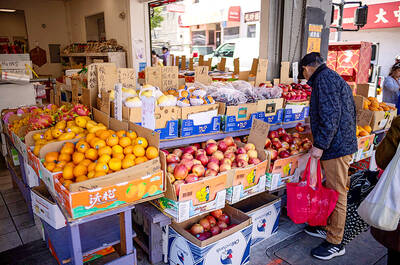
Ajay Verma, a consultant gastroenterologist at Kettering general hospital in Northamptonshire, says our gut is a “complex machine.” “It is constantly providing us with the nutrition we need, initially to grow and develop, and then for us to survive, thrive and repair from injury and illness.” How can we keep it functioning well? Put simply: “Make sure what you put into it is balanced, and that you clear out its waste products adequately,” Verma says. “In a general gastroenterology clinic, the most common conditions we see are irritable bowel syndrome (IBS), gastroesophageal reflux disease, inflammatory bowel disease and constipation,” says Nisha
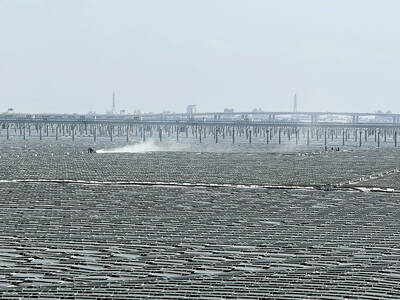
The arithmetic is straightforward and uncomfortable. By the end of 2025, Taiwan had committed itself to a 50-30-20 electricity mix — half natural gas, 30 per cent coal, 20 per cent renewables. The Ministry of Economic Affairs’s (MOEA) own monthly energy reports tell a different story. Natural gas reached 47.8 per cent of generation last year. Coal stood at 35.4 per cent, comfortably above its target ceiling. Renewables came in at 13.1 per cent, well short of the 20 per cent Taipei had pledged a decade earlier. Installed renewable capacity reached roughly half of the 12 gigawatts (GW) the government
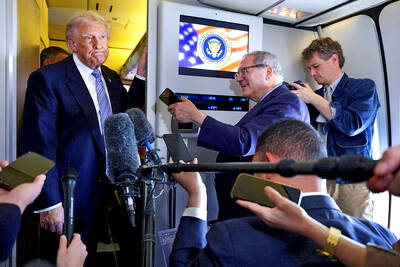
Last week US President Donald Trump was asked by a reporter whether he would speak on the phone to the President of Taiwan. “l’ll speak to him. I speak to everybody. We have that situation very well in hand,” Trump said. This marked the second time in a couple of weeks he had said he would talk to the President of Taiwan. In 2016 he famously took a call from then-president Tsai Ing-wen (蔡英文), when he was president-elect. Despite warnings that the apocalypse was nigh because of a phone call, the world quickly forgot about the conversation between two democratically-elected presidents.
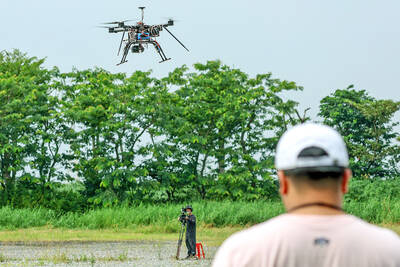
Taiwan’s drone exports are taking off, fuelled by the war in Ukraine, as Taiwanese companies seek a stake in the fast-growing global market for unmanned aerial vehicles (UAV). Low-cost drones used for reconnaissance and strikes are in high demand as governments around the world boost defense spending in the face of intensifying conflicts. A relative new player in the increasingly competitive industry, Taiwan’s pitch is to be an “Asian hub” for the production of UAVs and components free of Chinese materials, or “non-red.” That means its UAVs can be up to three times more expensive than their Chinese competitors, like the world’s biggest


 RSS
RSS