


For the past five years, Catrina Cowart started most of her days at 5am with a live-streamed call from China. Through a tutoring app called VIPKid, the freelance writer in Lexington, Kentucky earned US$21 an hour teaching English to Chinese kids, more than what she would have made at a local school. But her routine ended this summer after Beijing decreed a large portion of its US$100 billion private education sector illegal.
In moves that were much harsher than expected, Chinese regulators in July banned institutions teaching the school curriculum from raising capital, going public or even making profits. Also prohibited was the hiring of foreign tutors, who over the years made billions of dollars for burgeoning startups like VIPKid.
While Beijing’s ban was intended to prevent companies from capitalizing on parental paranoia, tens of thousands of American instructors paid a toll. For Cowart, losing the steady income stream is manageable, but what’s more difficult is cutting ties with her students, many of whom had been with her since they were toddlers.
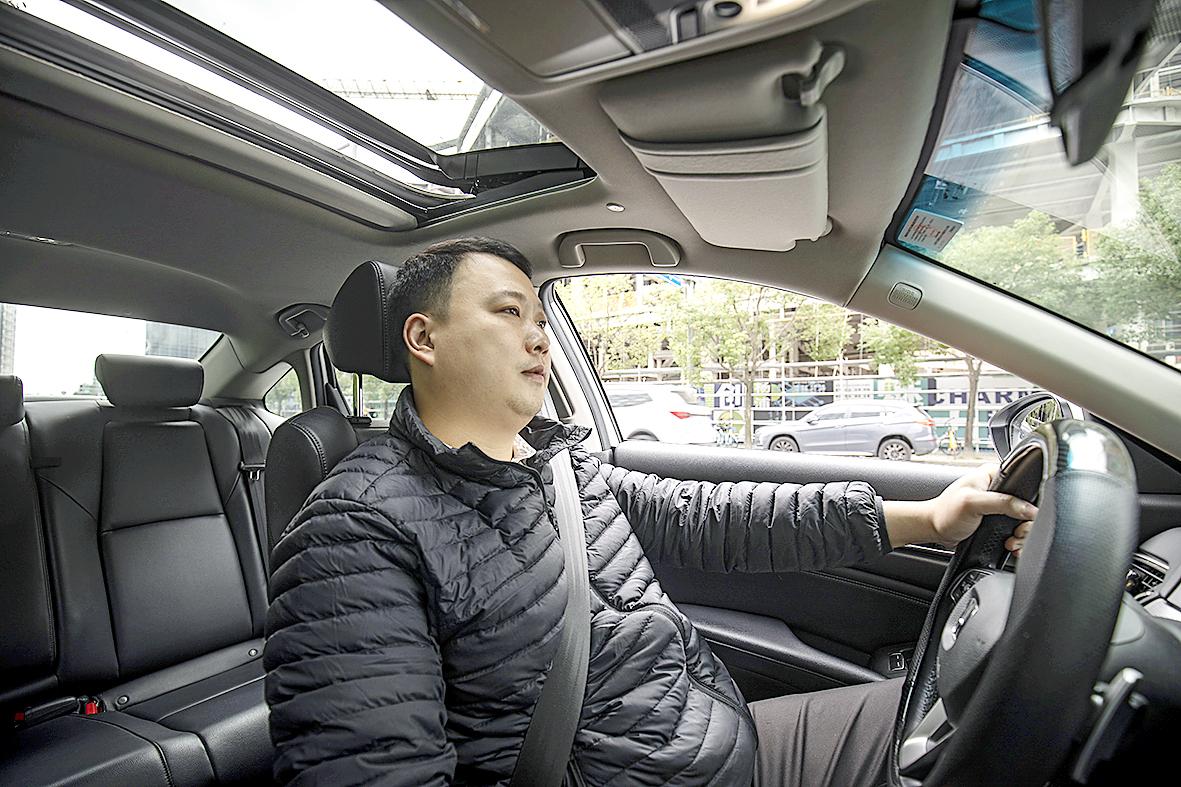
Photo: Bloomberg
“It’s upsetting. I do miss them. I feel bad about it,” Cowart said in an interview, after wrapping up her last class. “I hope they can get in touch with me.”
RACKDOWN
After kicking off a year ago, China’s big tech crackdown has forever changed the lives of hundreds of millions of people in China and beyond. President Xi Jinping’s (習近平) campaign quickly touched everything from education and e-commerce to finance, games and the gig economy, rattling investors and cowing the country’s billionaires into silent submission. Along the way, the top-down reforms rattled the worlds of everyday people like Cowart and her students, who are still trying to adjust.
China’s clampdown started with billionaire Jack Ma (馬雲) and his fintech empire Ant Group last November. In the ensuing weeks, Beijing’s antitrust watchdog unveiled a new guideline to curb monopolies and probed Alibaba Group Holding. Other Internet giants like Tencent Holdings, Meituan and Didi Global soon landed in Beijing’s sights.
Still, the tutoring ban was a stunner. Venture firms poured billions of dollars into the sector, figuring that tiger parents in China would pay up for their kids’ education. Then literally overnight, it was gone. Companies like ByteDance and TAL Education Group shut down their online products and training centers for kids, laying off thousands. Investors around the world questioned whether China was still investable.
Cowart’s last session was with one of her first students who she calls Francis. When he started, Cowart had to mime the entire class just to get the little boy’s attention. In return, Francis would innocently draw on the screen all the ways his tutor could die — from getting eaten by a whale to falling off a cliff.
Over time, he learned how to express himself in English words instead of pictures, Cowart said. They befriended each other on WeChat before VIPKid halted its service, but many other students weren’t so lucky.
For the past decade or so, China’s internet firms used one dependable tactic to supercharge their growth — burning money. Aided by their deep-pocketed investors, startups would give away generous coupons and subsidies to lure new users and elbow out smaller competitors. But once they achieved market dominance, it would be time for users to pay back. That’s proven to be a winning strategy in arenas like live-streaming, bike-sharing, and most recently, online grocery.
But regulators have started to curb arbitrage pricing and other unfair behaviors that could lead to monopoly.
GIG ECONOMY
Sheng Gang, a Didi driver since 2015, witnessed the change first-hand. During his first week with Didi, he made what was equivalent to his monthly salary working as a computer repair mechanic, thanks to the app’s hefty driver bonuses.
The father of a 10-year-old soon quit his day job and started driving for Didi full-time. But just as Didi went on to take over a local competitor and then Uber’s China business to land a supremacy in the local ride-sharing market, Sheng’s bonuses shrank.
It was only after Beijing launched a cybersecurity investigation into Didi in July that Sheng started to switch to other platforms. Regulators ordered the ride-hailing leader to stop new user registrations and removed its products from local app stores to prevent potential security risks from proliferating during the ongoing probe.
Beijing’s scrutiny came right on the heels of Didi’s US listing, which is now widely viewed as a hastily made decision without the government’s blessing. Now, any Chinese company with more than 1 million users will have to get a security clearance before they can list in other nations.
Didi’s setback has translated into a 30 percent decline in income for Sheng, he said, as the company keeps losing users. But competition is back for the first time in years as drivers like Sheng switch in between a slew of services, gaming their systems based on hours and locations to earn the biggest fares.
“We are not going to put our eggs in one basket,” he said. “Whichever platform pays better, we go and drive for that one.”
‘COMMON PROSPERITY’
To be sure, China’s tech crackdown — part of Xi’s bid to build a fairer society with “common prosperity” — has done good for many people. Schoolkids are now encouraged to spend more time on sports after the government eased their homework burden. Delivery riders and other gig-economy workers are covered with better packages and insurance, while tech giants and their founders donate billions of dollars to social causes like education and climate.
Companies like ByteDance and Kuaishou Technology have mandated shorter working hours for its employees, breaking away from the grueling 996 culture where they routinely labor from 9am to 9pm six days a week. Just two years ago, Alibaba’s Ma called the schedule “a huge blessing” to young people.
Roger Huang used to call Ma his boss. The 58-year-old retail veteran helped Alibaba set up its Tmall online marketplace in 2008. Now he’s running a skincare startup, selling lotions and creams on Tmall and other e-commerce sites. Rival platforms used to force him into exclusive deals, Huang said, where they would ask him to offer the lowest price on the same product.
“I’m sorry, you know, there’s only one lowest. So this is becoming a tricky thing,” he said.
As a workaround, Huang’s firm had to design new products that were slightly different from the original just so they didn’t lose any sales channels. Such headaches are finally gone after regulators imposed new antitrust rules.
“China’s Internet development in the early time was like a cowboy age. You come up with an idea and jump to the field and do whatever you want. It was pretty much not controlled, not regulated at all,” said Huang, who also served in senior roles at e-bookseller Dangdang and investment firm Warburg Pincus. “But now the Internet is becoming so popular, so impactful on almost everyone’s life. So if you do not have proper control, you know they will go wild.”
Cowart, the former online tutor, also sees a silver lining to the crackdown. She doesn’t have to get up before dawn for classes any more and can spend more time on her writing gigs.
“On a positive note, we get more sleep now. That is the one thing we’re all so excited about,” she said. “I hope the kids are getting more rest.”
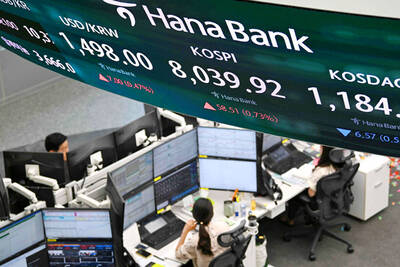
Taiwan’s overtaking of South Korea in GDP per capita is not a temporary anomaly, but the result of deeper structural problems in the South Korean economy says Chang Young-chul, the former CEO of Korea Asset Management Corp. Chang says that while it reflects Taiwan’s own gains, it also highlights weakening growth momentum in South Korea. As design and foundry capabilities become more important in the AI era, Seoul risks losing competitiveness if it relies too heavily on memory chips. IMF forecasts showing Taiwan widening its lead over South Korea have fueled debate in Seoul over memory chip dependence, industrial policy and

“China wants to unify with Taiwan at the lowest possible cost, and it currently believes that unification will become easier and less costly as time passes,” wrote Amanda Hsiao (蕭嫣然) and Bonnie Glaser in Foreign Affairs (“Why China Waits”) this month, describing how the People’s Republic of China (PRC) is playing the long game in its quest to seize Taiwan. This has been a favorite claim of many writers over the years, easy to argue because it is so trite. Very obviously, if the PRC isn’t attacking Taiwan, it is waiting. But for what? Hsiao and Glaser’s main point is trivial,
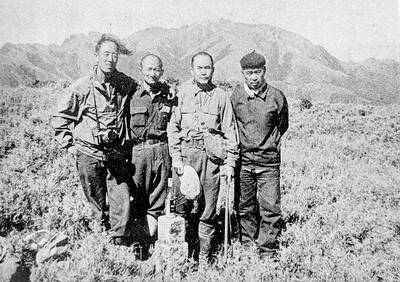
May 18 to May 24 Gathered on Yangtou Mountain (羊頭山) on Dec. 5, 1972, Taiwan’s hiking enthusiasts formally declared the formation of the “100 Peaks Club” (百岳俱樂部) and unveiled the final list of mountains. Famed mountaineer Lin Wen-an (林文安) led this effort for the Chinese Alpine Association (中華山岳協會). Working with other experienced climbers, he chose 100 peaks above 10,000 feet (3,048m) that featured triangulation points and varied in difficulty and character. The list sparked an alpine hiking craze, inspiring many to take up mountaineering and competing to “conquer” the summits. A common misconception is that the 100 Peaks represent Taiwan’s 100 tallest

The Chinese Nationalist Party (KMT), alongside their smaller allies the Taiwan People’s Party (TPP), are often accused of acting on behalf of the Chinese Communist Party (CCP). Some go so far as to call them “traitors.” It is not hard to see why. They regularly pass legislation to stymie the normal functioning of the ruling Democratic Progressive Party’s (DPP) administration, and they have yet to pass this year’s annual budget. They slashed key elements of the government’s proposed NT$1.25 trillion (US$40 billion) special military budget, and in the smaller NT$780 billion package they did pass, it is riddled with provisions that


 RSS
RSS