


British-American John Oliver roasted Chinese leader Xi Jinping (習近平) in 2018 and slammed China’s treatment of Uighurs in Xinjiang last year. Now some want him to do a segment on Taiwan.
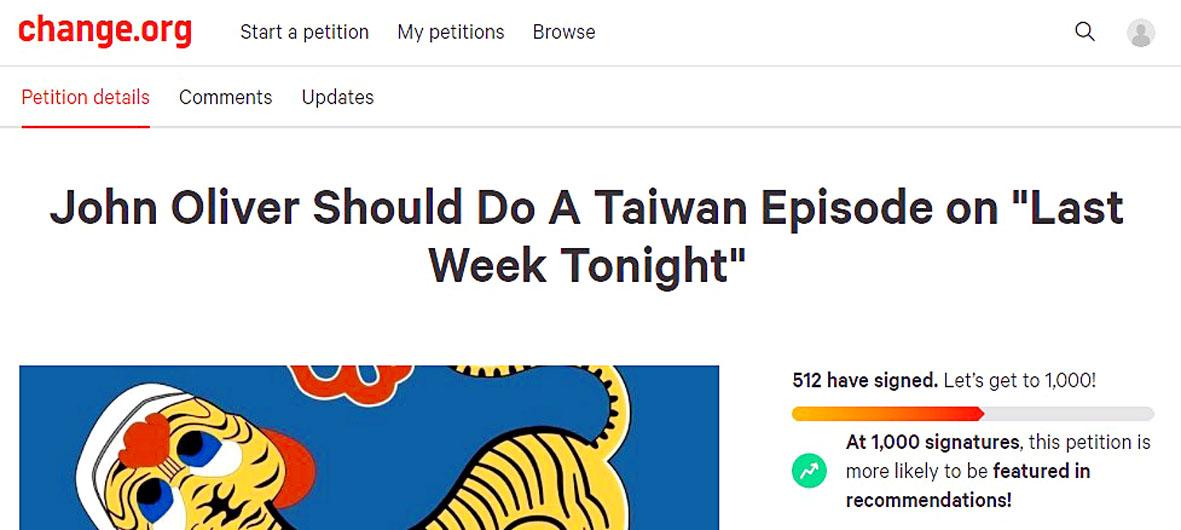
More than 500 people have signed a petition launched last week asking Oliver to discuss Taiwan’s complex political situation and its international significance on his HBO show Last Week Tonight.
Jenna Cody, an American teacher-trainer and prolific blogger who has lived in Taiwan for 15 years, says she created the petition during a night of insomnia. Cody’s blog is quick to dispel one-sided or misinformed Western reports of the country, but she says the issue remains widely misunderstood.
Screen grab: Han Cheung, Taipei Times
“For a lot of us who write about Taiwan, I feel that our audience is just people who care about Taiwan,” Cody says. “It doesn’t feel like we’re getting any sort of general viewership. Taiwan makes it into the mainstream media, but it’s always through the China lens.”
Along with items such as unlimited term limits and detained activists, Oliver panned Chinese media censorship during his segment on Xi (where he also joked about comparisons with Winnie the Pooh). As expected, China reacted by blocking HBO and erasing Oliver from microblogging Web site Sina Weibo.
“Of all the late night comedy news shows, I feel that [Oliver] is probably the best person to take this on,” Cody says. “He’s willing to criticize China … a lot of those news guys don’t do that. He also tends to do in-depth things and I think Taiwan really needs an in-depth look. So I was up late and I thought, ‘Why don’t I pull a stunt and see if I can get something to happen?’”
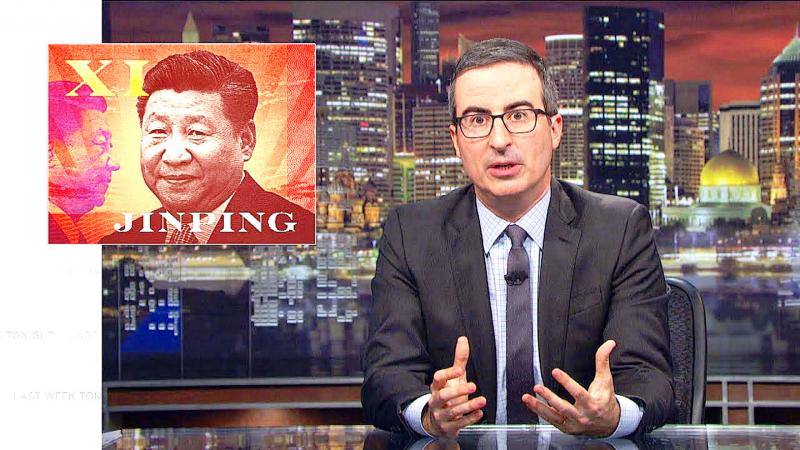
Photo: screen grab from HBO’s Last week Tonight With John Oliver
Oliver typically spends 20 to 30 minutes doing a deep dive on a single topic in a sharply critical yet informative and humorous manner.
“He’s able to break down very serious issues in a way that keeps people’s attention,” Cody says. “His brand of humor can take something that people don’t think about or find boring … and make them realize that it is in fact very important.”
There are many angles to approach the Taiwan issue from, but Cody says that from her experience, foreign understanding of Taiwan is still low, and a general overview is needed.
“My grandma once asked me why I live here since it’s not a democracy,” she says. “So just letting people know that Taiwan is in fact independent and doesn’t want to be part of China is enough. A lot of people think because Taiwan calls itself the ROC [Republic of China], they assume Taiwanese think they are Chinese. It’s a lot of work on my part to quash that every time it comes up.”
Cody says that when she criticizes China in Taiwan, it’s usually apparent that she’s talking about the Chinese Communist Party. But in the US, people seem to project negative commentary onto the entire country, which has fueled anti-Asian sentiment across the nation.
Oliver has spoken out about racism in the past. In March, he railed against former US president Donald Trump and other politicians for calling COVID-19 the “China virus,” stating that doing so has led to an increase in violence against people of Asian descent. And two weeks ago he did a 27-minute, detailed segment on Asian Americans to contextualize their layered history and the model minority myth in light of current events.
“Looking at what he’s done recently, I think he would be able to handle the issue sensitively as well as correctly,” Cody says.
Cody adds that instead of just complaining about the vaccine situation, foreigners in Taiwan can help the situation by doing more outreach to people back home
“While not perfect, this is a country worth knowing about and fighting for,” she says. “You can do PR stunts, you can write your opinions, or just talk to your friends.”
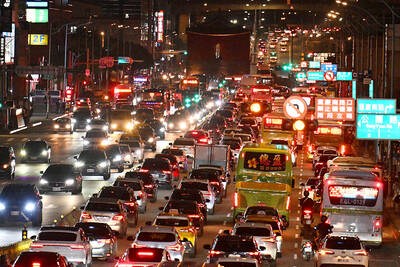
By global standards, the traffic congestion that afflicts Taiwan’s urban areas isn’t horrific. But nor is it something the country can be proud of. According to TomTom, a Dutch developer of location and navigation technologies, last year Taiwan was the sixth most congested country in Asia. Of the 492 towns and cities included in its rankings last year, Taipei was the 74th most congested. Taoyuan ranked 105th, while Hsinchu County (121st), Taichung (142nd), Tainan (173rd), New Taipei City (227th), Kaohsiung (241st) and Keelung (302nd) also featured on the list. Four Japanese cities have slower traffic than Taipei. (Seoul, which has some

In our discussions of tourism in Taiwan we often criticize the government’s addiction to promoting food and shopping, while ignoring Taiwan’s underdeveloped trekking and adventure travel opportunities. This discussion, however, is decidedly land-focused. When was the last time a port entered into it? Last week I encountered journalist and travel writer Cameron Dueck, who had sailed to Taiwan in 2023-24, and was full of tales. Like everyone who visits, he and his partner Fiona Ching loved our island nation and had nothing but wonderful experiences on land. But he had little positive to say about the way Taiwan has organized its
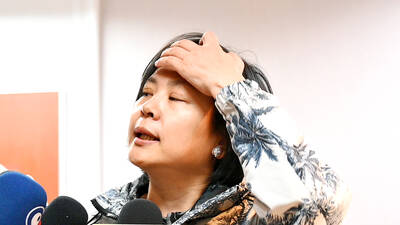
The entire Li Zhenxiu (李貞秀) saga has been an ugly, complicated mess. Born in China’s Hunan Province, she moved to work in Shenzhen, where she met her future Taiwanese husband. Most accounts have her arriving in Taiwan and marrying somewhere between 1993 and 1999. She built a successful career in Taiwan in the tech industry before founding her own company. She also served in high-ranking positions on various environmentally-focused tech associations. She says she was inspired by the founding of the Taiwan People’s Party (TPP) in 2019 by Ko Wen-je (柯文哲), and began volunteering for the party soon after. Ko
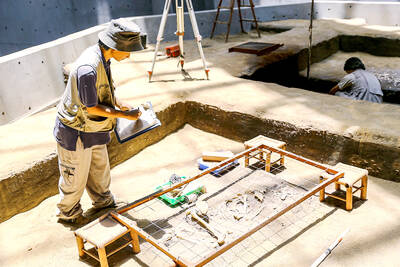
Writing of the finds at the ancient iron-working site of Shihsanhang (十 三行) in New Taipei City’s Bali District (八里), archaeologist Tsang Cheng-hwa (臧振華) of the Academia Sinica’s Institute of History and Philology observes: “One bronze bowl gilded with gold, together with copper coins and fragments of Tang and Song ceramics, were also found. These provide evidence for early contact between Taiwan aborigines and Chinese.” The Shihsanhang Web site from the Ministry of Culture says of the finds: “They were evidence that the residents of the area had a close trading relation with Chinese civilians, as the coins can be


 RSS
RSS