


Twenty-five years ago the Ministry of National Defense’s three theater troupes — the Lu Guang (陸光), Hai Guang (海光) and Da Peng (大鵬) — one for each service branch, were combined into one group under the auspices of the Ministry of Education, the “pride of the nation” or the National Guoguang Opera Company (國立國光劇團).
The company, which is now under the auspices of the National Center for Traditional Arts (臺灣戲曲中心小表演廳), has over the past two-plus decades established a reputation for not only preserving Beijing opera, helping spearhead a revival of kun opera, or kunqu (崑曲), but under artistic director Wang An-chi (王安祈), ventured into adaptations of modern Chinese and Western authors such as Eileen Chang (張愛玲) and Virginia Wolfe, as well as William Shakespeare’s plays, and forged collaborations with regional peers such as the Yokohama Noh Theater and Singapore’s Siong Leng Musical Association (湘靈音樂社) for performances both at home and abroad.
To celebrate its 25th anniversary, the troupe decided to restage a series of kunqu and Beijing opera classics.
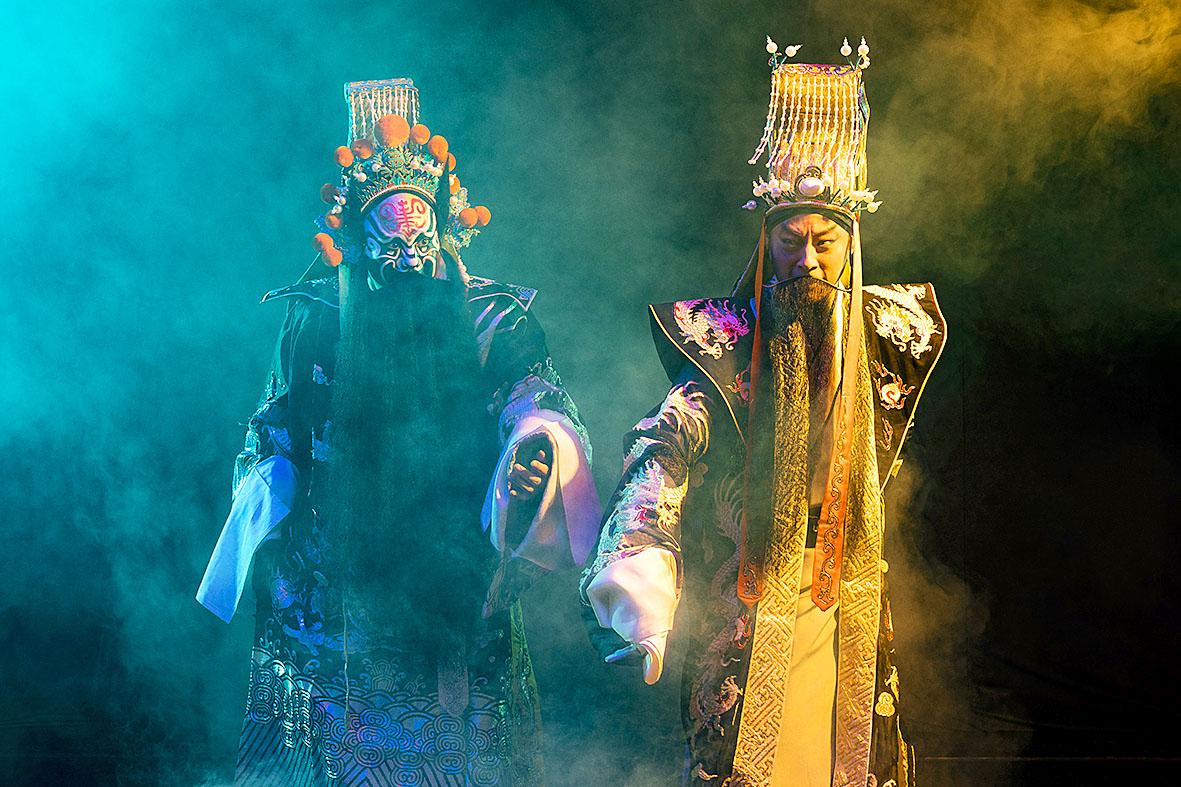
Photo courtesy of National Guoguang Opera Company
This weekend it has moved across town from its home stage at the National Center for Traditional Arts in Taipei’s Shilin District (士林) to the larger environs of the National Theater for four performances of a revival of its award-winning production Journey through Hell (閻羅夢 — 天地一秀才), which it will take to the National Kaohsiung Center for the Arts for two shows, starting on Dec. 19.
While the storyline is taken from a classic Chinese novel, Disturbing the Hell, Su Ma-mou Closes Trials with New Verdicts (陰司司馬貌斷獄), by Chen Ya-hsien (陳亞先), Wang and Shen Hui-ru (沈惠如) crafted a time-traveling, contemporary morality tale.
The story revolves around a Han Dynasty scholar, Su, who has not fared well professionally due to his unwillingness to condone bribery and the sale of offices and titles.
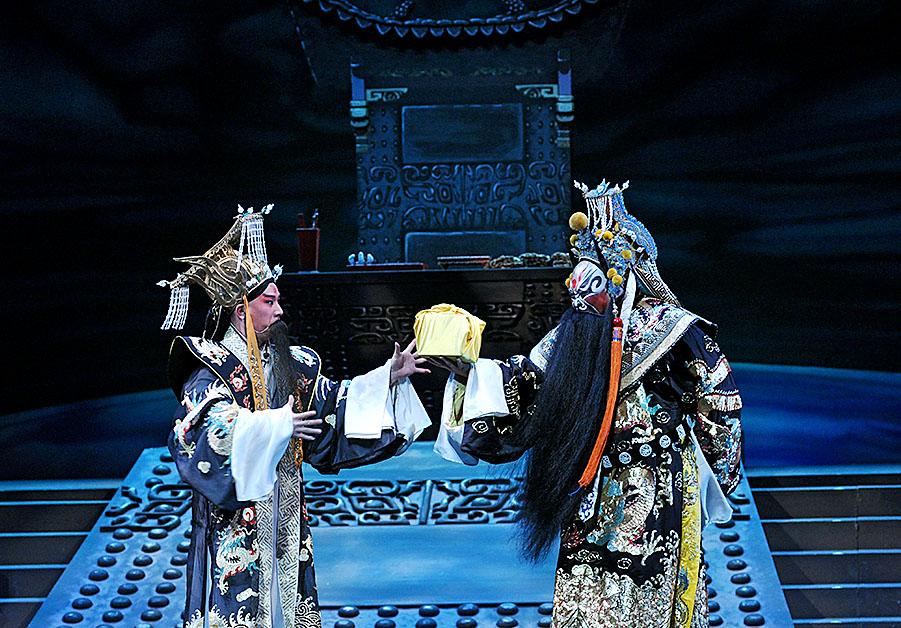
Photo courtesy of National Guoguang Opera Company
He ends up being badly beaten for his efforts. Angered that his efforts to be a just official have failed, he pens a missive to the Jade Emperor, outlining his complaints and volunteering to serve as a judge in hell for half-a-day.
However, when his offer is taken up, Su finds out that it is not as easy to determine right from wrong, dispense justice and overturn errors as he thought, amid a myriad of complaints from souls seeking to be reincarnated, especially when names can be confusing.
The company has two casts for the show led by Sheng Jian (盛鑑), Ling Chia-lin (凌嘉臨), Liu Hai-yuan (劉海苑) and Chu Sheng-li (朱勝麗) tomorrow night and Saturday afternoon, and Tang Wen-hua (唐文華), Lin Ting-yu (林庭瑜), Huang Shih-ya (黃詩雅) and Wang Yao-hsing (王耀星) on Saturday evening and the Sunday matinee.
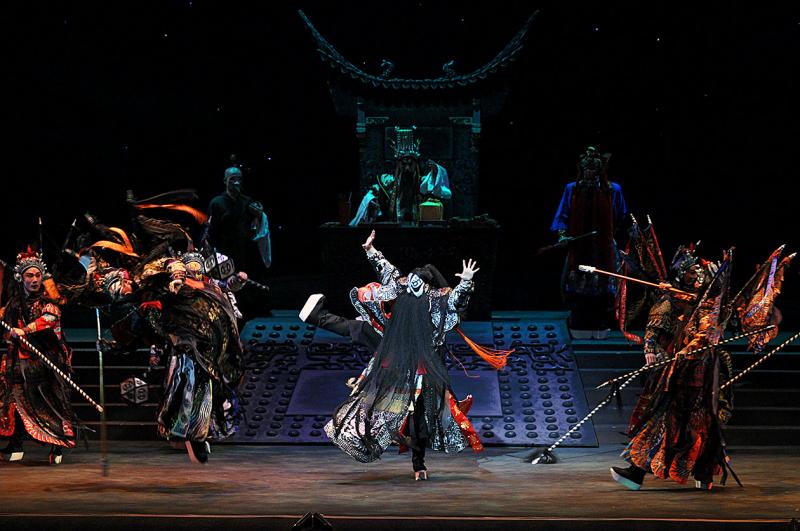
Photo courtesy of National Guoguang Opera Company
The Kaohsiung performances will be led by Sheng, Ling, Liu Hai-yuan and Chu on Saturday and Tang, Lin, Huang and Wang on Sunday.
Journey through Hell runs just over two-and-a-half hours, with a 20-minute intermission, and will be performed with Mandarin and English surtitles.

Just after 6am, I walked up to the ticket gate at Taipei Main Station and entered the Taiwan Railway platform without scanning any ticket; instead, I flashed the Sanrio Fun Rail pass on my phone to the gate worker and was admitted. I found my train and prepared to board. My destination? This very same station. I was embarking on a 13-hour journey on one of two round-the-island trains operated by ezTravel. They run each day, one counterclockwise around the island and one clockwise. They differ in a number of ways from an ordinary Taiwan Railway train and can make for
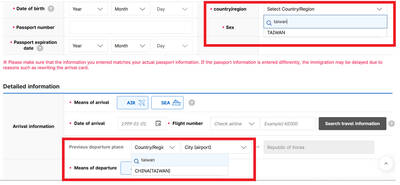
Jason Han says that the e-arrival card spat between South Korea and Taiwan shows that Seoul is signaling adherence to its “one-China” policy, while Taiwan’s response reflects a reciprocal approach. “Attempts to alter the diplomatic status quo often lead to tit-for-tat responses,” the analyst on international affairs tells the Taipei Times, adding that Taiwan may become more cautious in its dealings with South Korea going forward. Taipei has called on Seoul to correct its electronic entry system, which currently lists Taiwan as “China (Taiwan),” warning that reciprocal measures may follow if the wording is not changed before March 31. As of yesterday,
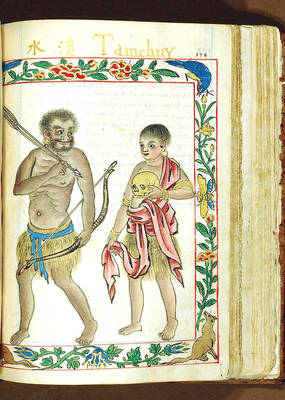
The Portuguese never established a presence on Taiwan, but they must have traded with the indigenous people because later traders reported that the locals referred to parts of deer using Portuguese words. What goods might the Portuguese have offered their indigenous trade partners? Among them must have been slaves, for the Portuguese dealt slaves across Asia. Though we often speak of “Portuguese” ships, imagining them as picturesque vessels manned by pointy-bearded Iberians, in Asia Portuguese shipping between local destinations was crewed by Asian seamen, with a handful of white or Eurasian officers. “Even the great carracks of 1,000-2,000 tons which plied

On Thursday, former Taipei mayor and founder of the Taiwan People’s Party (TPP) Ko Wen-je (柯文哲) was sentenced to 17 years in prison and had his civil rights suspended for six years over corruption, embezzlement and other charges. Seven others related to the case were also handed prison sentences, while two were found not guilty. It has been a bad week for the TPP. On Tuesday, prosecutors charged Chinese immigrant Xu Chunying (徐春鶯) with suspicion of taking part in Beijing-directed election interference. Xu has strong links to the TPP, which once offered her a party list legislator nomination. Tuesday also


 RSS
RSS