


The two existing film copies of The Best Secret Agent (天字第一號) were both in terrible condition. One was overexposed with significant damage in the highlight areas, while the other showed severe deterioration with scratches, stains, mold and flaky coating.
However, it was fortunate that the 1964 Hoklo-language (also known as Taiwanese) femme fatale flick was preserved at all. After the decline of the Hoklo film industry in the late 1970s, many directors sold their reels to scrap dealers, while the film strips ended up as linings for shirt collars, straw hats and wooden sandals. Countless more were lost to floods, fires and the ravages of time. When people started paying attention to these movies again in the 1990s, many had already been permanently lost.
Lee Cheng-liang (李政亮), assistant professor at National Chengchi University’s College of Communication, estimates that out of the more than 1,000 Hoklo films produced between 1956 and 1981, only about 200 remain.
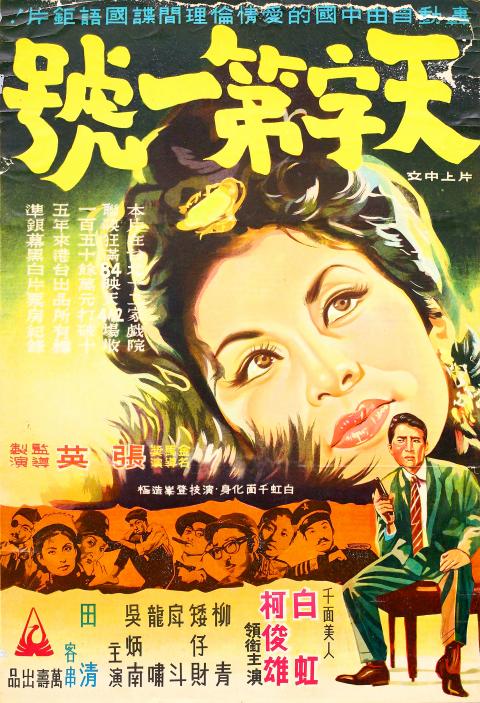
Photo courtesy of Taiwan Film Institute
The Taiwan Film Institute (國家電影中心) has taken on the role of preserving, restoring and digitizing these films since 2013. What remains is still quite diverse in genre and style — many taken straight from Hollywood, resulting in curious and campy Taiwanese Westerns and spy movies often featuring female leads.
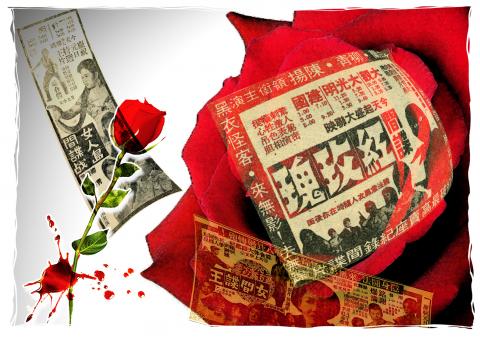
The restored version of The Best Secret Agent was screened at Enka Library (櫞?文庫) last weekend as part of a Taiwan Film Institute program to encourage coffee shops and other establishments to screen Taiwanese movies that they have digitized over the past few years. Three more femme fatale screenings are in store — the next one on Saturday is King of Spies: Female Secret Agent (特務女間諜王), which features a Chinese Nationalist Party (KMT) agent who heads to Macau to stop the Chinese Communist Party from smuggling in American missile blueprints.
THE GLORY DECADES
GRAPHIC: TT
In 2013, a team from Tainan National University of the Arts acquired a box of old films from a projectionist in Miaoli. After months of restoration, they discovered that one of them was the long-lost first 35mm Hoklo movie, Hsueh Ping-kui and Wang Pao-chuan (薛平貴與王寶釧).
Made in 1956, the film followed a traditional gezai opera (歌仔戲) format and launched the first Hoklo movie craze that lasted until about 1960. The iconic Brother Wang And Brother Liu Tour Taiwan (王哥柳哥遊台灣), clearly inspired by the US comedic duo Laurel and Hardy, was produced during this time.
The scene took off again in 1962, which saw 120 Hoklo movies made in that year alone. This number far exceeded that of Mandarin movies, despite the government’s policy to promote Mandarin and suppress local languages like Hoklo. The Golden Horse Awards were established that year specifically to “promote Mandarin movies,” and the number of Mandarin movies eventually surpassed Hoklo ones in 1969.
Lee says many of these films suffered from bad scripts and poor production, resulting in campy, B-movie qualities that make them entertaining to watch today. A common tactic was to feature popular singers in the film and rely on their star power to attract audiences, at times even having them appear at the premiere to perform a few tunes.
Most production companies preferred quantity over quality, usually renting a hotel in Taipei’s Beitou District (北投) and shooting the entire thing in a week. The area became sort of a “Hoklo Hollywood” during those decades.
“Those who were willing to spend half a month on their film were already considered very dedicated,” Lee says.
LOCAL AND FOREIGN
Lee separates Hoklo movies into local genres and “hybrid” genres that emulate Japanese and Hollywood themes. Popular local storylines include a young person from the countryside losing their way in the decadent “sin city” of Taipei, while their loved ones back home head to Taipei to search for them. Females often played tragic roles, whether a poor farm girl with unknown parentage, or the adopted daughter who was treated badly and eventually sold to a brothel.
Martial arts films were also popular — interestingly, 41 years before Crouching Tiger, Hidden Dragon (臥虎藏龍) took Hollywood by storm in 2000, a Hoklo version based on the novel of the same name had been made. This production has not been recovered.
“Hybrid” films include the aforementioned Brother Wang and Brother Liu series, wholesale adaptations of Japanese hits such as the Golden Demon, as well as Westerns and spy movies. Bond movies were especially popular due to the government’s anti-communist propaganda, and Hoklo filmmakers jumped on the bandwagon.
“The Hoklo film industry had few resources, but the producers reacted quickly to popular trends, often just remaking the entire movie,” Lee says.
The Best Secret Agent is a prime example of the hybridity Lee discusses, as it’s a remake of a Chinese movie of the same name, set in Japan-occupied Shanghai during World War II. The genre was so popular that even Brother Wang and Brother Liu had their own 007 spinoff.
The last Hoklo film of that era was made in 1981. Lee says the quality in general simply wasn’t that great, and as young people shunned speaking Hoklo under government policy, interest waned, with such movies considered tacky. With government support focused only on Mandarin-language productions, Lee says the Hoklo movie industry was never able to transition to color film, further cementing its demise.
The National Film Institute first put together a team in 1989 to track down these Hoklo directors and their productions. In two years, they managed to recover 11 films and screened them in Taipei to great fanfare.
Today, the institute continues its effort to bring these films back to the public. Out of the 25 old Taiwanese films it digitized last year, three of them were Hoklo productions.

Just after 6am, I walked up to the ticket gate at Taipei Main Station and entered the Taiwan Railway platform without scanning any ticket; instead, I flashed the Sanrio Fun Rail pass on my phone to the gate worker and was admitted. I found my train and prepared to board. My destination? This very same station. I was embarking on a 13-hour journey on one of two round-the-island trains operated by ezTravel. They run each day, one counterclockwise around the island and one clockwise. They differ in a number of ways from an ordinary Taiwan Railway train and can make for
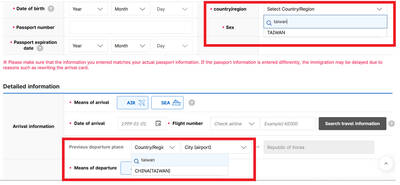
Jason Han says that the e-arrival card spat between South Korea and Taiwan shows that Seoul is signaling adherence to its “one-China” policy, while Taiwan’s response reflects a reciprocal approach. “Attempts to alter the diplomatic status quo often lead to tit-for-tat responses,” the analyst on international affairs tells the Taipei Times, adding that Taiwan may become more cautious in its dealings with South Korea going forward. Taipei has called on Seoul to correct its electronic entry system, which currently lists Taiwan as “China (Taiwan),” warning that reciprocal measures may follow if the wording is not changed before March 31. As of yesterday,
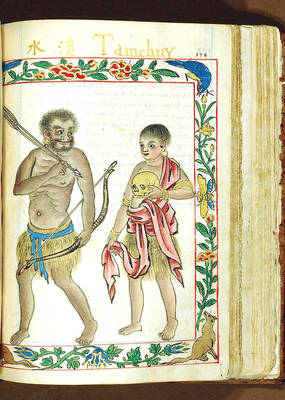
The Portuguese never established a presence on Taiwan, but they must have traded with the indigenous people because later traders reported that the locals referred to parts of deer using Portuguese words. What goods might the Portuguese have offered their indigenous trade partners? Among them must have been slaves, for the Portuguese dealt slaves across Asia. Though we often speak of “Portuguese” ships, imagining them as picturesque vessels manned by pointy-bearded Iberians, in Asia Portuguese shipping between local destinations was crewed by Asian seamen, with a handful of white or Eurasian officers. “Even the great carracks of 1,000-2,000 tons which plied

On Thursday, former Taipei mayor and founder of the Taiwan People’s Party (TPP) Ko Wen-je (柯文哲) was sentenced to 17 years in prison and had his civil rights suspended for six years over corruption, embezzlement and other charges. Seven others related to the case were also handed prison sentences, while two were found not guilty. It has been a bad week for the TPP. On Tuesday, prosecutors charged Chinese immigrant Xu Chunying (徐春鶯) with suspicion of taking part in Beijing-directed election interference. Xu has strong links to the TPP, which once offered her a party list legislator nomination. Tuesday also


 RSS
RSS