


Cased in glass and lit up by neon lights, the Donald Trump board game, the plastic bicycle, an electric beauty mask, bottles of Green Ketchup and a host of other unlikely innovations have found fame again in Sweden’s Museum of Failure.
The museum, one floor of a cultural center in the coastal town of Helsingborg, is the work of psychologist Samuel West, a 44-year-old Californian who used to research how to make big companies more innovative.
“I was looking for a new way to communicate research findings and stimulate a discussion and interest in the whole concept of learning from failure and I thought an exhibit would be a fun way to do that,” West said.

Photo: AFP
Launching in the summer of 2017 with support from the Swedish Innovation Fund, the exhibition is made up of items that West collected and that were donated to him by visitors.
A steady stream of visitors stopped by the case housing Trump — the Game, where players trade real estate under the watchful eye of the game’s namesake, rolling dice on which the number six has been replaced by a “T” because “Trump always wins,” West explained. Players handle sums of money no smaller than US$10 million — “because everyone’s a millionaire in Trump world.”
At the exhibition’s entrance, a spooky plastic mask gazes out at visitors from inside a case — a beauty product released by a US company in the 1990s that was supposed to reduce wrinkles with electricity.
Bemused members of the public look at a Swedish bicycle released in 1981 built from plastic that turned out not to be sturdy enough to support its rider, as well as Heinz’s Green Ketchup and Coca-Cola’s coffee-flavored drink, the Coke BlaK.
Having chanced upon the museum after visiting a photography exhibition on another floor, one visitor from France found West’s collection of unlikely innovations uplifting.
“I think you have to try everything,” said Claudine Cochet, a photographer from near Paris.
“You have to try and after you can talk it over.”
The Museum has turned out to be an unexpected hit for curator West, with visiting exhibits in Los Angeles and Toronto.
West’s success in celebrating unsuccessful innovations has brought him fame in the seaside town where he started out, as he found out one morning when he went to get breakfast at a nearby cafe.
“These people come in and shout ‘Hey! It’s Doctor Failure!’,” he laughed. “It’s cool. Someone’s got to be Doctor Failure.”
The Museum of Failure was upping sticks to move to Shanghai after closing in Sweden on Saturday.
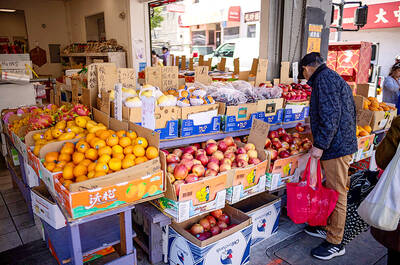
Ajay Verma, a consultant gastroenterologist at Kettering general hospital in Northamptonshire, says our gut is a “complex machine.” “It is constantly providing us with the nutrition we need, initially to grow and develop, and then for us to survive, thrive and repair from injury and illness.” How can we keep it functioning well? Put simply: “Make sure what you put into it is balanced, and that you clear out its waste products adequately,” Verma says. “In a general gastroenterology clinic, the most common conditions we see are irritable bowel syndrome (IBS), gastroesophageal reflux disease, inflammatory bowel disease and constipation,” says Nisha
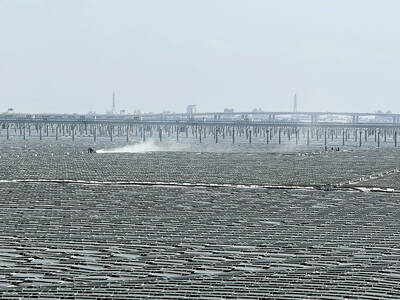
The arithmetic is straightforward and uncomfortable. By the end of 2025, Taiwan had committed itself to a 50-30-20 electricity mix — half natural gas, 30 per cent coal, 20 per cent renewables. The Ministry of Economic Affairs’s (MOEA) own monthly energy reports tell a different story. Natural gas reached 47.8 per cent of generation last year. Coal stood at 35.4 per cent, comfortably above its target ceiling. Renewables came in at 13.1 per cent, well short of the 20 per cent Taipei had pledged a decade earlier. Installed renewable capacity reached roughly half of the 12 gigawatts (GW) the government
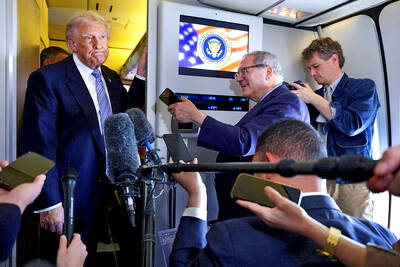
Last week US President Donald Trump was asked by a reporter whether he would speak on the phone to the President of Taiwan. “l’ll speak to him. I speak to everybody. We have that situation very well in hand,” Trump said. This marked the second time in a couple of weeks he had said he would talk to the President of Taiwan. In 2016 he famously took a call from then-president Tsai Ing-wen (蔡英文), when he was president-elect. Despite warnings that the apocalypse was nigh because of a phone call, the world quickly forgot about the conversation between two democratically-elected presidents.
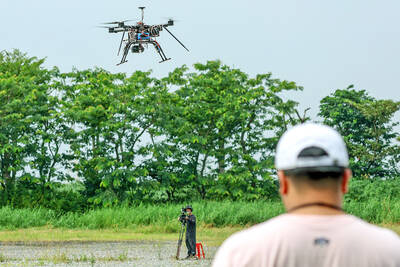
Taiwan’s drone exports are taking off, fuelled by the war in Ukraine, as Taiwanese companies seek a stake in the fast-growing global market for unmanned aerial vehicles (UAV). Low-cost drones used for reconnaissance and strikes are in high demand as governments around the world boost defense spending in the face of intensifying conflicts. A relative new player in the increasingly competitive industry, Taiwan’s pitch is to be an “Asian hub” for the production of UAVs and components free of Chinese materials, or “non-red.” That means its UAVs can be up to three times more expensive than their Chinese competitors, like the world’s biggest


 RSS
RSS