


At first glance, the cost-benefit ratio of a blood-only diet suggests that vampire bats — the only mammals to feed exclusively on the viscous, ruby-red elixir — flew down an evolutionary blind alley. Blood is not only teeming with bacterial and viral disease, it is also very poor in nutrients — too few carbs and vitamins, way too much salt. It’s a miracle Dracula lived as long as he did.
But natural selection, according to a study published Monday last week, overcame these challenges and fashioned a genetic profile and intestinal ecosystem perfectly suited to a life of silent blood sucking.
“Vampire bats have an ‘extreme’ diet, in the sense that it requires many adaptations in the organism,” said lead author Lisandra Zepeda Mendoza, a biogeneticist at the University of Copenhagen and an expert on the microbiome, the community of microorganisms camped out in the digestive tract.
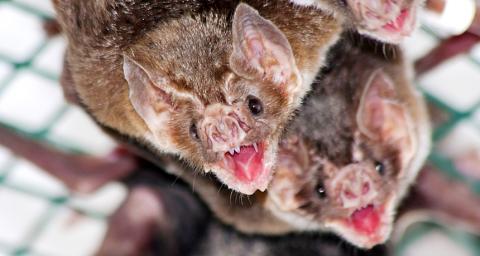
Photo: Wikimedia commons
To find out how the common vampire bat — also known as Desmodus rotundus — engineered those changes, Mendoza and a 30-strong team of scientists sequenced its genome and microbiome.
Both, they discovered, stand apart from the 1,200 other species of bats that favor fruits, flesh, and/or insects.
For starters, the genome — while typical in size — contains twice as many so-called transposable elements, DNA fragments that can shift position.
These vagabond bits of genetic code were concentrated in regions that govern the immune system and metabolism, functions that differed sharply compared to other species.
D. rotundus, for example, can assimilate or process the high levels iron and nitrogen waste found in blood. Its gut, meanwhile, hosts an impressive arsenal of protective bacteria — hundreds of which cause disease in other mammals — that produce anti-viral substances. Enter the microbiome, recently discovered to vary enormously not only from species to species, but from individual to individual within the same species (notably humans).
“We wanted to look at how the genome and the gut microbiome work together to overcome the challenge” of a blood-only diet, said co-author Tom Gilbert, among a growing number of biogeneticists championing the more inclusive concept of “hologenome.”
Gilbert speculated that vampire bats might have eased into pure-blood diet, starting with blood-gorged insects such as tics and mosquitoes.
“The beauty of it was that if they cracked the blood-diet code — and they did — then food became very plentiful, with not very much competition,” he said. “It was a big evolutionary win.”
The three species of blood-drinking bats, all native to Latin America, have razor-sharp teeth that shave away hair before piercing their victims’ skin and opening the spigot. Chemicals in the saliva prevent blood from coagulating. The common vampire bat feed mostly on mammals, including humans, often returning night-after-night to the same animal for a meal. Recent research has shown that D. rotundus can recognize individual humans by their breathing sounds, much in the way we can differentiate voices. Vampire bats are also surprising generous, willing to share a (regurgitated) meal with a fellow bat that missed out, even if they are not related.
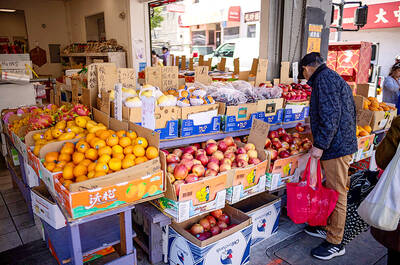
Ajay Verma, a consultant gastroenterologist at Kettering general hospital in Northamptonshire, says our gut is a “complex machine.” “It is constantly providing us with the nutrition we need, initially to grow and develop, and then for us to survive, thrive and repair from injury and illness.” How can we keep it functioning well? Put simply: “Make sure what you put into it is balanced, and that you clear out its waste products adequately,” Verma says. “In a general gastroenterology clinic, the most common conditions we see are irritable bowel syndrome (IBS), gastroesophageal reflux disease, inflammatory bowel disease and constipation,” says Nisha
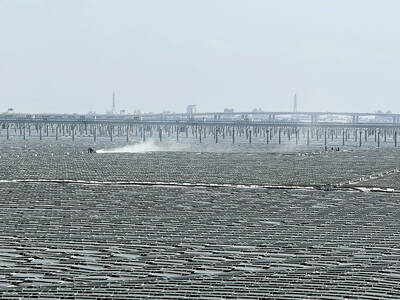
The arithmetic is straightforward and uncomfortable. By the end of 2025, Taiwan had committed itself to a 50-30-20 electricity mix — half natural gas, 30 per cent coal, 20 per cent renewables. The Ministry of Economic Affairs’s (MOEA) own monthly energy reports tell a different story. Natural gas reached 47.8 per cent of generation last year. Coal stood at 35.4 per cent, comfortably above its target ceiling. Renewables came in at 13.1 per cent, well short of the 20 per cent Taipei had pledged a decade earlier. Installed renewable capacity reached roughly half of the 12 gigawatts (GW) the government

Last week US President Donald Trump was asked by a reporter whether he would speak on the phone to the President of Taiwan. “l’ll speak to him. I speak to everybody. We have that situation very well in hand,” Trump said. This marked the second time in a couple of weeks he had said he would talk to the President of Taiwan. In 2016 he famously took a call from then-president Tsai Ing-wen (蔡英文), when he was president-elect. Despite warnings that the apocalypse was nigh because of a phone call, the world quickly forgot about the conversation between two democratically-elected presidents.
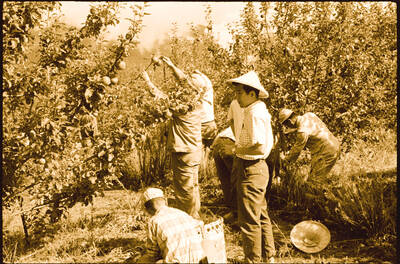
May 25 to May 31 Few believed that apples could be cultivated on a commercial scale in Taiwan’s high mountains. When horticulturalist Cheng Chao-hsiung (程兆熊) first proposed the idea in 1955, both American and Taiwanese colleagues dismissed it as implausible, arguing that temperate fruit could not be reliably grown on a subtropical island, especially on rugged terrain. However, it was this terrain in the Central Mountain Range where many Chinese Civil War veterans were resettled in the late 1950s. With limited job prospects and no family in Taiwan, they were placed on cooperative farms aimed toward self-sufficiency. Some say the conditions


 RSS
RSS