


ATAYAL aims to launch a new online communication platform to increase dialogue and relations among Aboriginal communities across the globe through media projects, cultural exchanges and tourism, while creating sustainable economic opportunities.
The nonprofit will change their name later this year to “Indigenous Bridges” as a rebranding strategy to emphasize the creation of this digital networking platform, said Tony Coolidge, director of ATAYAL.
Coolidge, whose mother is of Atayal descent, is no stranger to building digital networking platforms. In 2005, after Hurricane Katrina brought much devastation to the US gulf coast, he created the site, KatrinasAngels.org, a database of over 500,000 people that connected victims to volunteers offering housing and aid. A similar approach will be employed in ATAYAL’s online network.
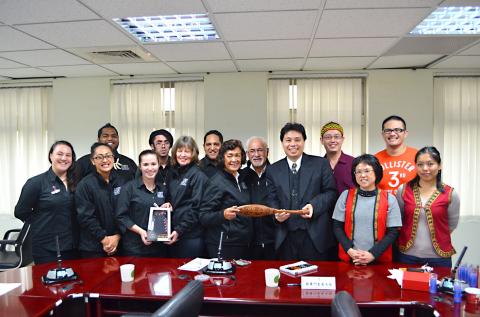
Photo courtesy of Tony Coolidge
“The creation of a system of information management and resource management is something I have been doing for years with other companies and projects. Applying it to indigenous cooperation and development, which is my mission in life, should have been done long ago,” Coolidge said.
SOLVING PROBLEMS
With better online communications and international cooperation among Aboriginal communities, it is possible to solve the problems they face, including discrimination, marginalization and extreme poverty. Aboriginal culture, languages, belief systems and ways of life are under threat, and in some cases have become extinct.
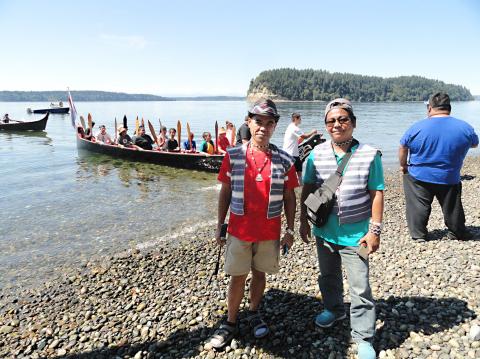
Photo courtesy of Gary Smoke
Even though each Aboriginal communities throughout the globe have their own unique concerns, they share similar historical experiences and contemporary issues of how to balance tradition and modernity, said Daya Dakasi, an Atayal and National Chengchi University associate professor of ethnology. He added that through cross-cultural collaboration, Aboriginal communities can share their experiences and learn from others to help them adopt new practices.
“Even if there are no successful cases, we can establish supporting systems for each other,” Daya said.
In order to alleviate these problems, ATAYAL’s database will feature a user-friendly interface where users can find each other and in turn, more projects can be achieved.
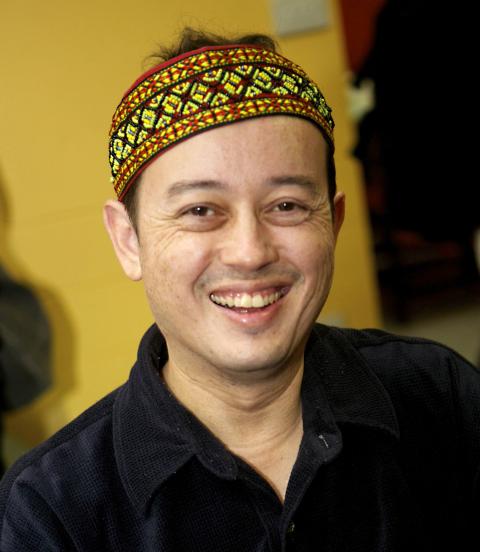
Photo courtesy of Tony Coolidge
“There will also be regular online newsletters and online forums to encourage regular communication between the tribal representatives,” Coolidge said.
Members will be able to look for performers for cultural events, academics and specialists for conferences, tourism opportunities and Aboriginal representatives.
“Our hopes are that by tribes working together they can further their own personal relationships and their own culture,” said Gary Smoke, director of international relations at ATAYAL.
ATAYAL will also continue various side projects that focus on strengthening and establishing relationships with other Aboriginal communities. The organization’s side projects include an annual canoe journey with Native American tribes of the US Pacific Coast, collaboration with other organizations to increase tourism to local Aboriginal villages in New Taipei City’s Wulai District (烏來) and Chiayi County’s Alishan Township (阿里山) and inviting delegations from other nations to visit and participate in cross-cultural exchange with Taiwanese Aboriginal communities.
In particular, the canoe journey has been beneficial to ATAYAL because it has strengthened relations between Taiwanese Aboriginal communities and Pacific tribes of the US, said Smoke. The Native Americans were willing to share their resources and knowledge to help Taiwanese Aborigines solve problems surrounding governmental support and environmental policies, he added.
Tana Yagu, an Atayal who is the nonprofit’s cultural ambassador and canoe journey organizer, said the journey can start a cross-cultural dialogue.
“The benefit to meeting in person ... is to learn really deeply, but also build the connections and relationships that make it possible for coalition building, for advocating on each other’s behalf and to highlight our issues.”
ENVIRONMENTAL ISSUES
Native Americans face similar environmental issues as Taiwan’s Aboriginal community and have been able to share their advice in regards to protesting and pressuring the government to uphold environmental policy promises as well as honoring the rights of indigenous peoples, Tana said.
Residents of Orchid Island (Lanyu, 蘭嶼), for example, are still waiting for the removal of 100,000 barrels of nuclear waste, which was deposited by state-run Taiwan Power Co (Taipower) in the 1980’s, Tana said.
There is also the potential that the Native Americans could partner with Taiwan in creating a cable TV channel to highlight indigenous issues around the globe.
“With the support of the Native Americans, it would be quite possible for them to put together their own channel,” Smoke said.
Native Americans are able to generate income from casinos, tourism and government grants, so they have already established their own Native American television channels, Smoke added.
OBSTACLES
Though ATAYAL has ambitions to increase dialogue among Aboriginal communities, there have been some obstacles causing the fruition of these goals to be slow and tedious. First, funding is limited, as ATAYAL does not receive any financial support from the government.
Second, there was also an instance of promises not being upheld, as Taiwan Indigenous Television dropped plans to feature Coolidge’s media projects after a change in management occurred last year.
Coolidge said that though there have been some setbacks, he “hopes there can be a breakthrough. We are going to keep doing what we do, such as sharing our projects with other people.”

Ajay Verma, a consultant gastroenterologist at Kettering general hospital in Northamptonshire, says our gut is a “complex machine.” “It is constantly providing us with the nutrition we need, initially to grow and develop, and then for us to survive, thrive and repair from injury and illness.” How can we keep it functioning well? Put simply: “Make sure what you put into it is balanced, and that you clear out its waste products adequately,” Verma says. “In a general gastroenterology clinic, the most common conditions we see are irritable bowel syndrome (IBS), gastroesophageal reflux disease, inflammatory bowel disease and constipation,” says Nisha
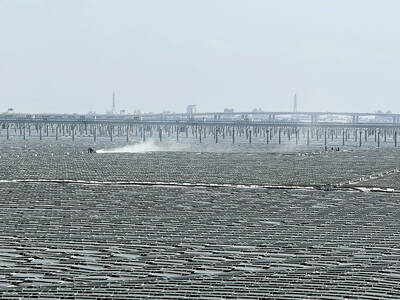
The arithmetic is straightforward and uncomfortable. By the end of 2025, Taiwan had committed itself to a 50-30-20 electricity mix — half natural gas, 30 per cent coal, 20 per cent renewables. The Ministry of Economic Affairs’s (MOEA) own monthly energy reports tell a different story. Natural gas reached 47.8 per cent of generation last year. Coal stood at 35.4 per cent, comfortably above its target ceiling. Renewables came in at 13.1 per cent, well short of the 20 per cent Taipei had pledged a decade earlier. Installed renewable capacity reached roughly half of the 12 gigawatts (GW) the government

Last week US President Donald Trump was asked by a reporter whether he would speak on the phone to the President of Taiwan. “l’ll speak to him. I speak to everybody. We have that situation very well in hand,” Trump said. This marked the second time in a couple of weeks he had said he would talk to the President of Taiwan. In 2016 he famously took a call from then-president Tsai Ing-wen (蔡英文), when he was president-elect. Despite warnings that the apocalypse was nigh because of a phone call, the world quickly forgot about the conversation between two democratically-elected presidents.
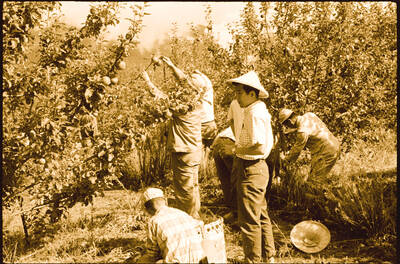
May 25 to May 31 Few believed that apples could be cultivated on a commercial scale in Taiwan’s high mountains. When horticulturalist Cheng Chao-hsiung (程兆熊) first proposed the idea in 1955, both American and Taiwanese colleagues dismissed it as implausible, arguing that temperate fruit could not be reliably grown on a subtropical island, especially on rugged terrain. However, it was this terrain in the Central Mountain Range where many Chinese Civil War veterans were resettled in the late 1950s. With limited job prospects and no family in Taiwan, they were placed on cooperative farms aimed toward self-sufficiency. Some say the conditions


 RSS
RSS