


Nestled in the hills of Austria sits Gugging, an artists’ colony with a difference where the worlds of psychiatry and art collide — with spectacular success.
Over the past 50 years, mentally ill patients here have churned out an astounding 75,000 recognized artworks, some selling for over NT$3 million
In particular, it is a wellspring for Art Brut, producing some of the giants in the popular genre like August Walla, Oswald Tschirtner and Johann Hauser.
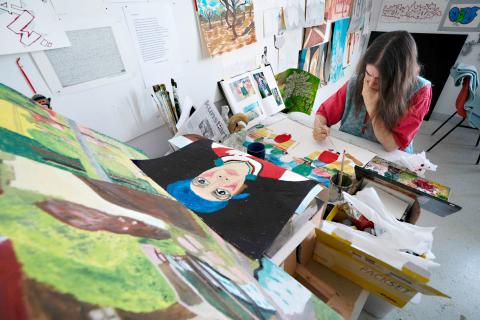
Photo: Joe Klamar, AFP
“Raw art” or “outsider art”, as it is known in English, is art by those untrained in — and untainted by — artistic conventions.
To the Frenchman who coined the term, Jean Dubuffet, it is found in the works of “primitive societies,” of children — and of the mentally ill.
NAZIS TO BOWIE
Until July 2, Dubuffet’s sensation-causing 1949 “L’Art Brut” exhibition in Paris that started it all is being staged again at the Gugging Museum.
Featured are works by those Dubuffet met while scouring Europe’s care homes for people with mental illnesses, like Adolf Woelfli, a Swiss suffering from psychosis and hallucinations.
Others include schizophrenic Aloise Corbaz who would use, at first in secret, juice from petals and toothpaste to create colorful and fantastical images, often of lovers.
“Up until then (1949), what they produced was seen, at best, as a kind of curiosity, certainly not as works of art,” Johann Feilacher, director of the Gugging Art Brut Centre, told AFP.
The early history of the Gugging psychiatric hospital, in the forested hills north of Vienna, is dark. During World War II, the Nazis killed hundreds of its patients.
In the 1950s though, its new director, Leo Navratil, began to diagnose his patients by getting them to draw.
Amazed by the results, Navratil began a correspondence with Dubuffet and as the output of its patients grew, so did Gugging’s fame as a mecca for art brut.
In 1981, Navratil founded at Gugging an art and psychotherapy center, later renamed the House of Artists. A commercial gallery and museum followed, drawing a growing stream of visitors. One was David Bowie, who bought several works for his art collection.
ARTISTS, NOT PATIENTS
The psychiatric clinic itself closed around a decade ago, but the artists’ colony remains.
“For us, the residents are first and foremost artists with special needs, not patients,” said Feilacher, who took over from Navratil in 1986.
Walla, Tschirtner and Hauser are dead now but half a dozen Gugging artists still generate works today bought by galleries and collectors the world over.
They include Franz Kernbeis, who, when first admitted in 1955, would remain immobile for hours, Karl Vondal, who specializes in erotic works, and Johann Garber.
“Along with the Creative Growth Art Center in Oakland (California), Gugging is one of the rare places in the world to have produced so many great artists,” said Sarah Lombardi, director of the Art Brut Collection in Lausanne, Switzerland, home to Dubuffet’s legacy.
The artists split the proceeds from sales 50-50 with the gallery, in which they are also shareholders.
Garber, whose busy surrealistic designs adorn Gugging’s walls and whose technicolor ear sculpture is a Vienna landmark, also has an exhibition on.
“I am an artist and a genius,” Garber told AFP. “It is beautiful to draw and paint. We are happy that we have a place where we can live and draw.”
Just being part of Gugging is no guarantee of success, however. Not all of the 15 residents produce work “particular enough to be recognized artworks,” said Feilacher.
“Some of them develop late, some of them never.”
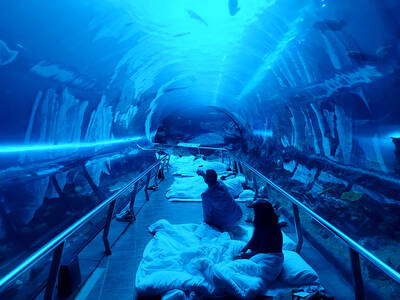
We lay transfixed under our blankets as the silhouettes of manta rays temporarily eclipsed the moon above us, and flickers of shadow at our feet revealed smaller fish darting in and out of the shelter of the sunken ship. Unwilling to close our eyes against this magnificent spectacle, we continued to watch, oohing and aahing, until the darkness and the exhaustion of the day’s events finally caught up with us and we fell into a deep slumber. Falling asleep under 1.5 million gallons of seawater in relative comfort was undoubtedly the highlight of the weekend, but the rest of the tour

Youngdoung Tenzin is living history of modern Tibet. The Chinese government on Dec. 22 last year sanctioned him along with 19 other Canadians who were associated with the Canada Tibet Committee and the Uighur Rights Advocacy Project. A former political chair of the Canadian Tibetan Association of Ontario and community outreach manager for the Canada Tibet Committee, he is now a lecturer and researcher in Environmental Chemistry at the University of Toronto. “I was born into a nomadic Tibetan family in Tibet,” he says. “I came to India in 1999, when I was 11. I even met [His Holiness] the 14th the Dalai

Following the rollercoaster ride of 2025, next year is already shaping up to be dramatic. The ongoing constitutional crises and the nine-in-one local elections are already dominating the landscape. The constitutional crises are the ones to lose sleep over. Though much business is still being conducted, crucial items such as next year’s budget, civil servant pensions and the proposed eight-year NT$1.25 trillion (approx US$40 billion) special defense budget are still being contested. There are, however, two glimmers of hope. One is that the legally contested move by five of the eight grand justices on the Constitutional Court’s ad hoc move
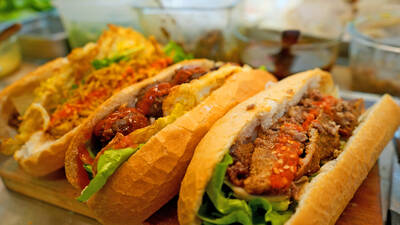
Stepping off the busy through-road at Yongan Market Station, lights flashing, horns honking, I turn down a small side street and into the warm embrace of my favorite hole-in-the-wall gem, the Hoi An Banh Mi shop (越南會安麵包), red flags and yellow lanterns waving outside. “Little sister, we were wondering where you’ve been, we haven’t seen you in ages!” the owners call out with a smile. It’s been seven days. The restaurant is run by Huang Jin-chuan (黃錦泉), who is married to a local, and her little sister Eva, who helps out on weekends, having also moved to New Taipei


 RSS
RSS