


The heirs of Alfred Flechtheim, a German-Jewish art dealer and collector, sued the German state of Bavaria on Monday, arguing in court papers that it has refused to turn over works of art that the heirs say were looted by the Nazis before World War II.
The suit, filed in federal court in New York, seeks the return of eight paintings by the artists Max Beckmann, Juan Gris and Paul Klee from the Bavarian state paintings collection. The Flechtheim heirs said seven years of negotiations had failed, and in court papers they accused Bavaria of not living up to international commitments on the restitution of art taken by the Nazis.
“Bavaria’s refusal to confront its responsibility has persisted since the war,” the complaint filed in US District Court in Manhattan states. Its “chain of title to the paintings is defective because it was rooted in the seizure of Flechtheim’s property in violation of international law.”
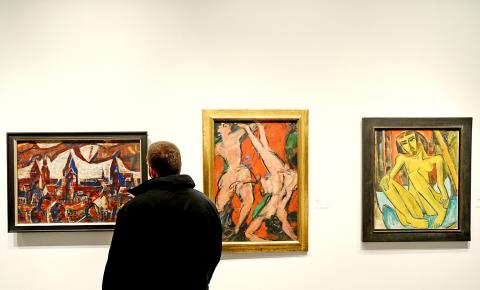
Photo: EPA/Justin Lane
In Weimar-era Germany, Flechtheim was a prominent art dealer, with galleries in Berlin and Dusseldorf, who supported avant-garde artists. He was also targeted by the Nazis as a Jew and a promoter of what they considered “degenerate” art. He fled Germany in May 1933, and died penniless in London four years later, at the age of 59.
According to the complaint, brought by the son and the widow of Flechtheim’s nephew — Michael Hulton, who lives in San Francisco, and Penny Hulton, a resident of Britain — the works being sought were among those Flechtheim was forced to leave behind as he was hounded out of Germany, and his galleries were taken over. They include six works by Beckmann, among them Portrait of Quappi in Blue, from 1926.
Bavaria has said previously that the paintings were not looted art. Officials there have said that the works were in fact sold by Flechtheim about 1932, before the Nazis came to power.
They were later donated to the Bavarian state paintings collection in 1974 by a Munich dealer, Gunther Franke.
But Flechtheim’s heirs dispute the Bavarian government’s position, citing, among other things, evidence that they say shows that the paintings were still in Flechtheim’s possession in 1934, after Hitler came to power. They say there is evidence that one of Flechtheim’s paintings was acquired from him in 1934 by Hildebrand Gurlitt, one of four dealers allowed under the Nazis to buy and sell the modern, or “degenerate,” art they officially so despised.
The collection of 19th and 20th-century European masterworks amassed by Gurlitt caused a sensation when it was revealed in 2013 after being kept hidden for decades by his son, Cornelius, in his Munich apartment.
In addition, the Flechtheim heirs say that Flechtheim ended up calling off a planned 1932 sale of many of his paintings to another dealer — which could have been one way they landed in Franke’s hands.
“Flechtheim did not sell the paintings to Franke, who usurped the collection for himself as a direct, proximate and foreseeable consequence of Flechtheim’s racial persecution by the Nazi state,” a lawyer for the Flechtheim heirs, Nicholas O’Donnell, wrote in the filing.
A lawyer for the Bavarian government, Andreas Frischknecht, declined to comment on the filing.
Artworks associated with Flechtheim have been the subject of other litigation in the past: The heirs of the expressionist artist George Grosz, a celebrated painter who fled Nazi Germany in 1933, sued the Museum of Modern Art for the return of two important oil paintings and a watercolor he had left behind in Berlin.
The Grosz heirs say that Flechtheim was only temporarily caring for the three Grosz works and that he was forced to sell or abandon his holdings because of the climate of terror created by Hitler’s regime.
The Flechtheim heirs criticize Bavaria for refusing to open records that they say would help research into the fate of the paintings.
Their filing cites a letter sent last year by 29 members of the US Congress to Horst Seehofer, governor of Bavaria, asking for “greater dialogue and cooperation to fulfill” international principles aimed at supporting the restitution of art seized by the Nazis.

Ajay Verma, a consultant gastroenterologist at Kettering general hospital in Northamptonshire, says our gut is a “complex machine.” “It is constantly providing us with the nutrition we need, initially to grow and develop, and then for us to survive, thrive and repair from injury and illness.” How can we keep it functioning well? Put simply: “Make sure what you put into it is balanced, and that you clear out its waste products adequately,” Verma says. “In a general gastroenterology clinic, the most common conditions we see are irritable bowel syndrome (IBS), gastroesophageal reflux disease, inflammatory bowel disease and constipation,” says Nisha
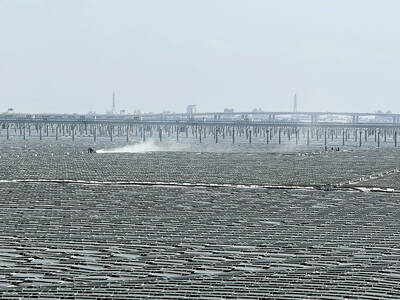
The arithmetic is straightforward and uncomfortable. By the end of 2025, Taiwan had committed itself to a 50-30-20 electricity mix — half natural gas, 30 per cent coal, 20 per cent renewables. The Ministry of Economic Affairs’s (MOEA) own monthly energy reports tell a different story. Natural gas reached 47.8 per cent of generation last year. Coal stood at 35.4 per cent, comfortably above its target ceiling. Renewables came in at 13.1 per cent, well short of the 20 per cent Taipei had pledged a decade earlier. Installed renewable capacity reached roughly half of the 12 gigawatts (GW) the government
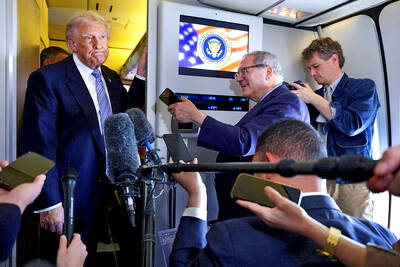
Last week US President Donald Trump was asked by a reporter whether he would speak on the phone to the President of Taiwan. “l’ll speak to him. I speak to everybody. We have that situation very well in hand,” Trump said. This marked the second time in a couple of weeks he had said he would talk to the President of Taiwan. In 2016 he famously took a call from then-president Tsai Ing-wen (蔡英文), when he was president-elect. Despite warnings that the apocalypse was nigh because of a phone call, the world quickly forgot about the conversation between two democratically-elected presidents.

Taiwan’s drone exports are taking off, fuelled by the war in Ukraine, as Taiwanese companies seek a stake in the fast-growing global market for unmanned aerial vehicles (UAV). Low-cost drones used for reconnaissance and strikes are in high demand as governments around the world boost defense spending in the face of intensifying conflicts. A relative new player in the increasingly competitive industry, Taiwan’s pitch is to be an “Asian hub” for the production of UAVs and components free of Chinese materials, or “non-red.” That means its UAVs can be up to three times more expensive than their Chinese competitors, like the world’s biggest


 RSS
RSS