


The road to recovery has been slow for the Aboriginal residents of Wulai (烏來) in New Taipei City, many of whom have been affected by the typhoons earlier this year. But this Sunday, Santa will be spreading some holiday cheer to the town’s youngest residents, handing out toys and donated school supplies, as well as leading a group of pint-sized carolers.
The idea behind “Christmas in Wulai” started in 2011 with long-time Taipei expat Gary Smoke. As a Vietnam War veteran, Smoke says he’s seen what people are capable of doing to each other and wanted to contribute something meaningful to the community he was living in for a change. At the time, Smoke was also collecting instructional books recycled by English teachers in Taiwan who left their jobs when he met Tony Coolidge (he’s also a contributor for the Taipei Times). Coolidge was born in Wulai to an Atayal Aboriginal mother and American serviceman father and had just returned to Taiwan to rediscover his roots. Like Smoke, Coolidge also felt compelled to give back to the community.
“I said, ‘hey, why don’t we put on a Christmas show up in Wulai?’” Smoke says. “The rest is history.”
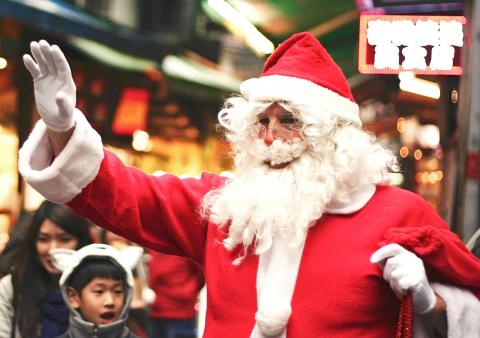
Photo courtesy of Maciej Korbas
Smoke now serves as the international relations director at Coolidge’s Taiwan-based non-profit organization, Atayal, which aims to connect indigenous people around the world. In the past, they’ve arranged for musicians, storytellers and children’s choirs from nearby churches to perform outside of Wulai Atayal Museum, and this year’s event will be just as boisterous.
“I’ll walk down the streets in my Santa suit handing out candy and people will stop and hand me their babies, asking me to pose so that they can get a picture of Santa with their baby,” Smoke tells me.
Santa and his helpers will hand out Christmas bells and clappers to children, encouraging them to dance. Although some might initially be too shy to join in, most eventually come around.
“Once people know Santa is here, the crowd is just in frenzy mode,” Smoke adds.
Besides organizing the yearly Christmas event, Smoke is trying to implement new programs in Wulai that will have more long-lasting change. One idea is to do a walking tour of Wulai led by a local Atayal guide and accompanied by an English translator. Another is to develop the library in the museum by donating his English textbooks and converting the place into a learning center. Finally, Smoke also wishes to start a soccer tournament in Wulai that will bring together Atayal children and students from international schools.
Smoke says that all the projects are intertwined and have to do with children of different backgrounds coming together and learning from one another. In particular, the idea to host soccer tournaments came from the English-language basketball camps Coolidge had been organizing for children in Tainan.
“Our expectations are high and it’s all contingent on collaborating with Wulai’s Atayal community,” Smoke says.
Ajay Verma, a consultant gastroenterologist at Kettering general hospital in Northamptonshire, says our gut is a “complex machine.” “It is constantly providing us with the nutrition we need, initially to grow and develop, and then for us to survive, thrive and repair from injury and illness.” How can we keep it functioning well? Put simply: “Make sure what you put into it is balanced, and that you clear out its waste products adequately,” Verma says. “In a general gastroenterology clinic, the most common conditions we see are irritable bowel syndrome (IBS), gastroesophageal reflux disease, inflammatory bowel disease and constipation,” says Nisha
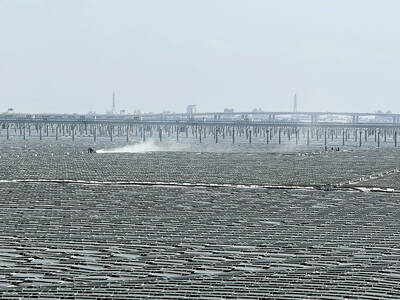
The arithmetic is straightforward and uncomfortable. By the end of 2025, Taiwan had committed itself to a 50-30-20 electricity mix — half natural gas, 30 per cent coal, 20 per cent renewables. The Ministry of Economic Affairs’s (MOEA) own monthly energy reports tell a different story. Natural gas reached 47.8 per cent of generation last year. Coal stood at 35.4 per cent, comfortably above its target ceiling. Renewables came in at 13.1 per cent, well short of the 20 per cent Taipei had pledged a decade earlier. Installed renewable capacity reached roughly half of the 12 gigawatts (GW) the government
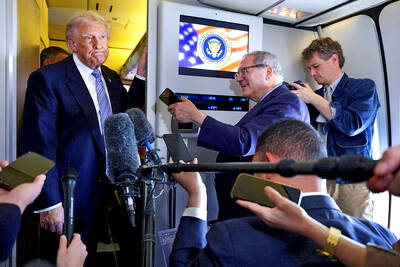
Last week US President Donald Trump was asked by a reporter whether he would speak on the phone to the President of Taiwan. “l’ll speak to him. I speak to everybody. We have that situation very well in hand,” Trump said. This marked the second time in a couple of weeks he had said he would talk to the President of Taiwan. In 2016 he famously took a call from then-president Tsai Ing-wen (蔡英文), when he was president-elect. Despite warnings that the apocalypse was nigh because of a phone call, the world quickly forgot about the conversation between two democratically-elected presidents.
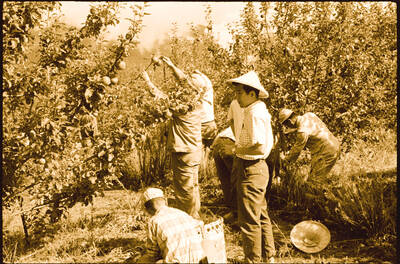
May 25 to May 31 Few believed that apples could be cultivated on a commercial scale in Taiwan’s high mountains. When horticulturalist Cheng Chao-hsiung (程兆熊) first proposed the idea in 1955, both American and Taiwanese colleagues dismissed it as implausible, arguing that temperate fruit could not be reliably grown on a subtropical island, especially on rugged terrain. However, it was this terrain in the Central Mountain Range where many Chinese Civil War veterans were resettled in the late 1950s. With limited job prospects and no family in Taiwan, they were placed on cooperative farms aimed toward self-sufficiency. Some say the conditions


 RSS
RSS