


There are many things that one may find attractive about Chang Ju Cantonese Cuisine (常聚), an establishment nestled in the basement of a luxury office building on Taipei’s Renai Road (仁愛路). Its large menu includes banquet-style dishes and dim sum classics, inspired by its culinary heritage and contemporary trends. The food here is arguably as tasty as that served at high-end restaurants in international hotels, but costing less. Reservations are strongly advised.
On a recent weekend at the packed restaurant, our party began with duck tongue cooked in Shaoxing rice wine (醉香鴨舌, NT$150). Served deboned, the dish is not as scary as its name suggests, and the long-lasting aroma of the spirit adds a robust finish. Chang Ju’s rendition of the soy-marinated goose meat (潮州滷水鵝, NT$480) was spot on, with the meat firm yet tender.
Apart from fancy seafood banquet dishes such as Cantonese superior abalone (蠔皇一品原隻鮑, NT$1,180 per person), the restaurant sports a variety of finely prepared oceanic delights (note to conservationists: shark fin soup is sold here at premium prices). The shrimp salad with onions (卡夫醬拌明蝦球, NT$280 per person), for example, earned praised for its succulent crustacean and creamy sauce made from salted egg yolk and sea urchin.
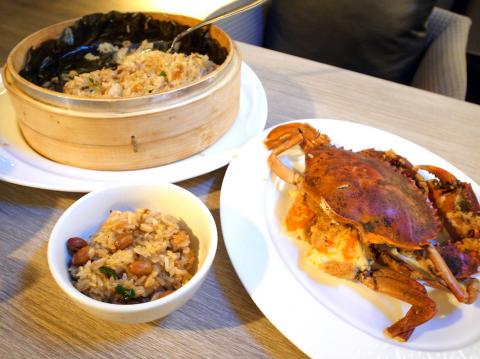
Photo: Ho Yi, Taipei Times
Crab dishes are usually on offer, depending on the season and ingredients at hand. One of our party, a crab enthusiast, picked the garlic-flavored crab with sticky rice (香蒜荷葉糯米蟹飯, NT$90 or 100 per liang (兩); one liang equals to 37.5 grams), which was one of four choices available on the day we visited. It was a pleasant surprise to discover how the fresh, plump decapod and a bowl of stick rice and peanuts could make such a soothing combo.
A visit to Chang Ju would not be complete without tasting its signature crispy barbecued pork (脆皮叉燒, NT$420). The reason behind the hype is the restaurant’s chef, Yang Hua-chih (楊華志). A younger brother of the inventor of the famous dish, Yang is said to have mastered the recipe, which involves repeatedly applying cane sugar to the thin layer of fat and roasting the pork until its skin becomes caramelized and crisp. The result is a delightful combination of textures, accented by a sweet and savory flavor. Some claim Chang Ju’s crisp pork is as good as that served at the Sheraton Hotel’s (喜來登飯店) The Dragon (辰園), where the delicacy was first introduced.
Other popular offerings on the menu include fried grouper with black truffles (黑松露油泡星斑球, NT$780), sweet and sour pork with pineapple (菠蘿水晶咕咾肉, NT$420) and steak (特選稻草西施牛, NT$1,080). Do not let the simple English name of the latter fool you. The time-consuming dish involves wrapping prime rib in straw and stewing the whole package in a homemade sauce for four hours until the meat reaches a melt-in-your-mouth tenderness.
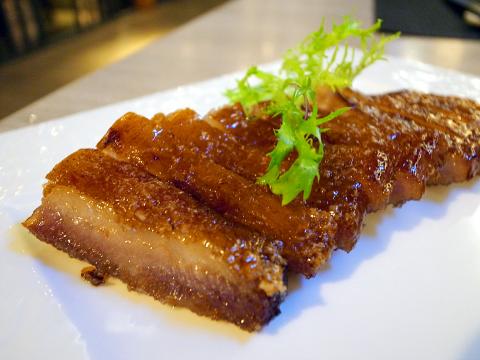
Photo: Ho Yi, Taipei Times
The restaurant’s dim sum section is equally strong. The pan-fried turnip cakes (蘿蔔千絲酥, NT$120) were well-season, crispy and golden brown on the outside, while the juicy shreds of turnip retained a lovely flavor on the inside.
Chang Ju’s dessert menu is also worth checking out. One of my perennial favorites is the classic Hong Kong liushabao, known here as golden lava bao (鳳凰流沙包, NT$120). One bite into the steamed bun brings forth a custard made from egg yolk, which is as silky smooth and rich as a good liushabao should be.
Service is attentive and neighborly, especially by chef Yang, who is always seen gliding through the dining room, greeting and chatting with customers, while sometimes recommending dishes and taking orders himself.
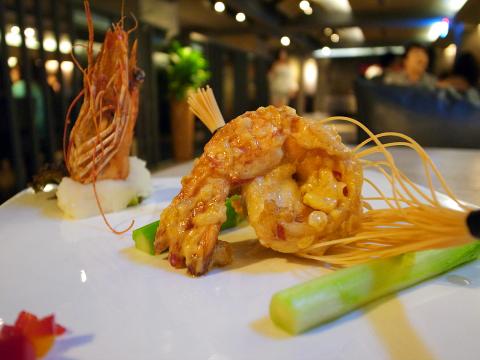
Photo: Ho Yi, Taipei Times
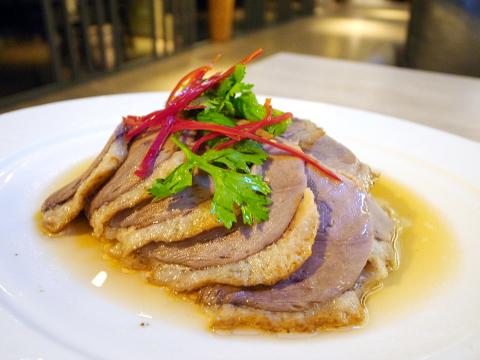
Photo: Ho Yi, Taipei Times

Just after 6am, I walked up to the ticket gate at Taipei Main Station and entered the Taiwan Railway platform without scanning any ticket; instead, I flashed the Sanrio Fun Rail pass on my phone to the gate worker and was admitted. I found my train and prepared to board. My destination? This very same station. I was embarking on a 13-hour journey on one of two round-the-island trains operated by ezTravel. They run each day, one counterclockwise around the island and one clockwise. They differ in a number of ways from an ordinary Taiwan Railway train and can make for
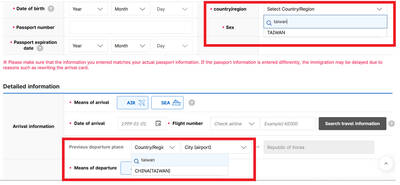
Jason Han says that the e-arrival card spat between South Korea and Taiwan shows that Seoul is signaling adherence to its “one-China” policy, while Taiwan’s response reflects a reciprocal approach. “Attempts to alter the diplomatic status quo often lead to tit-for-tat responses,” the analyst on international affairs tells the Taipei Times, adding that Taiwan may become more cautious in its dealings with South Korea going forward. Taipei has called on Seoul to correct its electronic entry system, which currently lists Taiwan as “China (Taiwan),” warning that reciprocal measures may follow if the wording is not changed before March 31. As of yesterday,

The Portuguese never established a presence on Taiwan, but they must have traded with the indigenous people because later traders reported that the locals referred to parts of deer using Portuguese words. What goods might the Portuguese have offered their indigenous trade partners? Among them must have been slaves, for the Portuguese dealt slaves across Asia. Though we often speak of “Portuguese” ships, imagining them as picturesque vessels manned by pointy-bearded Iberians, in Asia Portuguese shipping between local destinations was crewed by Asian seamen, with a handful of white or Eurasian officers. “Even the great carracks of 1,000-2,000 tons which plied

On Thursday, former Taipei mayor and founder of the Taiwan People’s Party (TPP) Ko Wen-je (柯文哲) was sentenced to 17 years in prison and had his civil rights suspended for six years over corruption, embezzlement and other charges. Seven others related to the case were also handed prison sentences, while two were found not guilty. It has been a bad week for the TPP. On Tuesday, prosecutors charged Chinese immigrant Xu Chunying (徐春鶯) with suspicion of taking part in Beijing-directed election interference. Xu has strong links to the TPP, which once offered her a party list legislator nomination. Tuesday also


 RSS
RSS