


Gusto Street Hot Dog, located across from original branch of The Diner on Ruian Street (瑞安街), is gone, but a improved version of the restaurant has taken its place.
American expat Jason Hobbie took over the operation at the beginning of this year, and Gusto Street regulars will feel right at home as the decor hasn’t changed much. Rebooted as “Chef Jason — My Place,” the small shop is a bit less cluttered and still adorned with a few Americana knick-knacks and memorabilia, with a framed New York City subway map and a few vintage posters hanging on the wood-paneled walls.
But the food has changed for the better, with a revamped menu. There are still hot dogs, but burgers and pasta dishes are the feature items at My Place.
Photos: David Chen, Taipei TImes
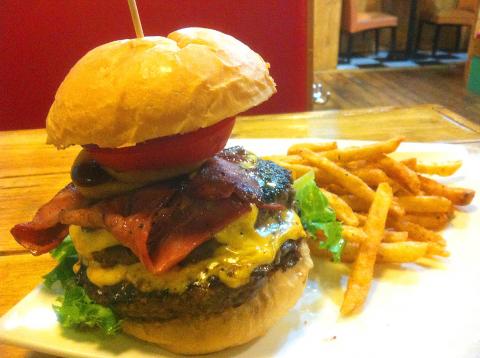
Hobbie, who does all of the cooking, says most items are made from scratch, and I believed it after trying the Signature Dish Cowboy Burger (NT$330), an impossibly large stack of two 7oz beef patties, melted cheese, bacon and several deep fried onion rings stuck between a bun slathered with a tangy barbeque sauce. It’s kept together by a long toothpick, but arm yourself with napkins or be prepared to break out the fork and knife to eat this.
Hobbie takes pride in his burger patty recipe, which contains no breadcrumbs or egg, with each patty containing “25 percent fat.” This indulgent, homemade goodness is something to be appreciated for sure, but I do have a few nitpicky suggestions. Ask for the bacon to be cooked crispy: Hobbie will gladly oblige if you ask, but his default is to cater to the Taiwanese preference for soft, undercooked bacon. I also thought the bun should have been toasted a tad bit more and told Hobbie as such. He smiled, knowing right away what I was getting at, and said he was already working on finding the right kind of toaster for the task.
It should be noted that My Place’s burgers use a bun, an oft-overlooked component of a good burger, that is perfect — it’s light and not at all sweet. Hobbie gets his bread made-to-order, and it definitely makes his burgers standout from the rest.
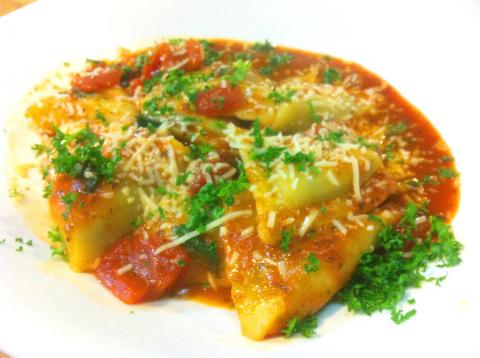
Photo: David Chen, Taipei TImes
The burger choices are simple. If you want something more deluxe, you can get the “Ultimate Cowboy Burger” for NT$450, which is the same as the above, but with three 7oz patties instead of two. The Philly Burger (NT$240) is exactly what it sounds like: loaded with grilled onions, sauteed peppers and mushrooms. For something plainer, there’s the Chili Burger (NT$230) and regular hamburger (NT$190) and cheeseburger (NT$200). All come with a side of fries (which are not homemade but rather the generic food service variety).
I didn’t try the vegetarian burgers, but non-carnivores will appreciate the range of choices. Hobbie’s veggie patties are made of organic wild rice, oats and nuts, and he continues to tweak the recipe. The plain vegetarian burger is NT$250, the Swiss and mushroom version is NT$240 and the Philly version is NT$250.
One vegetarian choice I absolutely loved and will definitely order again was the “Stuff Pasta” (NT$250), which is ravioli made from scratch. On a separate visit, I ordered the raviolis filled with spinach and cheese, which was melt-in-the-mouth delicious from beginning to end. It’s topped with a tomato sauce, also made from scratch, that was tweaked to have a nice balance of tanginess and sweetness. If you’re in the mood for pasta, you can’t go wrong with this dish.
Other pasta dishes include the “Spicy Vodka Pomodoro” (NT$190), a tomato-based sauce made with vodka and served on a bed of fettuccini (which is not made from scratch), Chicken Parmesean (NT$240) and Shrimp Pesto (NT$240).
My Place has the same relaxed, college neighborhood vibe that Gusto Street Hot Dog did. Indeed, if not for the food, which is much better, and a new storefront sign, you wouldn’t be able to tell that things have changed.
You also probably wouldn’t guess that Hobbie, who’s 40 but looks and dresses like a scruffy twenty-something college student, is a retired US Army soldier who served in both Iraq and Afghanistan. “Chef Jason” makes a point to talk to patrons when he’s free from the kitchen, and his mellow but friendly demeanor only adds to the restaurant’s laid-back charm.
Ajay Verma, a consultant gastroenterologist at Kettering general hospital in Northamptonshire, says our gut is a “complex machine.” “It is constantly providing us with the nutrition we need, initially to grow and develop, and then for us to survive, thrive and repair from injury and illness.” How can we keep it functioning well? Put simply: “Make sure what you put into it is balanced, and that you clear out its waste products adequately,” Verma says. “In a general gastroenterology clinic, the most common conditions we see are irritable bowel syndrome (IBS), gastroesophageal reflux disease, inflammatory bowel disease and constipation,” says Nisha
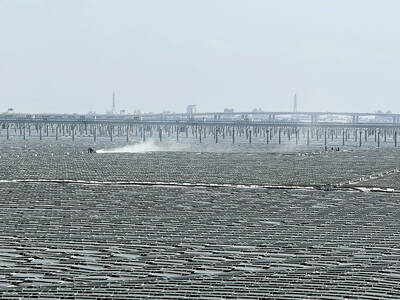
The arithmetic is straightforward and uncomfortable. By the end of 2025, Taiwan had committed itself to a 50-30-20 electricity mix — half natural gas, 30 per cent coal, 20 per cent renewables. The Ministry of Economic Affairs’s (MOEA) own monthly energy reports tell a different story. Natural gas reached 47.8 per cent of generation last year. Coal stood at 35.4 per cent, comfortably above its target ceiling. Renewables came in at 13.1 per cent, well short of the 20 per cent Taipei had pledged a decade earlier. Installed renewable capacity reached roughly half of the 12 gigawatts (GW) the government

Last week US President Donald Trump was asked by a reporter whether he would speak on the phone to the President of Taiwan. “l’ll speak to him. I speak to everybody. We have that situation very well in hand,” Trump said. This marked the second time in a couple of weeks he had said he would talk to the President of Taiwan. In 2016 he famously took a call from then-president Tsai Ing-wen (蔡英文), when he was president-elect. Despite warnings that the apocalypse was nigh because of a phone call, the world quickly forgot about the conversation between two democratically-elected presidents.
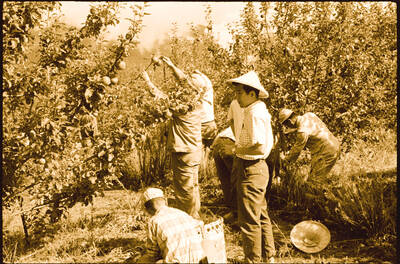
May 25 to May 31 Few believed that apples could be cultivated on a commercial scale in Taiwan’s high mountains. When horticulturalist Cheng Chao-hsiung (程兆熊) first proposed the idea in 1955, both American and Taiwanese colleagues dismissed it as implausible, arguing that temperate fruit could not be reliably grown on a subtropical island, especially on rugged terrain. However, it was this terrain in the Central Mountain Range where many Chinese Civil War veterans were resettled in the late 1950s. With limited job prospects and no family in Taiwan, they were placed on cooperative farms aimed toward self-sufficiency. Some say the conditions


 RSS
RSS