


Polka dots are Japanese avant-garde artist Yayoi Kusama’s lifelong inspiration, obsession and passion.
And so they’re everywhere — not only on canvases but on installations shaped like gnarled tentacles and oversized yellow pumpkins. As part of her retrospective on exhibit at the Whitney Museum of American Art in New York, they also sparkle as “firefly” light bulbs reflected on water and mirrors.
Kusama’s signature splash of dots has now arrived in the realm of fashion in a new collection from French luxury brand Louis Vuitton — bags, sunglasses, shoes and coats.
“Polka dots are fabulous,” Kusama said in a recent interview with AP, looking much younger than her 83 years in a bright red wig, a polka dot dress she designed herself and one of the new Louis Vuitton polka dot scarves.
Dots aside, Kusama cuts an odd figure for the fashion world. She has lived in a psychiatric institution for decades, battling demons that feed her art.
Still, in her Tokyo studio, filled with wall-sized paintings throbbing with her repetitive dots, Kusama said the collaboration was a natural, developed from her friendship with Louis Vuitton creative director Marc Jacobs.
Louis Vuitton had already scored success 10 years ago by collaborating on a bag line with another Japanese artist, Takashi Murakami. The latest Kusama collection is showcased at its boutiques around the world, including New York, Paris, Tokyo and Singapore, sometimes with replica dolls of Kusama.
“The polka dots cover the products infinitely,” said Louis Vuitton, which racks up US$29 billion in annual revenue, a significant portion in Japan. “No middle, no beginning and no end.”
Dots started popping up in Kusama’s work more than 50 years ago, from her early days as a pioneer Japanese woman venturing abroad.
Like most middle-class families in Japan those days, her parents, who ran a flower nursery, were eager to simply get her married. They wanted to buy her kimono, not paints and brushes. She knew she had to get away. And she chose America.
Dots may be fashionable today. But when Kusama arrived in New York in 1958, the fad was “action painting,” characterized by dribbles, swooshes and smears, not dots. She suffered years of poverty and obscurity. But she kept painting the dots.
She put circles of paper on people’s bodies, and once a horse, in “happening” anti-war performances in the late 1960s, which got some people arrested for obscenity but helped get media attention for her art. While in New York, she befriended artists like Andy Warhol, Georgia O’Keefe and Joseph Cornell, who praised her innovative style.
Since then, the times have caught up with Kusama.
In 2008, Christie’s auctioned her work for US$5.8 million. Her retrospective at the Whitney Museum was previously at the Centre Pompidou in Paris and Tate Modern in London. Earlier this month, a major exhibition Eternity of Eternal Eternity opened in her home town of Matsumoto, Nagano prefecture, complete with polka-dot shuttle buses.
“I’ve always been amazed at Kusama’s ability to pick up on and meld current trends in thoroughly original ways,” said Lynn Zelevansky, Carnegie Museum of Art director.
“During her New York years, her work fused Abstract Expressionist, Minimalist and Pop art elements, with an added dash of sexuality and the baseness of bodily functions. She was a precursor of feminist art of the 1970s and much of the work that was produced in the 80s around the AIDS crisis,” she said.
Dots had a rather sad beginning for Kusama. Since her childhood, she had recurring hallucinations. A portrait of her mother that she drew when she was 10 years old shows a forlorn face covered with spots. Immersing herself in her art was a way of overcoming her fears and hallucinations.
Since her return to Japan nearly 40 years ago, Kusama has lived in a psychiatric hospital and remains on medication to prevent depression and suicidal drives. But she commutes daily to her studio and works viciously on her paintings.
Kusama, who has also made films and published several novels, acknowledged she doesn’t know where she gets her ideas. She just picks up her brush and starts drawing.
“I think, ‘Oh, I drew that? I was thinking that,’” she said in her characteristic unsmiling matter-of-fact style of speaking.
Over the years, Kusama has made quirky but stunning works like Macaroni Girl, a female figure plastered with macaroni, which expresses the fear of food; The Visionary Flowers, giant sculptures of twisting tulips, and Mirrored Corridor, a room with mirrors that delivers an illusion of a field of phallic protrusions speckled with dots.
The works are triumphant, humorous celebrations of potential, vulnerability and defiance — like Kusama herself, who at one moment, declares herself “an artistic revolutionary,” and then, the next, mumbles: “I am so afraid, all the time, of everything.”
Her latest project is an ambitious series of paintings with whimsical motifs such as triangles and swirls, along with her trademark dots, in vibrant, almost fluorescent colors.
As Kusama worked on No. 196 in the series, the look of concentration was childlike yet fierce as she painted red dots inside white dots, one by one.
“I want to create a thousand paintings, maybe two thousand paintings, as many as I can draw,” she said. “I will keep painting until I die.”

Just after 6am, I walked up to the ticket gate at Taipei Main Station and entered the Taiwan Railway platform without scanning any ticket; instead, I flashed the Sanrio Fun Rail pass on my phone to the gate worker and was admitted. I found my train and prepared to board. My destination? This very same station. I was embarking on a 13-hour journey on one of two round-the-island trains operated by ezTravel. They run each day, one counterclockwise around the island and one clockwise. They differ in a number of ways from an ordinary Taiwan Railway train and can make for
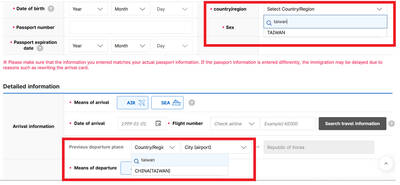
Jason Han says that the e-arrival card spat between South Korea and Taiwan shows that Seoul is signaling adherence to its “one-China” policy, while Taiwan’s response reflects a reciprocal approach. “Attempts to alter the diplomatic status quo often lead to tit-for-tat responses,” the analyst on international affairs tells the Taipei Times, adding that Taiwan may become more cautious in its dealings with South Korea going forward. Taipei has called on Seoul to correct its electronic entry system, which currently lists Taiwan as “China (Taiwan),” warning that reciprocal measures may follow if the wording is not changed before March 31. As of yesterday,
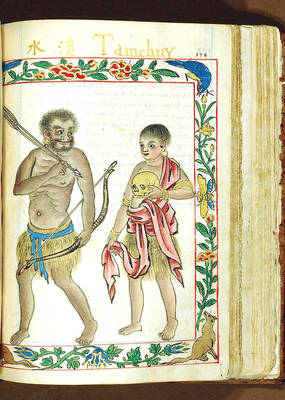
The Portuguese never established a presence on Taiwan, but they must have traded with the indigenous people because later traders reported that the locals referred to parts of deer using Portuguese words. What goods might the Portuguese have offered their indigenous trade partners? Among them must have been slaves, for the Portuguese dealt slaves across Asia. Though we often speak of “Portuguese” ships, imagining them as picturesque vessels manned by pointy-bearded Iberians, in Asia Portuguese shipping between local destinations was crewed by Asian seamen, with a handful of white or Eurasian officers. “Even the great carracks of 1,000-2,000 tons which plied

On Thursday, former Taipei mayor and founder of the Taiwan People’s Party (TPP) Ko Wen-je (柯文哲) was sentenced to 17 years in prison and had his civil rights suspended for six years over corruption, embezzlement and other charges. Seven others related to the case were also handed prison sentences, while two were found not guilty. It has been a bad week for the TPP. On Tuesday, prosecutors charged Chinese immigrant Xu Chunying (徐春鶯) with suspicion of taking part in Beijing-directed election interference. Xu has strong links to the TPP, which once offered her a party list legislator nomination. Tuesday also


 RSS
RSS