


Disgust is the Cinderella of emotions. While fear, sadness and anger, its nasty, flashy sisters, have drawn the rapt attention of psychologists, poor disgust has been hidden away in a corner, left to muck around in the ashes.
No longer. Disgust is having its moment in the light as researchers find that it does more than cause that sick feeling in the stomach. It protects human beings from disease and parasites, and affects almost every aspect of human relations, from romance to politics.
In several new books and a steady stream of research papers, scientists are exploring the evolution of disgust and its role in attitudes toward food, sexuality and other people.
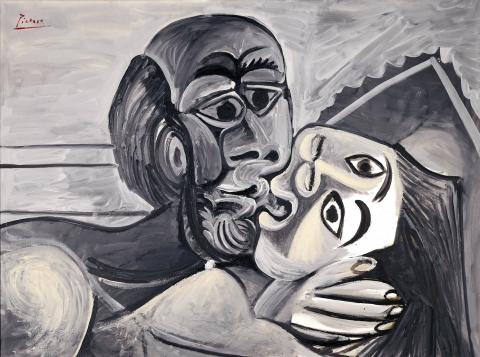
Photo: Bloomberg
Paul Rozin, a psychologist who is an emeritus professor at the University of Pennsylvania and a pioneer of modern disgust research, began researching it with a few collaborators in the 1980s, when disgust was far from the mainstream.
“It was always the other emotion,” he said. “Now it’s hot.”
It still won’t wear glass slippers, which may be just as well, given the stuff it has to walk through. Nonetheless, its reach takes disgust beyond the realms of rot and excrement.

Photo: Bloomberg
Speaking last week from a conference on disgust in Germany, Valerie Curtis, a self-described “disgustologist” from the London School of Public Hygiene and Tropical Medicine, described her favorite emotion as “incredibly important.”
She continued: “It’s in our everyday life. It determines our hygiene behaviors. It determines how close we get to people. It determines who we’re going to kiss, who we’re going to mate with, who we’re going to sit next to. It determines the people that we shun, and that is something that we do a lot of.”
It begins early, she said: “Kids in the playground accuse other kids of having cooties. And it works, and people feel shame when disgust is turned on them.”
Some studies have suggested that political conservatives are more prone to disgust than liberals are. And it is clear that what people find disgusting they often find immoral, too.
It adds to the popularity of disgust as a subject of basic research that it is easier to elicit in an ethical manner than anger or fear. You don’t have to insult someone or make anyone afraid for his or her life — a bad smell will do the trick. And disgust has been relatively easy to locate in the brain, where it frequents the insula, the amygdala and other regions.
“It is becoming a model emotion,” said Jonathan Haidt of the University of Virginia, a disgust pioneer with Rozin.
And the research may have practical benefits, including clues to obsessive compulsive disorder, some aspects of which — like excessive hand washing — look like disgust gone wild.
Conversely, some researchers are trying to inspire more disgust at dirt and germs to promote hand washing and improve public health. Curtis is involved in efforts in Africa, India and England to explore what she calls “the power of trying to gross people out.” One slogan that appeared to be effective in England in getting people to wash their hands before leaving a bathroom was “Don’t bring the toilet with you.”
Disgust was not completely ignored in the past. Charles Darwin tackled the subject in The Expression of the Emotions in Man and Animals. He described the face of disgust, documented by Guillaume-Benjamin Duchenne in his classic study of facial expressions in 1862, as if one were expelling some horrible-tasting substance from the mouth.
“I never saw disgust more plainly expressed,” Darwin wrote, “than on the face of one of my infants at five months, when, for the first time, some cold water, and again a month afterwards, when a piece of ripe cherry was put into his mouth.”
His book did not contain an image of the infant, but fortunately YouTube has numerous videos of babies tasting lemons.
Human beings are complex, of course, as evidenced by the behavior of parents who give their babies lemons and record their distress on video, and the lemon face is not exactly that of adult disgust.
It is, however, generally accepted that disgust evolved partly to avoid putting bad things in the mouth, an idea already put forth when Rozin tackled disgust. He and his colleagues developed the idea that disgust was then elaborated by cultural evolution to include other forms, one of them based in a dislike for reminders of the animal nature of humans. Sex, death, feces and bad food all smacked of animality.
There are many variations in how scientists now view disgust, but one new approach by evolutionary psychologists was captured in a December special issue of The Philosophical Transactions of the Royal Society B, Disease Avoidance: From Animals to Culture, and in a conference on The Evolution of Disgust earlier this month in Bielefeld, Germany, where many of the same scientists appeared.
Curtis contributed to the issue and the conference, and emphasized above all disgust as an adaptation to avoid disease-causing microbes and parasites that involves not only taste and smell but also sight and touch.
“To me the story is quite simple,” she said. The animal origins of disgust involve all sorts of ways that diseases are spread, including fleas, so there are a variety of signs of disease and types of disgust.
Under that evolutionary umbrella, however, there is still the question of what kinds of disgust there are. Haidt, Rozin and Clark McCauley of Bryn Mawr College claim nine different domains of disgust for North Americans. Curtis proposes seven categories. Joshua Tybur of VU University in Amsterdam proposed three domains of disgust, three separate psychological programs, for disease avoidance, mate choice and moral judgment.
“People who are sensitive to one type of disgust are not necessarily sensitive to another,” he said. For example, he said, earlier claims that political conservatives (self-identified) were more sensitive than liberals to disgust were overly general. Research that he and his colleagues did suggested that conservatives were more disgusted by sexual topics but were similar to liberals in the domains of disease avoidance and moral judgment.
Still, it’s not always easy to say in which domain a form of disgust fits, and there is no reason that more than one can’t operate at the same time, given the right stimulus. Jeffrey Dahmer killed and ate people he had had sex with — a disgust trifecta if there ever was one.
Researchers have also been trying to pin down details about the mechanisms and evolutionary value of disgust. Daniel Fessler, an anthropologist at the Center for Behavior, Evolution and Culture at the University of California, Los Angeles, investigated with his colleagues why pregnant women were more sensitive to disgust.
What they found was that as progesterone levels went up, so did sensitivity to disgust. That was true in the first trimester of pregnancy, when derailing fetal development would have the most dire effects.
In very recent work, Fessler said, the researchers found that even in women who weren’t pregnant and were not suffering nausea, disgust increased with the levels of progesterone.
An important function of progesterone, Fessler said, is that it dials down an early-warning part of the immune system, inflammation, which might prevent the embryo, or conceptus, from implanting itself in the placenta. The eight-cell embryo “actually destroys tissue as it burrows in,” Fessler said. “Left to its own, the maternal immune system would destroy the conceptus.” So, he and his colleagues reason, while the body turns down the dial on one kind of protection, it turns it up on disgust, another kind of defense.
Whatever the fine points of disgust, its power to affect behavior is unquestioned, and that power ought to be put to good use, Curtis said. So, in one of her projects, she has worked with an Indian public relations agency to come up with a disgust-based campaign to encourage hand washing among mothers in small villages, which could save countless children’s lives lost to diarrhea and other diseases.
The result, now being tested, is a skit involving two characters, one a supermom and the other a disgusting, dirty man. The man makes sweets using mud and worms, stops in the middle of the performance to rush off because he has diarrhea, never washes his hands and does everything possible to be revolting.
Supermom is scrupulously clean. Her children don’t get sick, the skit makes clear. In fact, her baby grows up to be a doctor. She washes her hands all the time.
The prominence of diarrhea in the skit is no accident. One thing about studying disgust, Curtis said, is that it makes you realize how important it is to talk about the very things that disgust us, because they often present dangers to public health.
“Which is worse?” Curtis asked. To talk about it, “or to make kids die?”

Just after 6am, I walked up to the ticket gate at Taipei Main Station and entered the Taiwan Railway platform without scanning any ticket; instead, I flashed the Sanrio Fun Rail pass on my phone to the gate worker and was admitted. I found my train and prepared to board. My destination? This very same station. I was embarking on a 13-hour journey on one of two round-the-island trains operated by ezTravel. They run each day, one counterclockwise around the island and one clockwise. They differ in a number of ways from an ordinary Taiwan Railway train and can make for
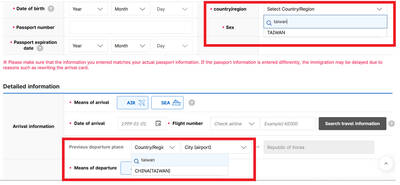
Jason Han says that the e-arrival card spat between South Korea and Taiwan shows that Seoul is signaling adherence to its “one-China” policy, while Taiwan’s response reflects a reciprocal approach. “Attempts to alter the diplomatic status quo often lead to tit-for-tat responses,” the analyst on international affairs tells the Taipei Times, adding that Taiwan may become more cautious in its dealings with South Korea going forward. Taipei has called on Seoul to correct its electronic entry system, which currently lists Taiwan as “China (Taiwan),” warning that reciprocal measures may follow if the wording is not changed before March 31. As of yesterday,
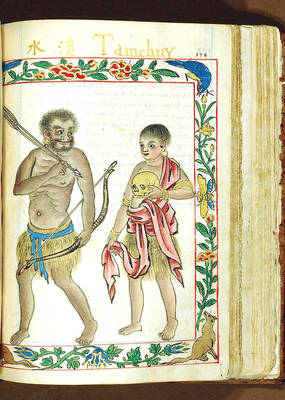
The Portuguese never established a presence on Taiwan, but they must have traded with the indigenous people because later traders reported that the locals referred to parts of deer using Portuguese words. What goods might the Portuguese have offered their indigenous trade partners? Among them must have been slaves, for the Portuguese dealt slaves across Asia. Though we often speak of “Portuguese” ships, imagining them as picturesque vessels manned by pointy-bearded Iberians, in Asia Portuguese shipping between local destinations was crewed by Asian seamen, with a handful of white or Eurasian officers. “Even the great carracks of 1,000-2,000 tons which plied

On Thursday, former Taipei mayor and founder of the Taiwan People’s Party (TPP) Ko Wen-je (柯文哲) was sentenced to 17 years in prison and had his civil rights suspended for six years over corruption, embezzlement and other charges. Seven others related to the case were also handed prison sentences, while two were found not guilty. It has been a bad week for the TPP. On Tuesday, prosecutors charged Chinese immigrant Xu Chunying (徐春鶯) with suspicion of taking part in Beijing-directed election interference. Xu has strong links to the TPP, which once offered her a party list legislator nomination. Tuesday also


 RSS
RSS