


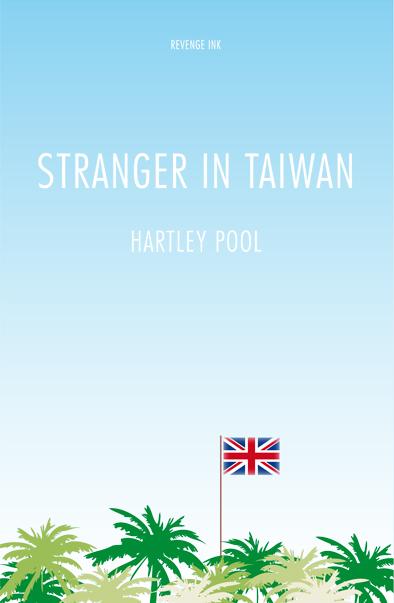
Hartley Pool (who’s a native of Hartlepool, UK) is a pseudonym for John Anderson, a former language teacher in Taiwan now living in Kuala Lumpur. Stranger in Taiwan is his comic novel about a fictional language-teacher’s experiences here.
The narrator is Hartley, 31, a British teacher with previous teaching experience in Romania, Hungary, Spain and Singapore who meets a Taiwanese girl, Anita, in the UK, and flies to Taiwan to be with her.
He looks for teaching work but is initially judged to be over-qualified. After suffering from salmonella poisoning from eating shrimps, he lands a job at a junior high school. He buys Anita a Louis Vuitton handbag costing NT$60,000 in Taipei 101, twice the price, he ruminates, of the PlayStation 3 he’d hoped to buy for himself.
Several features of Taiwanese life are invoked — working on Christmas Day, 7-Elevens staying open throughout typhoons (they’re “the cockroaches of the retail world,” able to survive any disaster, he writes), night markets crowded with people looking for unmentionable animal parts as food, socializing at Taipei’s Brass Monkey, and so on.
There are several trips out of Taipei — to Hong Kong to renew his visa, to Miaoli to savor Hakka specialties, to Guilin, China, for a short vacation, then to Yulin, Kenting, and finally Miaoli again.
In the second half of the book he gets a teaching job with the British Council. Episodes follow describing being driven by Anita for the first time after she’s passed her test, cycling (one of the more entertaining episodes), riding the Maokong Gondola, and buying an apartment — a particularly nice and inexplicably cheap one on the fourth floor, facing a cemetery, is declined, reluctantly on his part but emphatically on Anita’s.
Then Anita’s aunt from the US comes to stay for three weeks, with Anita’s mother there too for much of the time. Hartley has a tooth extracted by a reluctant dentist just as the Year of the Dog turns into the Year of the Pig, an event that locates the story in early 2007.
The author’s fellow language teachers might find elements of his account that resonate with their own experiences and hence enjoy it more than I did. Anderson is a well-established stand-up comic and the novel reads like a comedy routine with laugh points regularly dispersed throughout.
The dialogue is sprinkled with mild obscenities, though there are no actual sex descriptions, merely an on-going joke about pedophiles which is hard to understand and consequently to come to terms with.
Both typhoons and earthquakes are treated with comic unconcern.
It’s unwarranted to criticize a book for not being something it never sets out to be, so it’s perhaps unfair to say that there are swathes of Taiwan life untouched by this tale. Few Taiwanese other than Hartley’s girlfriend appear, and none of those that do are presented in depth. The grandeur of the country’s landscapes doesn’t figure significantly, nor any of its cultural life. Neither politics nor public affairs make an appearance. Again, these were never on the agenda to begin with, but something of their nature could have been expected if Taiwan’s essential character was being depicted.
This, then, is a collection of fictional peeps from the window by a rather unadventurous Briton. Because the writer wants his narrative to be funny, they’re usually negative. But Hartley Pool isn’t entirely negative. Air Macau, some noodles at Yulin and a son-et-lumiere show in Guilin are all treated to generous praise.
By and large, though, this is a novel marked by a farcical breeziness, and you feel you ought to be hearing the author reading it aloud to get its full flavor. It’s not really a novel as such, but it’s no worse for that.
Stranger in Taiwan is available from Amazon both as a paperback and as a Kindle download, and is on sale in the UK, though apparently not yet in bookshops in Taiwan.

As mega K-pop group BTS returns to the stage after a hiatus of more than three years, one major market is conspicuously missing from its 12-month world tour: China. The omission of one of the group’s biggest fan bases comes as no surprise. In fact, just the opposite would have been huge news. China has blocked most South Korean entertainment since 2016 under an unofficial ban that also restricts movies and the country’s popular TV dramas. For some Chinese, that means flying to Seoul to see their favorite groups perform — as many were expected to do for three shows opening
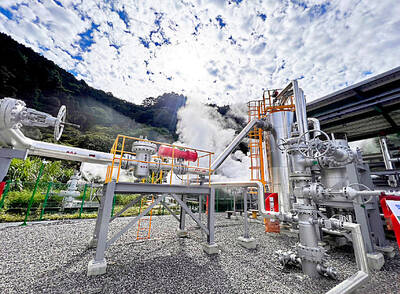
Taiwan’s semiconductor industry consumes electricity at rates that would strain most national grids. Taiwan Semiconductor Manufacturing Co (TSMC) alone accounted for more than 9 percent, or 2,590 megawatts (MW), of the nation’s power demand last year. The factories that produce chips for the world’s phones and servers run around the clock. They cannot tolerate blackouts. Yet Taiwan imports 97 percent of its energy, with liquefied natural gas reserves measured in days. Underground, Taiwan has options. Studies from National Taiwan University estimate recoverable geothermal resources at more than 33,000 MW. Current installed capacity stands below 10 MW. OBSTACLES Despite Taiwan’s significant geothermal potential, the

In our discussions of tourism in Taiwan we often criticize the government’s addiction to promoting food and shopping, while ignoring Taiwan’s underdeveloped trekking and adventure travel opportunities. This discussion, however, is decidedly land-focused. When was the last time a port entered into it? Last week I encountered journalist and travel writer Cameron Dueck, who had sailed to Taiwan in 2023-24, and was full of tales. Like everyone who visits, he and his partner Fiona Ching loved our island nation and had nothing but wonderful experiences on land. But he had little positive to say about the way Taiwan has organized its
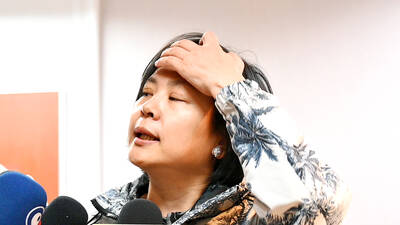
The entire Li Zhenxiu (李貞秀) saga has been an ugly, complicated mess. Born in China’s Hunan Province, she moved to work in Shenzhen, where she met her future Taiwanese husband. Most accounts have her arriving in Taiwan and marrying somewhere between 1993 and 1999. She built a successful career in Taiwan in the tech industry before founding her own company. She also served in high-ranking positions on various environmentally-focused tech associations. She says she was inspired by the founding of the Taiwan People’s Party (TPP) in 2019 by Ko Wen-je (柯文哲), and began volunteering for the party soon after. Ko


 RSS
RSS