


Summer is in full swing, and there are few better ways to cool down than with a plate of mango shaved ice, and I’m not just talking about the immensely popular Yong Kang 15 (永康15), which occupies the spot that the legendary Ice Monster (冰館) once did. For those who have grown weary of waiting in the long queue outside that shaved ice shop on Yongkang Street (永康街), Mango ChaCha (芒果恰恰) is an equally good, if not better, alternative.
Walk into the brightly decorated shop and the scent of mangos wafts through the air, with the luscious fruit invitingly displayed in paper cartons and containers.
Proprietor Chang Chih-min (張智閩) knows the fruit well. His mangos reportedly come from orchards that produce top-grade varieties for export to Japan and South Korea.
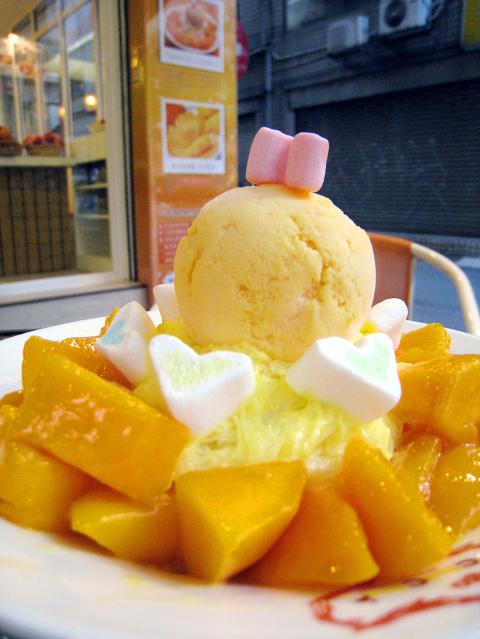
Photo: Ho Yi, Taipei Times
But premium ingredients mean higher prices. The cheapest shaved ice item on the menu is the NT$140 mango chacha brown sugar shaved ice (芒果恰恰黑糖剉冰), which blends diced mango with a homemade brown sugar syrup.
A mango maniac’s dream come true, the mango chacha snowflake ice (芒果恰恰雪花冰, NT$200) is made from a thick layer of “snowflake ice” — a frozen concoction made from milk and the fruit that is topped with diced mango, condensed milk and a scoop of handmade mango ice cream.
This mango extravagance is delicately fragrant but isn’t cloying. And like the rest of the shop’s frozen desserts, it includes a plenteous serving of fruit.
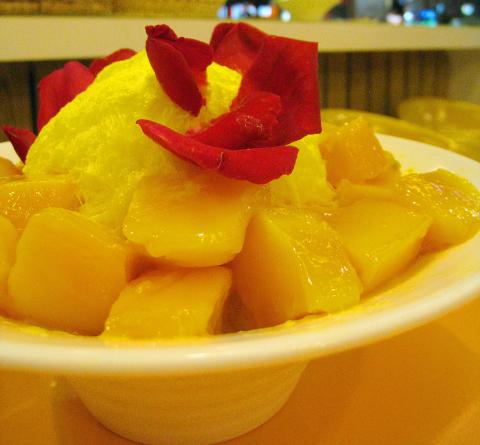
Photo: Ho Yi, Taipei Times
Rose lover (風花雪月, NT$280), the shop’s most expensive menu option, spreads rose petals on a bed of snowflake ice and diced mango. The innovative dish is gorgeous to look at, but the petals’ aroma and flowery taste do not go well with the fruit.
Icy desserts aside, the ambitious shop has developed a whole range of mango products including mango milkshake (NT$80), mango slush (NT$100), mango jam (NT$230 and NT$380), dried mango slices (NT$60 and NT$40) and mango cake (芒果酥, NT$42 each). For tipplers, there’s mango liqueur (14 percent alcohol by volume, NT$580), which has a pleasantly sweet and smooth taste, and a mango spirit (41 percent abv) will hit the store shelf soon.
Mango ChaCha is a five-minute walk from the intersection of Guangfu South Road (光復南路) and Xinyi Road (信義路).

Just after 6am, I walked up to the ticket gate at Taipei Main Station and entered the Taiwan Railway platform without scanning any ticket; instead, I flashed the Sanrio Fun Rail pass on my phone to the gate worker and was admitted. I found my train and prepared to board. My destination? This very same station. I was embarking on a 13-hour journey on one of two round-the-island trains operated by ezTravel. They run each day, one counterclockwise around the island and one clockwise. They differ in a number of ways from an ordinary Taiwan Railway train and can make for
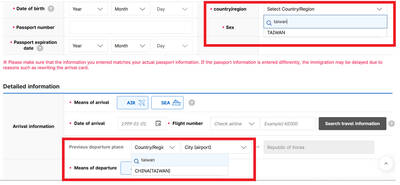
Jason Han says that the e-arrival card spat between South Korea and Taiwan shows that Seoul is signaling adherence to its “one-China” policy, while Taiwan’s response reflects a reciprocal approach. “Attempts to alter the diplomatic status quo often lead to tit-for-tat responses,” the analyst on international affairs tells the Taipei Times, adding that Taiwan may become more cautious in its dealings with South Korea going forward. Taipei has called on Seoul to correct its electronic entry system, which currently lists Taiwan as “China (Taiwan),” warning that reciprocal measures may follow if the wording is not changed before March 31. As of yesterday,
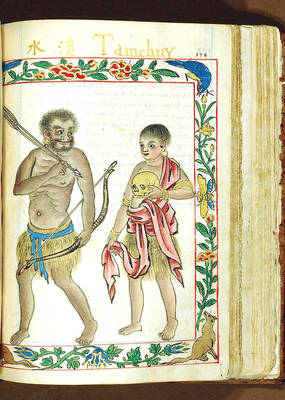
The Portuguese never established a presence on Taiwan, but they must have traded with the indigenous people because later traders reported that the locals referred to parts of deer using Portuguese words. What goods might the Portuguese have offered their indigenous trade partners? Among them must have been slaves, for the Portuguese dealt slaves across Asia. Though we often speak of “Portuguese” ships, imagining them as picturesque vessels manned by pointy-bearded Iberians, in Asia Portuguese shipping between local destinations was crewed by Asian seamen, with a handful of white or Eurasian officers. “Even the great carracks of 1,000-2,000 tons which plied

On Thursday, former Taipei mayor and founder of the Taiwan People’s Party (TPP) Ko Wen-je (柯文哲) was sentenced to 17 years in prison and had his civil rights suspended for six years over corruption, embezzlement and other charges. Seven others related to the case were also handed prison sentences, while two were found not guilty. It has been a bad week for the TPP. On Tuesday, prosecutors charged Chinese immigrant Xu Chunying (徐春鶯) with suspicion of taking part in Beijing-directed election interference. Xu has strong links to the TPP, which once offered her a party list legislator nomination. Tuesday also


 RSS
RSS