


Aboriginal activist Hu De-fu (胡德夫, commonly known as Kimbo) makes a long overdue return to the big stage tomorrow night with a concert at Legacy Taipei (傳音樂展演空間). Performing for the first time under his full Aboriginal name, Ara Kimbo, the musician will showcase songs from an upcoming album.
“It’s been a long time since I performed. I am 60 now and I want to perform under my Aboriginal name at least once,” Kimbo told the Taipei Times earlier this week. In addition to premiering new songs from his upcoming album, Kimbo, who has not played a solo concert at such a large venue since the 1970s, will cover classics by Bob Dylan and Don McLean. Aboriginal acts Samingad (紀曉君) and Matzka (瑪斯卡) will appear as guests.
The new album — tentatively titled Sky High Mountain Blues (大武山藍調) — is scheduled to be released next month.
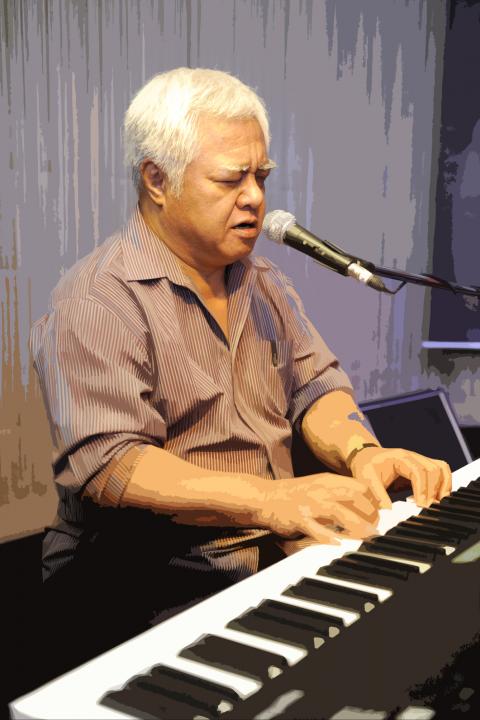
Photo: Taipei Times
Part Puyuma (卑南族) and part Paiwan (排灣族), Kimbo grew up in Pingtung and became interested in music when he joined a choir while studying at Tamkang Senior High in Taipei.
In the 1970s, he befriended folk singer Lee Shuang-tze (李雙澤) and started performing self-penned folk songs at venues in Taipei, including the Leofoo Hotel and the coffee shop at the then-Columbian embassy. His sincere, heartfelt folk tunes earned him the moniker “Father of Taiwanese Folk” (台灣民歌之父).
After Lee drowned at the age of 28 in 1977, Kimbo premiered his now-famous song Formosa (美麗島) at the funeral.
“When we went to Lee’s home after his death, we found the lyrics for Formosa there,” he said.
The tune soon became an anthem among political activists. After the 1979 Kaohsiung Incident, Formosa was associated with the banned Formosa Magazine (美麗島雜誌) and Kimbo was barred from radio and TV.
Undeterred, Kimbo opted to use his music as a platform to push for social reform. He campaigned for the Northern Students Alliance (a group of Aboriginal university students), for the Aboriginal miners killed in the 1984 Haishan mining disaster, and against the construction of a nuclear waste dump on Lanyu Island. He helped found the Minority Affairs Council in 1982 and established the Alliance of Taiwan Aborigines two years later.
Kimbo’s political activism derailed his music career until his first album, In a Flash (匆匆), was released in 2005.
“How can you hear people cry and howl and turn your back and not face it?” he said. “I might have missed out on fortune and success, but I was honest to myself.”
He went on to win both the Best Lyricist and Best Song of the Year Golden Melody Awards in 2006 for the single Wind of the Pacific (太平洋的風).
“Good music is honest music that gives people blessings, dreams and hope,” he said. “A good song is a canto that glorifies the Earth and its people.”
Though he has found success, Kimbo’s activism is undiminished.
“I want to help refine governmental policies so that the many outstanding Aboriginal singers I know can have the chance to release their works,” he said.
Kimbo is scheduled to perform at the Taipei Arena (台北小巨蛋) on June 25.
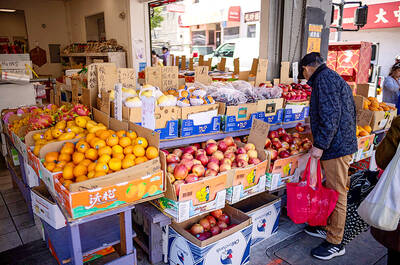
Ajay Verma, a consultant gastroenterologist at Kettering general hospital in Northamptonshire, says our gut is a “complex machine.” “It is constantly providing us with the nutrition we need, initially to grow and develop, and then for us to survive, thrive and repair from injury and illness.” How can we keep it functioning well? Put simply: “Make sure what you put into it is balanced, and that you clear out its waste products adequately,” Verma says. “In a general gastroenterology clinic, the most common conditions we see are irritable bowel syndrome (IBS), gastroesophageal reflux disease, inflammatory bowel disease and constipation,” says Nisha
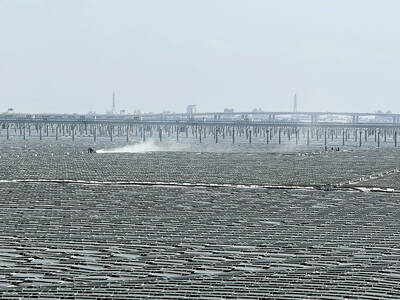
The arithmetic is straightforward and uncomfortable. By the end of 2025, Taiwan had committed itself to a 50-30-20 electricity mix — half natural gas, 30 per cent coal, 20 per cent renewables. The Ministry of Economic Affairs’s (MOEA) own monthly energy reports tell a different story. Natural gas reached 47.8 per cent of generation last year. Coal stood at 35.4 per cent, comfortably above its target ceiling. Renewables came in at 13.1 per cent, well short of the 20 per cent Taipei had pledged a decade earlier. Installed renewable capacity reached roughly half of the 12 gigawatts (GW) the government

Last week US President Donald Trump was asked by a reporter whether he would speak on the phone to the President of Taiwan. “l’ll speak to him. I speak to everybody. We have that situation very well in hand,” Trump said. This marked the second time in a couple of weeks he had said he would talk to the President of Taiwan. In 2016 he famously took a call from then-president Tsai Ing-wen (蔡英文), when he was president-elect. Despite warnings that the apocalypse was nigh because of a phone call, the world quickly forgot about the conversation between two democratically-elected presidents.
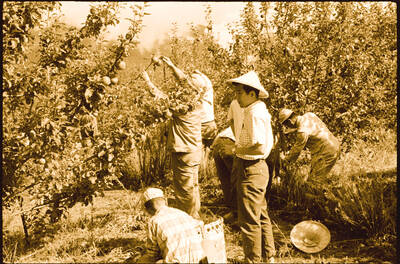
May 25 to May 31 Few believed that apples could be cultivated on a commercial scale in Taiwan’s high mountains. When horticulturalist Cheng Chao-hsiung (程兆熊) first proposed the idea in 1955, both American and Taiwanese colleagues dismissed it as implausible, arguing that temperate fruit could not be reliably grown on a subtropical island, especially on rugged terrain. However, it was this terrain in the Central Mountain Range where many Chinese Civil War veterans were resettled in the late 1950s. With limited job prospects and no family in Taiwan, they were placed on cooperative farms aimed toward self-sufficiency. Some say the conditions


 RSS
RSS