


Taichung is putting on a free outdoor rock festival this weekend, with around 90 bands slated to perform on four stages at Wensin Park (文心森林公園) tomorrow and Sunday.
Prominent indie performers from Taiwan, Japan and South Korea are featured at the third annual Rock in Taichung (搖滾台中樂團節), which is sponsored by Taichung’s Bureau of Cultural Affairs.
Highlights for tomorrow include Japanese pop-punk group Mix Market, and Start of the Day, a band that mixes emo, techno and post-rock. They appear on the park’s main stage, the 6,000-seat Fulfillment Amphitheatre (文心圓滿戶外劇場).
Featured acts on Sunday include indie-pop artist Ciacia (何欣穗) with electro-pop band The Girl and the Robots (女孩與機器), rock trio Green!Eyes and Japanese emo outfit Good 4 Nothing.
The smaller stages promise to be just as lively, said musician Nuno Chen (陳信宏), who helped organized the festival program.
One successful aspect of last year’s festival was that each of the four stages attracted “a lot of people,” he said. Chen said more than 60,000 people in total attended last year’s two-day festival.
As with last year’s event, each stage presents a specific theme. The Attack Stage (衝擊舞台) generally caters to bands from Taichung’s indie scene, which favors punk and heavy metal. Alien Avenge (異族亡魂) is among the list of metal bands performing tomorrow. Sunday is for the punks, with an all-day lineup that includes hometown favorites Damnkidz, as well as popular Taipei groups Children Sucker (表兒) and 88 Balaz (88顆芭樂籽).
Social activism is the theme tomorrow at the Garage Liberation Stage (車庫解放舞台), with a series of locally produced documentaries screening throughout the day. There will also be performances by Aboriginal singer-songwriter Panai, who is known for her anti-nuclear activism in Taitung, and folk rock group Country Boys (農村武裝青年), who sing about environmental issues.
Chen touts this stage as one of the unique features of Rock in Taichung, noting that many music festivals are wary of bands mentioning political issues.
“But this thinking isn’t right,” he said. “A lot of rock ’n’ roll looks at things in society, environmental problems, societal problems. So if you restrict rock bands and tell them ‘You can’t do this or that,’ that would be a strange thing.”
In addition to live music, there will be food courts and an arts and crafts market, which will be set up in the grounds of Wensin Park.
As of press time, organizers say the event will proceed even if it rains, but it’s best to check the festival Web site for the latest updates.



Just after 6am, I walked up to the ticket gate at Taipei Main Station and entered the Taiwan Railway platform without scanning any ticket; instead, I flashed the Sanrio Fun Rail pass on my phone to the gate worker and was admitted. I found my train and prepared to board. My destination? This very same station. I was embarking on a 13-hour journey on one of two round-the-island trains operated by ezTravel. They run each day, one counterclockwise around the island and one clockwise. They differ in a number of ways from an ordinary Taiwan Railway train and can make for
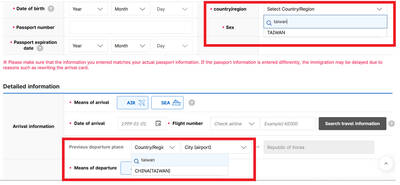
Jason Han says that the e-arrival card spat between South Korea and Taiwan shows that Seoul is signaling adherence to its “one-China” policy, while Taiwan’s response reflects a reciprocal approach. “Attempts to alter the diplomatic status quo often lead to tit-for-tat responses,” the analyst on international affairs tells the Taipei Times, adding that Taiwan may become more cautious in its dealings with South Korea going forward. Taipei has called on Seoul to correct its electronic entry system, which currently lists Taiwan as “China (Taiwan),” warning that reciprocal measures may follow if the wording is not changed before March 31. As of yesterday,
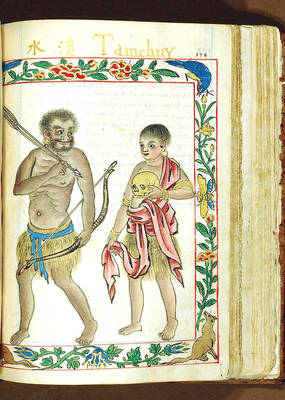
The Portuguese never established a presence on Taiwan, but they must have traded with the indigenous people because later traders reported that the locals referred to parts of deer using Portuguese words. What goods might the Portuguese have offered their indigenous trade partners? Among them must have been slaves, for the Portuguese dealt slaves across Asia. Though we often speak of “Portuguese” ships, imagining them as picturesque vessels manned by pointy-bearded Iberians, in Asia Portuguese shipping between local destinations was crewed by Asian seamen, with a handful of white or Eurasian officers. “Even the great carracks of 1,000-2,000 tons which plied

On Thursday, former Taipei mayor and founder of the Taiwan People’s Party (TPP) Ko Wen-je (柯文哲) was sentenced to 17 years in prison and had his civil rights suspended for six years over corruption, embezzlement and other charges. Seven others related to the case were also handed prison sentences, while two were found not guilty. It has been a bad week for the TPP. On Tuesday, prosecutors charged Chinese immigrant Xu Chunying (徐春鶯) with suspicion of taking part in Beijing-directed election interference. Xu has strong links to the TPP, which once offered her a party list legislator nomination. Tuesday also


 RSS
RSS