


The heart-warming tale of a friendly, flatulent and hitch-hiking dog has seen major mining firms branch out into new territory, as they support an Australian film about the legendary Red Dog.
Companies such as Rio Tinto and Woodside Petroleum have backed the low-budget movie, which depicts Western Australia’s resource-rich Pilbara region in the 1970s when the mining industry was taking off there.
“It was hard in the beginning because they are not in the film business,” producer Nelson Woss said of working with the companies. “But we talked to them and they acknowledged that it was a really important story.”
The result was that the makers of the film Red Dog, which stars American Josh Lucas, were given rare access to mine sites close to the coastal town of Dampier and were able to follow the mining of iron ore from pit to port.
“We’ve had unprecedented access,” Woss said. “We’ve gone right into their operations and filmed it. Yesterday we were on a Chinese ore carrier, filming the ore being put on the carrier.”
Red Dog is based on the life of a russet-colored kelpie (Australian sheep dog) who became a key figure in Dampier as the community grew up around the expanding mining industry.
The entrance to the town now boasts a large statue of the dog, a monument which inspired the writer Louis de Bernieres to pen a half-fictional account of the animal’s life on which the movie is based.
Woss said the stories he has been told about Red Dog during the weeks the crew has been filming in hot and sparsely populated Pilbara have supported the animal’s legendary stature in the region.
“He interacted with everybody,” he said. “But whenever there was an event or a community get-together, whether it was something official or a local barbecue at the beach, the dog had an uncanny ability to turn up.
“And, as a result, he was basically a member of the town.”
Woss said the dog, owned by none but cared for by all, provided company to many of those stranded in the remote area by their work — whether they were carrying out the hardest manual work or middle-managers sitting in the air-conditioned site office. He also interacted with local Aborigines.
“The dog went everywhere, he hitch-hiked on trucks, he was on trains, he apparently was on a boat. The workers just adored him so they would take him along wherever they went,” he said.
“He had a unique ability to hitch-hike. He could tell who his friends were from the sound of their cars,” Woss said, adding that the dog would wait in the middle of the road until the car stopped and picked him up.
The dog traveled intensively in the Pilbara, an area where towns can be hundreds of kilometers apart, as well as around Western Australia — a key producer of the iron ore exports driving the nation’s economic recovery.
Woss said several locals had told him the story of Red Dog being taken by a holidaying miner to Perth, and then escaping from the man and hitch-hiking the 1,500km back to Dampier.
The canine was also known for its flatulence. “I think what happened was everybody fed him,” Woss said. “And they weren’t too worried about what they fed him. And as a result, I think at times he had digestion issues.”
Dampier was shattered when Red Dog died, at an old age, in November 1979 because he had been part of the town for the best part of a decade, Woss said.
Lucas, whose credits include Sweet Home Alabama and A Beautiful Mind, heads a cast which includes Australians Rachael Taylor and Noah Taylor and canine co-star Koko. He said the dog had brought people together.
“It’s a strange thing what this damned red dog did,” he told the Australian from the set this week.
The film, which wraps up its Pilbara shoot this week, is due for release by Roadshow Films early next year. “It’s an underdog film,” Woss said.



Just after 6am, I walked up to the ticket gate at Taipei Main Station and entered the Taiwan Railway platform without scanning any ticket; instead, I flashed the Sanrio Fun Rail pass on my phone to the gate worker and was admitted. I found my train and prepared to board. My destination? This very same station. I was embarking on a 13-hour journey on one of two round-the-island trains operated by ezTravel. They run each day, one counterclockwise around the island and one clockwise. They differ in a number of ways from an ordinary Taiwan Railway train and can make for
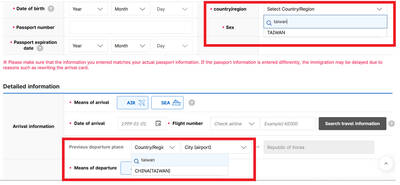
Jason Han says that the e-arrival card spat between South Korea and Taiwan shows that Seoul is signaling adherence to its “one-China” policy, while Taiwan’s response reflects a reciprocal approach. “Attempts to alter the diplomatic status quo often lead to tit-for-tat responses,” the analyst on international affairs tells the Taipei Times, adding that Taiwan may become more cautious in its dealings with South Korea going forward. Taipei has called on Seoul to correct its electronic entry system, which currently lists Taiwan as “China (Taiwan),” warning that reciprocal measures may follow if the wording is not changed before March 31. As of yesterday,

The Portuguese never established a presence on Taiwan, but they must have traded with the indigenous people because later traders reported that the locals referred to parts of deer using Portuguese words. What goods might the Portuguese have offered their indigenous trade partners? Among them must have been slaves, for the Portuguese dealt slaves across Asia. Though we often speak of “Portuguese” ships, imagining them as picturesque vessels manned by pointy-bearded Iberians, in Asia Portuguese shipping between local destinations was crewed by Asian seamen, with a handful of white or Eurasian officers. “Even the great carracks of 1,000-2,000 tons which plied

On Thursday, former Taipei mayor and founder of the Taiwan People’s Party (TPP) Ko Wen-je (柯文哲) was sentenced to 17 years in prison and had his civil rights suspended for six years over corruption, embezzlement and other charges. Seven others related to the case were also handed prison sentences, while two were found not guilty. It has been a bad week for the TPP. On Tuesday, prosecutors charged Chinese immigrant Xu Chunying (徐春鶯) with suspicion of taking part in Beijing-directed election interference. Xu has strong links to the TPP, which once offered her a party list legislator nomination. Tuesday also


 RSS
RSS