


Taipei is home to a fair number of Japanese chain restaurants serving tonkatsu, or Japanese fried pork cutlet, with Saboten (勝博殿), Anzu (杏子) and Koshiya (晃士家) among the most popular.
In its hometown of Hakone, Japan, Ginkatsutei has been making tonkatsu for more than 35 years. The restaurant opened a branch in Taipei’s East District (東區) last year.
Unlike many tonkatsu eateries, whose interior designs favor wood and shades of brown, Ginkatsutei’s strong palette of black and reds exudes a chic mien.
The clever use of glass to partition the dining space makes the restaurant look deceptively spacious.
However, when it comes to the food, the chef sticks with old-school simplicity rather than a fancy menu of tonkatsu stuffed with various fillings.
Ginkatsutei’s pork fillet and pork loin cutlets are coated in a homemade breadcrumb mix, which alone deserves special mention, and deep-fried until golden and crispy.
The cutlet may look dry on the outside, but is gratifyingly succulent on the inside, and is served with a tart tonkatsu sauce and punchy Japanese mustard sauce.
Health-conscious diners may find it consolatory to know that the restaurant uses brown rice oil, which it touts as rich in vitamins, to deep-fry the tonkatsu.
Besides the pork fillet set
(里脊豬排御膳, NT$320) and pork loin set (腰內豬排御膳, NT$350), the ginkatsu set meal (銀勝御膳, NT$350), a popular choice, consists of two tempura prawns and one tonkatsu chopped up into four portions.
Ginkatsutei’s must-try signature dish has little to do with meat: deep-fried breaded tofu, served on a bed of tangy onion in a clay pot, and accompanied with a small portion of ground pork
(豆腐勝煮御膳, NT$350).
The bean curd is made specially for the restaurant through a process that employs sea salt to coagulate the soy milk instead of the often-used quicklime.
All set meals come with white rice, miso soup — exceedingly salty — Japanese pickles, shredded cabbage dressed in a piquant vinegar and mustard sauce, an additional side dish, dessert and a soft drink.
Shochu (燒酒) and beer are also available.


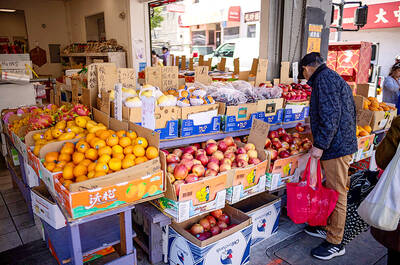
Ajay Verma, a consultant gastroenterologist at Kettering general hospital in Northamptonshire, says our gut is a “complex machine.” “It is constantly providing us with the nutrition we need, initially to grow and develop, and then for us to survive, thrive and repair from injury and illness.” How can we keep it functioning well? Put simply: “Make sure what you put into it is balanced, and that you clear out its waste products adequately,” Verma says. “In a general gastroenterology clinic, the most common conditions we see are irritable bowel syndrome (IBS), gastroesophageal reflux disease, inflammatory bowel disease and constipation,” says Nisha
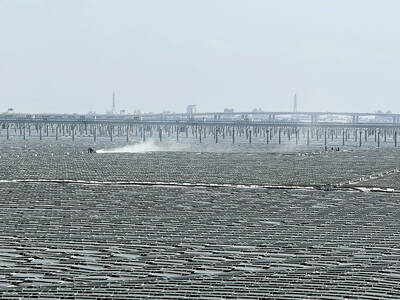
The arithmetic is straightforward and uncomfortable. By the end of 2025, Taiwan had committed itself to a 50-30-20 electricity mix — half natural gas, 30 per cent coal, 20 per cent renewables. The Ministry of Economic Affairs’s (MOEA) own monthly energy reports tell a different story. Natural gas reached 47.8 per cent of generation last year. Coal stood at 35.4 per cent, comfortably above its target ceiling. Renewables came in at 13.1 per cent, well short of the 20 per cent Taipei had pledged a decade earlier. Installed renewable capacity reached roughly half of the 12 gigawatts (GW) the government

Last week US President Donald Trump was asked by a reporter whether he would speak on the phone to the President of Taiwan. “l’ll speak to him. I speak to everybody. We have that situation very well in hand,” Trump said. This marked the second time in a couple of weeks he had said he would talk to the President of Taiwan. In 2016 he famously took a call from then-president Tsai Ing-wen (蔡英文), when he was president-elect. Despite warnings that the apocalypse was nigh because of a phone call, the world quickly forgot about the conversation between two democratically-elected presidents.
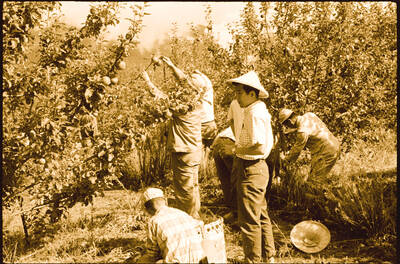
May 25 to May 31 Few believed that apples could be cultivated on a commercial scale in Taiwan’s high mountains. When horticulturalist Cheng Chao-hsiung (程兆熊) first proposed the idea in 1955, both American and Taiwanese colleagues dismissed it as implausible, arguing that temperate fruit could not be reliably grown on a subtropical island, especially on rugged terrain. However, it was this terrain in the Central Mountain Range where many Chinese Civil War veterans were resettled in the late 1950s. With limited job prospects and no family in Taiwan, they were placed on cooperative farms aimed toward self-sufficiency. Some say the conditions


 RSS
RSS