


The US$300 pair of designer jeans is now, courtesy of the recession, the US$200 pair of designer jeans.
“It was all just a fad,” said Jeff Rudes, a founder of the hot-denim-label-du-jour J Brand Jeans and an astute observer of the suspiciously inflated prices of fashion’s most eternally reinvented staple. Like any commodity that becomes overpriced, there eventually comes a market correction. And denim’s day of reckoning was long overdue.
“The floors at most of the major stores were so overassorted that they almost looked like Loehmann’s,” Rudes said. “They were just cramming jeans onto the racks.”
The introduction of US$300 jeans — perhaps even more than US$1,000 coin purses and US$500 plastic sunglasses — marked the moment when customers really began to question the prices they were seeing in department stores. Cotton dungarees for the price of an iPod was a stretch so extreme that retailers had to come up with a whole new term to suggest that the new jeans were different from the US$100 jeans they used to sell in the 1990s.
So, early in the decade designer jeans became “premium” jeans — as in, you had to pay a premium to wear them: US$340 for Acne jeans, US$350 for Ksubi jeans, US$359 for True Religion jeans, US$395 for Notify jeans, US$580 for Dior jeans and so on. Before the recession, premium denim was one of the fastest growing categories of the apparel business, and there seemed to be no limit to what customers would pay for the latest label, fit, finish, wash or whatever Paris Hilton wore.
But the denim bubble has burst, and only a handful of such extravagantly priced jeans remain at the jeans bar — labels like PRPS and 45rpm, which, in tacit acknowledgment of the decline of the premium business, are now more often referred to as “artisanal” jeans. Meanwhile, the sweet spot for designer jeans has relocated to a neighborhood just below US$200, even though the styles do not look substantially different from the US$300 jeans that were on the sales floors of Barneys New York and Bloomingdale’s only two years ago.
“The key price is under US$200 now,” said Eric Jennings, the men’s fashion director at Saks Fifth Avenue. “The superexpensive stuff is not performing as well.”
Despite all this tumult, designer denim is still one of the few bright spots of the apparel industry. Annual sales of all women’s jeans were actually up 5 percent over last year to US$8.2 billion through August, though average prices were down 1 percent, according to the research firm NPD — the pricing shift is reflective of a broader reset taking place in luxury stores.
During the modern gilded age, the spiraling prices of designer clothes had more to do with driving profits than the actual design or construction of a garment. Designers found they could charge a lot for the perception of prestige. Dresses and suits and handbags were priced like cars, and consumers didn’t blink. But with jeans, it just felt more obvious that some kind of game was being played; the basic elements, after all, had not changed substantially in decades: five pockets, cotton, some rivets.
Now designers are facing pressure from stores and from their competitors to rethink prices, in many cases resulting in less expensive jeans or more styles at the lower end of each designer’s range. It has not gone unnoticed by executives behind the great denim rush of 2005 that even mainstream retailers like Gap and J. Crew have caught on to the appeal of Japanese denim, whisker treatments and fading details, and that they are now produce comparable premium-look jeans that cost around US$60. Banana Republic has a new denim line coming in January.
“Charging US$600 for jeans for no reason at all — those days are over,” said You Nguyen, the senior vice president of women’s merchandising and design for Levi Strauss & Co.
Diesel, the Italian jeans company that pioneered the three-figure category, used to produce only two styles at its lowest price of US$150 for men, US$160 for women. This season there are 10, said Renzo Rosso, the label’s founder, “because the market demanded more product at this level.”
Rock & Republic, another popular label, introduced a Recession Collection this spring with styles under US$140, about US$40 less than before. Ksubi, the maker of US$280 skintight jeans, is now producing less expensive styles for stores in the UK and Australia. And Citizens of Humanity found it could entice retailers with a new style for US$148, about 10 percent lower than its previous entry point.
“Below that, it is no longer premium,” said Gary Freedman, the company’s chief operating officer.
But that distinction seemed arbitrary before, and the broad pricing retrenchment suggests that there was nothing so premium about last year’s jeans except the profits. The retail price of most designer jeans is calculated by multiplying the wholesale cost by 2.2. A pair of jeans that costs US$158 at Saks, for example, was sold to the store for US$72.
While that is a typical markup for designer fashion, the actual costs of producing jeans are much lower, and so for many years it was considered a lucrative field for start-ups. In the early part of the decade, there were more than 40 start-ups. But many of those labels, once the next big things, are but memories. Remember Blue Cult? Antique Denim? Paper Denim & Cloth?
“Five years ago, it was easy to start a jeans company,” said Scott Morrison, one of the original founders of Paper Denim & Cloth in 1999 and later a founder of Earnest Sewn, who joined Evisu in May as its chief executive. “You basically have a market that is the fastest growing segment in the apparel business, and stores are overbuying because of it.”
Evisu is a good example. The brand, when it started in Japan in 1991, was so exclusive that only a few dozen pairs of jeans, priced at US$600, were produced each week, each with a hand-painted seagull logo on the back pocket. But the label’s popularity soon led to a global licensing agreement to produce runway collections in Italy and increasingly baggy and flashy street-wear styles that, while generating US$30 million in sales, devalued the brand to the point that no designer store would touch it.
Morrison said the label has been losing money for the last four years. His strategy is to revive Evisu by starting over, with a handful of clean, unadulterated styles that will be sold at Barneys beginning this month. Many of them under US$200.
But prices are not the only thing that has changed since the recession. The jeans business is just not the same without the swagger.
“You have the underpinnings of a disaster if people can’t turn this around,” Morrison said.
Of course, people will turn denim around and around and around, lately as skinny jeans or boyfriend jeans and even more recently as jeans so skinny they are called “jeggings.”
Rosso of Diesel also sensed it is time for a change. Last week, he met with his team of designers to give them a challenge, he said, to reinvent denim in a “younger way, a fresher way.”
“It’s been too many years that we’ve just looked at wash, and the time is now to make an evolution,” Rosso said. “Denim is the only fabric you really can transform.”

Just after 6am, I walked up to the ticket gate at Taipei Main Station and entered the Taiwan Railway platform without scanning any ticket; instead, I flashed the Sanrio Fun Rail pass on my phone to the gate worker and was admitted. I found my train and prepared to board. My destination? This very same station. I was embarking on a 13-hour journey on one of two round-the-island trains operated by ezTravel. They run each day, one counterclockwise around the island and one clockwise. They differ in a number of ways from an ordinary Taiwan Railway train and can make for
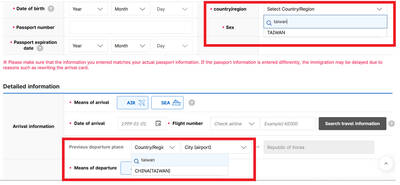
Jason Han says that the e-arrival card spat between South Korea and Taiwan shows that Seoul is signaling adherence to its “one-China” policy, while Taiwan’s response reflects a reciprocal approach. “Attempts to alter the diplomatic status quo often lead to tit-for-tat responses,” the analyst on international affairs tells the Taipei Times, adding that Taiwan may become more cautious in its dealings with South Korea going forward. Taipei has called on Seoul to correct its electronic entry system, which currently lists Taiwan as “China (Taiwan),” warning that reciprocal measures may follow if the wording is not changed before March 31. As of yesterday,
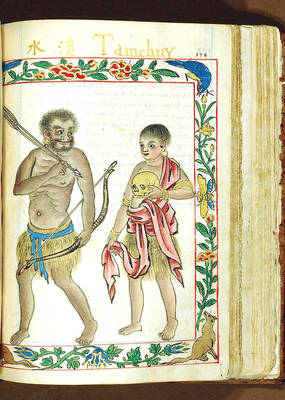
The Portuguese never established a presence on Taiwan, but they must have traded with the indigenous people because later traders reported that the locals referred to parts of deer using Portuguese words. What goods might the Portuguese have offered their indigenous trade partners? Among them must have been slaves, for the Portuguese dealt slaves across Asia. Though we often speak of “Portuguese” ships, imagining them as picturesque vessels manned by pointy-bearded Iberians, in Asia Portuguese shipping between local destinations was crewed by Asian seamen, with a handful of white or Eurasian officers. “Even the great carracks of 1,000-2,000 tons which plied

On Thursday, former Taipei mayor and founder of the Taiwan People’s Party (TPP) Ko Wen-je (柯文哲) was sentenced to 17 years in prison and had his civil rights suspended for six years over corruption, embezzlement and other charges. Seven others related to the case were also handed prison sentences, while two were found not guilty. It has been a bad week for the TPP. On Tuesday, prosecutors charged Chinese immigrant Xu Chunying (徐春鶯) with suspicion of taking part in Beijing-directed election interference. Xu has strong links to the TPP, which once offered her a party list legislator nomination. Tuesday also


 RSS
RSS