


Ink painting exhibitions have become an annual tradition at the Taipei Fine Arts Museum. The 2006 show Ink Transformation: Modern Ink Painting in Taiwan (水墨變相:現代水墨在台灣) examined the development of ink painting in Taiwan since the 1950s, while 2004’s Contemporary Ink Painting and the State of the Ink (當代水墨與水墨當代) took the 1980s as its starting point.
Last year’s Form, Ideas, Essence, Rhythm: Contemporary East Asian Ink Painting (形•意•質•韻 ─ 東亞當代水墨創作邀請展) displayed the work of artists from Japan, South Korea, Taiwan and China as a means of dispelling the popular notion that ink painting is a hidebound art form.
Open Flexibility: Innovative Contemporary Ink Art (開顯與時變-創新水墨藝術展), which is currently on display on the museum’s third floor, explores the evolution of ink painting in Taiwan since the 1960s and China since the 1980s.
Curator Liu Yung-jen (劉永仁) has assembled 80 works by 27 artists — 15 from Taiwan, 12 from China — as a means of tracing the revolutionary changes in ink painting that occurred in both countries. He dubs the new style “modern” in the Taiwanese context, but “experimental” when it comes to China’s ink painting endeavors.
“The professional terms used are different but the concepts are the same. It’s just that Taiwan developed ink painting in a different direction 20 years earlier than China,” Liu said, adding that China’s art fell under the influence of Taiwan’s earlier innovators.
Orthodox ink painting techniques developed over centuries had previously dominated the genre. For the past several hundred years, the literary themes such styles depicted as well as adherence to technical form determined the pedigree of the work. Artists were expected to hold the brush in a certain manner and apply paint to rice paper in a particular fashion.
This dogmatic conception of the genre began to lose steam at the end of the 1950s, when Taiwan’s ink painters broke with tradition and came under the influence of surrealism, abstract expressionism and pop art. The examples exhibited in Open Flexibility demonstrate that modernist experimentation freed Taiwanese artists from the formal constraints of the past and enabled them to employ ink in a revolutionary manner. When China opened up in the early 1980s, ink painters across the country followed in the innovative footsteps of their Taiwanese counterparts.
Liu masterfully sets the stage with three works by Taiwanese painter and art theorist Liu Kuo-sung (劉國松). Interaction (互動), a 1964 painting by Liu, portrays non-representational forms through the use of expressive brush strokes on homemade rice paper.
Yuan Chin-ta (袁金塔) employs the visual language of pop art to chronicle Taiwan’s folk culture and temple scenes, as well as other mainstays of local identity. In his 2008 collage Reading Beauty (書中自有顏如玉), he satirizes the decline of moral standards through the repetitive depiction of naked women.
Chinese ink painter Liu Zijian (劉子建), an experimentalist working in the early 1980s, breaks many, if not all, of the technical rules of traditional ink painting. He smudges, rubs and dabs the ink, creating distinct black and white forms that collide on the paper’s surface.
In Untitled (無題), Liu Yong (劉庸) freely splashes, drizzles and smears colored ink on his paintings, while Wang Chuan’s (王川) lyrical Static Sensation I (塵世之一) contains flowing lines reminiscent of Jackson Pollock’s expressionist drippings.
In their quest for new forms, some artists have even gone so far as to do away with ink. Using a lit cigarette, Chinese artist Wang Tiande (王天德) burns characters onto thin rice paper, which he then curtains over abstract paintings.
Others work without brushes. In Zhang Yu’s (張羽) Fingerprint series, the artist dipped his finger in spring water lightly saturated with colored ink and randomly pressed it on rice paper, creating dynamic visual tension.
The juxtaposition of Chinese experimental ventures and Taiwanese modernist undertakings illustrates the flexibility of ink painting, which is able to depict the multiplicity of contemporary society while remaining somewhat grounded in tradition. The exhibit’s subtext, of course, makes it perfectly clear that Chinese innovative ink painters lagged 20 years behind their Taiwanese counterparts because of China’s tumultuous
recent history.
Although the exhibition’s catalogue fully explains the remarkable aesthetic transitions taking place in both Taiwan and China, the exhibit fails to help those without a guide understand why the featured ink painters were cutting edge. Viewers raised on a bevy of modern and contemporary art will probably view the works and question the level of innovation present in the paintings. Had the museum provided visitors with a brief explanation of the ink painting tradition — even a traditional painting or two would suffice to elucidate the contrast — even those unversed in the art form would be better equipped to evaluate the truly revolutionary nature of the pieces on display.

After Jurassic Park premiered in 1993, people began to ask if scientists could really bring long-lost species back from extinction, just like in the hit movie. The idea has triggered “de-extinction” debates in several countries, including Taiwan, where the focus has been on the Formosan clouded leopard (designated after 1917 as Neofelis nebulosa brachyura). National Taiwan Museum’s (NTM) Web site describes the Formosan clouded leopard as “a subspecies endemic to Taiwan…it reaches a body length of 0.6m to 1.2m and tail length of 0.7m to 0.9m and weighs between 15kg and 30kg. It is entirely covered with beautiful cloud-like spots

Just after 6am, I walked up to the ticket gate at Taipei Main Station and entered the Taiwan Railway platform without scanning any ticket; instead, I flashed the Sanrio Fun Rail pass on my phone to the gate worker and was admitted. I found my train and prepared to board. My destination? This very same station. I was embarking on a 13-hour journey on one of two round-the-island trains operated by ezTravel. They run each day, one counterclockwise around the island and one clockwise. They differ in a number of ways from an ordinary Taiwan Railway train and can make for
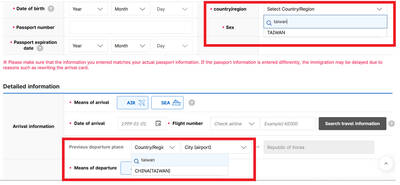
Jason Han says that the e-arrival card spat between South Korea and Taiwan shows that Seoul is signaling adherence to its “one-China” policy, while Taiwan’s response reflects a reciprocal approach. “Attempts to alter the diplomatic status quo often lead to tit-for-tat responses,” the analyst on international affairs tells the
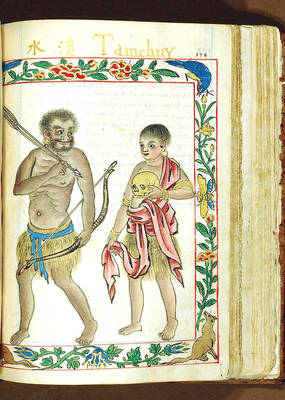
The Portuguese never established a presence on Taiwan, but they must have traded with the indigenous people because later traders reported that the locals referred to parts of deer using Portuguese words. What goods might the Portuguese have offered their indigenous trade partners? Among them must have been slaves, for the Portuguese dealt slaves across Asia. Though we often speak of “Portuguese” ships, imagining them as picturesque vessels manned by pointy-bearded Iberians, in Asia Portuguese shipping between local destinations was crewed by Asian seamen, with a handful of white or Eurasian officers. “Even the great carracks of 1,000-2,000 tons which plied


 RSS
RSS