


“You’ve been in the sun,” a woman remarked when she saw me last month, a hint of disapproval in her voice.
“No,” I was pleased to be able to reply. “I just use a tinted face cream and makeup to match.”
You see, I’ve learned my lesson, sort of. I’ve had four precancers (medically, actinic keratoses) removed from my face in recent years, the consequence of decades of unprotected exposure to ultraviolet radiation from the sun. From my teens through my 30s, I devoted hours to baking in the summer sun coated with baby oil, not sunscreen.
So far I’ve been fortunate — no skin cancers yet and minimal facial wrinkles at age 68. But I decided awhile back not to push my luck. I would rather not be the one in six Americans who eventually develops skin cancer. So I apply a facial moisturizer with sunscreen several times a day, and in spring through fall I minimize my time in the midday sun. I also wear sunglasses with full UV protection both for comfort and to protect against cataracts.
But I admit to two failings. Despite the admonitions of my dermatologist, who gives his patients guidelines called “Confessions of a Pale Dermatologist,” I don’t wear hats even though I know I should don one with a 10cm brim when walking or working outdoors. And I still love that tan look.
Now, though, I can acquire a summery glow far more safely from a tube.
ATTITUDES ABOUT TANS
A walk through pharmacy aisles attests to the popularity of two kinds of products: potent full-spectrum sunscreens that protect against cancer-causing sunburn and wrinkled leathery skin, and artificial tanning lotions, creams and sprays. When used correctly, these tanning products can safely provide natural-looking color (not the orange tinge of products past) without the risks of UV radiation.
Sunless tanning products are hot sellers despite the push of some fashionistas, like Simon Doonan, creative director of Barneys New York, who insists that the bronzed look “is very ’80s porno star, unhealthy and kind of sleazy.” In the current issue of The Skin Cancer Foundation Journal, Doonan cites examples like Tilda Swinton, Michelle Obama and Lucy Liu to show that what is now in fashion is “healthy, natural glowing skin” — the “color you were born with.”
Still, a summer tan seems to be coveted by many Westerners, whose values spread easily to others. Despite the traditionally prized porcelain skin of Asian cultures, in a survey of 546 Asian Americans published last month in The Archives of Dermatology, Emily Gorell and colleagues at Stanford University School of Medicine found that the more westernized the respondents, the more positive their attitudes toward tanning and sunbathing, and the more negative toward the use of sun protection.
And according to a 2006 report in Pediatrics, only minimal progress has been made in persuading American teenagers to adopt sun-protective behaviors.
In two nationally representative surveys, conducted in 1998 and 2004, Vilma Cokkinides, an epidemiologist at the American Cancer Society, and colleagues found that in both years, about 70 percent of teenagers reported having been sunburned during the summer. There was a significant decrease in sunburns among younger teenagers and an overall increase (to 39 percent from 31 percent) in those who said they regularly used sunscreen. But there was little change in time spent outdoors during the peak sun hours of 10am to 4pm and an increase in days spent at the beach.
In the 2004 survey, only one in three teenagers reported using sunglasses, one in 20 said they wore wide-brimmed hats, and two-thirds agreed or strongly agreed with the statement, “I look better when I have a tan.”
ADDING COLOR WITHOUT SUN
Those seeking a safe tan have a choice of products called sunless tanners and bronzers, including daily moisturizers, brush-on powders and sprays that gradually add a tan to the skin that washes off over time. These products use a color additive — a colorless sugar called dihydroxyacetone, or DHA — that darkens the skin by reacting with amino acids in the dead cells on the skin surface. The sun, in contrast, affects the deepest layers of the skin.
It is important to note that most of these products do not contain sunscreen ingredients and will not protect you from harmful UV radiation. Nor will the resulting tan protect you. You still will need to use sunscreen with an SPF value of 15 or higher (preferably 30 or higher in the summer). The most effective products contain a micronized form of titanium dioxide, which provides excellent protection without leaving you white as a ghost.
Tanning products that lack sunscreen must contain a warning on the label; consider it a word to the wise: “This product does not contain a sunscreen and does not protect against sunburn. Repeated exposure of unprotected skin while tanning may increase the risk of skin aging, skin cancer and other harmful effects to the skin even if you do not burn.”
FOLLOW INSTRUCTIONS
In choosing a product, pay attention to the shade. If you are light-skinned, look for products marked for light to medium skin tones. Those marked dark work best on people with naturally darker complexions who tan easily.
If you use a spray-on sunless tanner, be sure to follow the package directions. Keep the spray away from your eyes, mouth and mucous membranes. The risks of inhaling or ingesting DHA are not known.
To avoid uneven color, first wash with a soapy washcloth to remove dead cells that are ready to flake off. You may also apply a moisturizer to your skin before spraying. Apply very little of the product to dry-skin areas like knees and elbows, which take up more of the color. And be sure to wash your hands before touching your eyes.
Dead skin cells are sloughed off or worn off every day, and your entire epidermis is replaced every 35 to 45 days. In most cases, the color from sunless tanners is gone within a week. So most products require reapplication about once every three days to maintain the color.
The US Food and Drug Administration warns against the use of tanning pills. These contain large amounts of a color additive called canthazanthin, which can settle in various parts of the body and damage the retina of the eye. The pills can also cause nausea, cramps and diarrhea.
The Skin Cancer Foundation has produced many helpful brochures, which can be ordered through its Web store, www.skincancer.org.

Just after 6am, I walked up to the ticket gate at Taipei Main Station and entered the Taiwan Railway platform without scanning any ticket; instead, I flashed the Sanrio Fun Rail pass on my phone to the gate worker and was admitted. I found my train and prepared to board. My destination? This very same station. I was embarking on a 13-hour journey on one of two round-the-island trains operated by ezTravel. They run each day, one counterclockwise around the island and one clockwise. They differ in a number of ways from an ordinary Taiwan Railway train and can make for
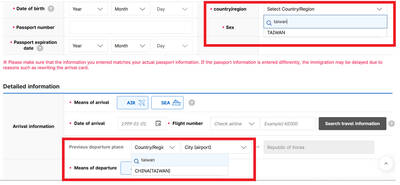
Jason Han says that the e-arrival card spat between South Korea and Taiwan shows that Seoul is signaling adherence to its “one-China” policy, while Taiwan’s response reflects a reciprocal approach. “Attempts to alter the diplomatic status quo often lead to tit-for-tat responses,” the analyst on international affairs tells the Taipei Times, adding that Taiwan may become more cautious in its dealings with South Korea going forward. Taipei has called on Seoul to correct its electronic entry system, which currently lists Taiwan as “China (Taiwan),” warning that reciprocal measures may follow if the wording is not changed before March 31. As of yesterday,

The Portuguese never established a presence on Taiwan, but they must have traded with the indigenous people because later traders reported that the locals referred to parts of deer using Portuguese words. What goods might the Portuguese have offered their indigenous trade partners? Among them must have been slaves, for the Portuguese dealt slaves across Asia. Though we often speak of “Portuguese” ships, imagining them as picturesque vessels manned by pointy-bearded Iberians, in Asia Portuguese shipping between local destinations was crewed by Asian seamen, with a handful of white or Eurasian officers. “Even the great carracks of 1,000-2,000 tons which plied

On Thursday, former Taipei mayor and founder of the Taiwan People’s Party (TPP) Ko Wen-je (柯文哲) was sentenced to 17 years in prison and had his civil rights suspended for six years over corruption, embezzlement and other charges. Seven others related to the case were also handed prison sentences, while two were found not guilty. It has been a bad week for the TPP. On Tuesday, prosecutors charged Chinese immigrant Xu Chunying (徐春鶯) with suspicion of taking part in Beijing-directed election interference. Xu has strong links to the TPP, which once offered her a party list legislator nomination. Tuesday also


 RSS
RSS