


“Deejaying will never die, there will always be the need for a live DJ ... until Japan invents deejaying robots,” says Dominick Fresina, aka DJ Fratzuki in the house scene, and now just plain Dom in the Taiwanese hip-hop scene.
Originally from Houston, Texas, the DJ, promoter and ex-restaurateur has lived in Taipei for four and a half years and now aims to become the only famous white rapper residing in Taiwan and rhyming in Mandarin.
“Being a DJ allows one person to be musically involved,” said Dom, 29, “so that for me was a way to do something. Some of the best parties I played were Re:Action in Taichung at Wen In Hall with Tim Healy, Halloween at Luxy, and Love Fest back in Texas, a beach festival with over 10,000 people and lots of stages of random music all up and down the beach.”
So why switch tack?
“The house music scene in Taipei is dying off,” said Dom. “People are not coming out to support the events regularly so there is a lack of the feeling of a good scene. Some of the promoters from a year ago are gone and events since then have kind of died off. A lot of the people that you could count on watching the sunrise with have moved, and the new people to Taiwan aren’t coming out in the masses.”
With an ambition for success, this perceived decline may have encouraged Dom towards his latest goal of becoming “the greatest thing to hit Asia since chopsticks.”
When Dom’s restaurant Ocean Blue went out of business in 2007, he found out one of his partners was a record executive at Machi Entertainment, a hip-hop label cofounded by Jeff Huang (黃立成) of Machi (麻吉) fame.
“I had always liked rap music and am pretty good at freestyling and MCing,” said Dom. “I told my partner since we were going out of business I needed to find a way to make some dollar and he needed to give me a record deal. He said he would be open to my idea after I explained it, and so he gave me the confidence that it could be done.”
Dom’s latest tracks are certainly brimming with ideas.
“Most rappers try to be the hardest, and most gangster,” said Dom. “My songs are about ridiculous topics like aliens and betel nuts. For me, it’s a whole entertainment package as the music is a foundation around which I can express the full idea of videos, photos and one-of-a-kind shows to really make something special.”
Having studied Chinese since he arrived here, he writes all his own songs and then works “with Taiwanese people on translation and making the wording a bit better,” said Dom. “Pretty soon, at the end of the month, we are going to put out a three-song demo CD with my songs and an hour-long mixtape with my songs mixed in with other local Taiwanese rappers’ music.” Ten thousand will be pressed and handed out for free.
Beginning next month, Dom will be hosting a regular mixtape on the Web, “freestyling in English and Chinese, and having guest MCs come in and freestyle in both languages,” he said. “Every month will highlight a new local DJ and new MCs to keep it fresh. I don’t care about people getting the music free as I want as many people out there to hear what we’re doing, so they love it and come out and support the live shows.”
The aspiring rapper is set to shoot a music video, his first, for the track Something New, a song about aliens that come to Earth and kidnap him in order to learn how to be cool.
Something New’s production is pretty slick, the flow is pretty sweet and in the video Dom is sure to be ... pretty.
“The video will be out in August,” said Dom, adding a hugely audacious claim that you can’t help but respect. “This is going to be the most bad-ass video you have ever seen, guaranteed!” Ever? Awesome!
Check out Dom at www.wretch.cc/album/ILOVEDOM for future dates, and catch him deejaying at Deep Passion on May 23.
If you agree with Dom that the house scene needs more support then get yourself down to China White tomorrow to see a couple of legends throwing down electro, house and breaks as Paul Energy and vDub will be on the ones and twos. NT$300 gets you access to their years of collective house knowledge and a drink.
Tasty Beats is tomorrow from 10pm to 4am at China White, 2F, 97-101, Dunhua S Rd Sec 2, Taipei City, (台北市敦化南路二段97-101號2樓).
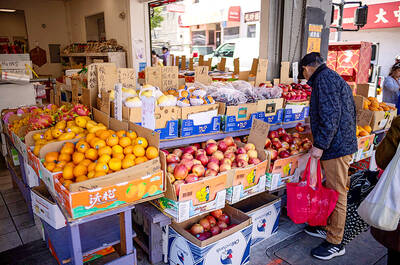
Ajay Verma, a consultant gastroenterologist at Kettering general hospital in Northamptonshire, says our gut is a “complex machine.” “It is constantly providing us with the nutrition we need, initially to grow and develop, and then for us to survive, thrive and repair from injury and illness.” How can we keep it functioning well? Put simply: “Make sure what you put into it is balanced, and that you clear out its waste products adequately,” Verma says. “In a general gastroenterology clinic, the most common conditions we see are irritable bowel syndrome (IBS), gastroesophageal reflux disease, inflammatory bowel disease and constipation,” says Nisha
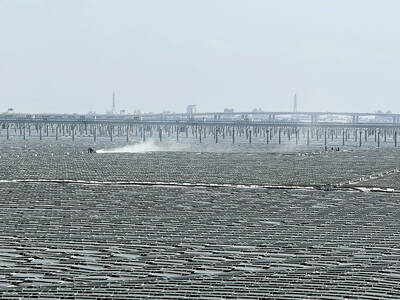
The arithmetic is straightforward and uncomfortable. By the end of 2025, Taiwan had committed itself to a 50-30-20 electricity mix — half natural gas, 30 per cent coal, 20 per cent renewables. The Ministry of Economic Affairs’s (MOEA) own monthly energy reports tell a different story. Natural gas reached 47.8 per cent of generation last year. Coal stood at 35.4 per cent, comfortably above its target ceiling. Renewables came in at 13.1 per cent, well short of the 20 per cent Taipei had pledged a decade earlier. Installed renewable capacity reached roughly half of the 12 gigawatts (GW) the government

Last week US President Donald Trump was asked by a reporter whether he would speak on the phone to the President of Taiwan. “l’ll speak to him. I speak to everybody. We have that situation very well in hand,” Trump said. This marked the second time in a couple of weeks he had said he would talk to the President of Taiwan. In 2016 he famously took a call from then-president Tsai Ing-wen (蔡英文), when he was president-elect. Despite warnings that the apocalypse was nigh because of a phone call, the world quickly forgot about the conversation between two democratically-elected presidents.
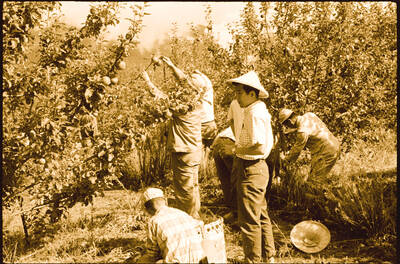
May 25 to May 31 Few believed that apples could be cultivated on a commercial scale in Taiwan’s high mountains. When horticulturalist Cheng Chao-hsiung (程兆熊) first proposed the idea in 1955, both American and Taiwanese colleagues dismissed it as implausible, arguing that temperate fruit could not be reliably grown on a subtropical island, especially on rugged terrain. However, it was this terrain in the Central Mountain Range where many Chinese Civil War veterans were resettled in the late 1950s. With limited job prospects and no family in Taiwan, they were placed on cooperative farms aimed toward self-sufficiency. Some say the conditions


 RSS
RSS