


The Golden Bell Awards (金鐘獎) handed out yearly laurels to the kings and queens of television on Friday of last week. Bickering and catfights promptly ensued, giving the world a glimpse into the alliances and feuds among the glitterati.
Entertainment host Jacky Wu (吳宗憲) waxed ecstatic when he was named best variety-entertainment show host for Guess Show (我猜我猜我猜猜猜) with co-hostess Aya (阿雅). Awarded the top honor for the very first time during his 20-year career, Wu did five push-ups out of sheer excitement on stage.
Things turned sour, though, when the funnyman was asked on Monday whether he felt intimidated by the comeback of Chang Hsiao-yen (張小燕). Long revered as the godmother of television, Chang’s new family-entertainment show Million Dollar Class (百萬小學堂) hit the airwaves about one month ago.
Not known for his discretion, Wu confidently replied: “Didn’t she withdraw from the leader’s circle already?”
But Wu seemed to have calmed down the next day, since he offered to attend Chang’s show for a special discounted fee as a gesture of reconciliation.
No sooner had shopping channel hostess-turned-star Li Jing (利菁) walked home with her first Golden Bell trophy as the best host in the category of singing entertainment for Super Idol (超級偶像) than the person who presented her the award, Pauline Lan (藍心湄), in a bit of backstage sniping, questioned the coarse-voiced lady’s suitability for hosting a singing contest show.
“I am not a lesser singer than she [Lan] is,” Li said in response to Lan’s criticism, according to the Apple Daily. “I can put together a record album to prove it.”
Pop Stop thinks the transsexual hostess would make better use of her time and public stature by fighting for the rights of her fellow transgenders in Taiwan.
In other gong-related news, the Golden Horse Awards (金馬獎) revealed its nomination list last week. Heartthrob Takeshi Kaneshiro (金城武) was listed as a nominee for the best Taiwanese film worker of the year — for about seven hours. Takeshi isn’t ineligible because he’s a Japanese national.
Also caught in controversy is another nominee of Japanese nationality, Chie Tanaka. Nominated for the best newcomer for her performance in Cape No. 7 (海角七號), Tanaka’s eligibility was questioned because she has already played small roles in such films as Initial D (頭文字D).
Organizers said Tanaka wouldn’t be scratched from the list, but they promised to make the rules clearer next year.
Pop Stop suspects Tanaka is getting preferential treatment because Cape No. 7 beat Hollywood films at the box office and grossed more than NT$450 million.
The movie has also made its director, Wei Te-sheng (魏德聖), a very popular man, but, according to unsourced rumors reported by Apple Daily, journalists have been muttering that Wei’s success has gone to his head. Why? Apparently it’s because he doesn’t always answer his phone when they call him.
Wei responded by saying that he’s still getting to used to going from being a nobody to a somebody in less than two months.
“Once I put aside my phone for five minutes and there were 18 missed calls,” Wu was quoted as saying by the Apple Daily.

Taiwan’s English education system is being pulled apart by three opposing forces. Bilingual Nation 2030 pulls students toward English and global communication. Artificial Intelligence (AI) readiness pulls them toward digital judgment, verification and AI-mediated work. But Taiwan’s old exam culture pulls them back toward memorization, grammar drills, timed reading and correct answers. If the education system keeps using old exams to define success, it risks producing graduates who are neither genuinely bilingual nor genuinely AI-ready, but trained for tasks machines can already perform. The first force is Bilingual Nation 2030. Launched in 2018, the policy aimed to “help Taiwan’s workforce connect
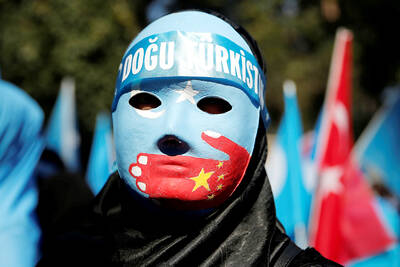
It seems every few days one bumps into one of those “real man” comments in which Taiwan is urged to “face reality” or similar, and “make a deal,” with the speaker implying that soon it will be too late. “Deal” advocates always present themselves as having a superior grip on reality, and the manly ability to make the “hard choice.” Their testosterone-laden language often echoes that of Taiwan sellout advocates. Note that such commentary always specifies a process (“make a deal, work with, make progress”), never the end state of what occupation by a violent authoritarian colonialist state will entail. In
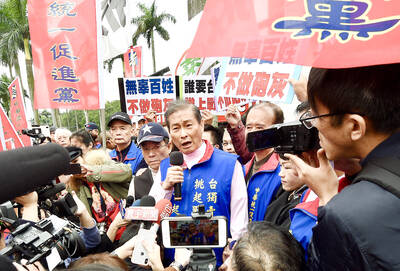
There are shadowy cabals plotting to sell out Taiwan to be annexed by China, by invasion if necessary. Fortunately, they are buffoons. In 2019, former Bamboo Union gangster and founder of the China Unification Promotion Party (CUPP), Chang An-le (張安樂, colorfully known as “White Wolf”), led a protest at the Legislative Yuan against comments made by then-premier Su Tseng-chang (蘇貞昌) that in the event of an attack by China, he would never surrender, but would protect the nation by fighting to the end, even if he only had a broom. Chang had party members bring a wooden casket that they
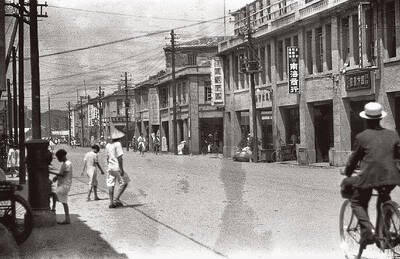
June 1 to June 7 "If all Taiwanese were as afraid of dying as you, then what would happen?” Physician Shih Chiang-nan (施江南) reportedly said this to his wife Chen Chiao-tung (陳焦桐) after she urged him to stop intervening on behalf of Taiwanese soldiers stranded overseas after serving in the Japanese Army during World War II. Shih had clashed with high-ranking officials over the issue, engaged in several heated arguments with Taiwan governor-general Chen Yi (陳儀) and allegedly shouted at general Ko Yuan-fen (柯遠芬), chief of staff of the Taiwan Garrison Command, over


 RSS
RSS