


On Friday, The Golden Cangue (金鎖記), an innovative work of Beijing opera based on a short story by Eileen Chang (張愛玲), returned for a third Taipei production since its 2005 debut, with Beijing opera virtuoso Wei Hai-min (魏海敏) in the leading role of Cao Chi-chiao (曹七巧), one of Chinese literature’s great tragic antiheroes.
The role was created for Wei and her command of the nuanced performance has not wavered over the years, as her character evolves from an ambitious and passionate woman willing to sacrifice everything, to a bitter, twisted crone addicted to opium and inflicting destruction on all those with whom she comes into contact.
Little has changed from past productions, though the second half seems to have been tightened somewhat, so that Cao’s gradual mental disintegration is not quite as grueling for the audience. The introduction of English subtitles for this production is a great boon and hopefully will lead to a larger non-Chinese speaking audience enjoying this new form of dramatic Beijing opera. Unfortunately, audio production once again was far from adequate, a criticism that is not restricted to the Metropolitan Hall, where The Golden Cangue was staged.
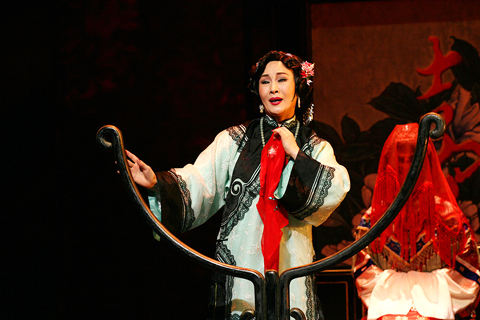
PHOTO COURTESY OF NATIONAL GUOGUANG OPERA COMPANY
Meanwhile at the Bamboo Studio Theater (竹圍工作室), Sun Son Theater (身聲演繹劇場) staged a revival of its Aurora (光音) production to a packed house. Friday’s performance, in celebration of the troupe’s 10th anniversary, was a captivating fusion of modern theater, dance and world music, with fire dancer Chang Yu-wei (張育瑋), also known as Huo Pao (火寶), illuminating the stage while the actors, led by Chien Yan-chen (簡妍臻) and Chang Wei-lai (張偉來), were silhouetted behind gauzy black curtains, behind which they could be seen twitching, tossing, twirling and shouting.
Rhythms were provided by tabla drummer Toshihiro Wakaike and sitar player Ryohei Kanemistu, along with other musicians on a range of traditional instruments, including the didgeridoo, Malaysian kulintangan and Tibetan gong.
Each scene evoked a different emotional landscape. One of the more mesmerizing saw the svelte dancers chanting and howling around a bonfire to the eerie sound of a cello, gong and drums. A few scenes were quite jarring, such as one that showed bodies hanging from the ceiling by red ropes.
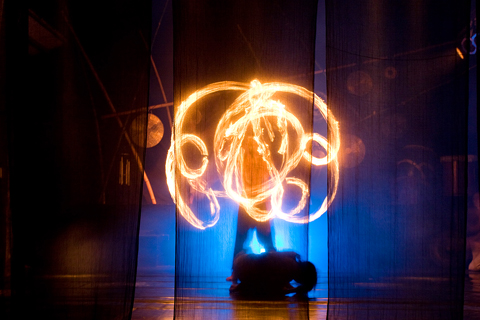
PHOTO COURTESY OF SUN SON THEATER
One minor complaint: the Bamboo Studio Theater, located near the Zhuwei (竹圍) MRT station, is not the most well-ventilated performance space. The smoke from the candles and torches likely caused headaches and dizziness among some audience members.
As of press time, there were still seats available for performances this coming Friday and Saturday. Tickets cost NT$400 and can be purchased at NTCH ticket outlets or online at www.artsticket.com.tw.
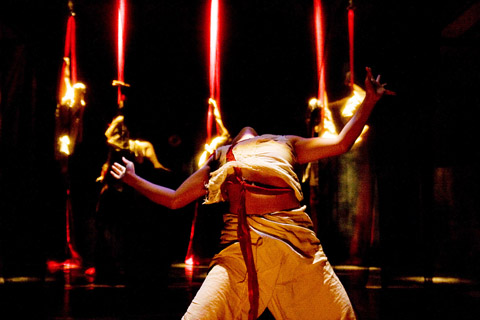
PHOTO COURTESY OF SUN SON THEATER
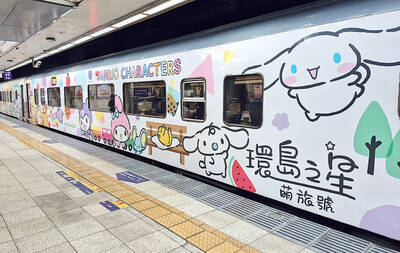
Just after 6am, I walked up to the ticket gate at Taipei Main Station and entered the Taiwan Railway platform without scanning any ticket; instead, I flashed the Sanrio Fun Rail pass on my phone to the gate worker and was admitted. I found my train and prepared to board. My destination? This very same station. I was embarking on a 13-hour journey on one of two round-the-island trains operated by ezTravel. They run each day, one counterclockwise around the island and one clockwise. They differ in a number of ways from an ordinary Taiwan Railway train and can make for
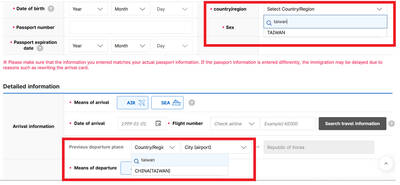
Jason Han says that the e-arrival card spat between South Korea and Taiwan shows that Seoul is signaling adherence to its “one-China” policy, while Taiwan’s response reflects a reciprocal approach. “Attempts to alter the diplomatic status quo often lead to tit-for-tat responses,” the analyst on international affairs tells the Taipei Times, adding that Taiwan may become more cautious in its dealings with South Korea going forward. Taipei has called on Seoul to correct its electronic entry system, which currently lists Taiwan as “China (Taiwan),” warning that reciprocal measures may follow if the wording is not changed before March 31. As of yesterday,
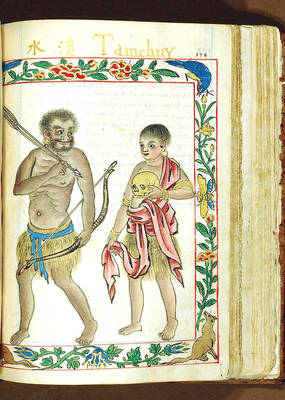
The Portuguese never established a presence on Taiwan, but they must have traded with the indigenous people because later traders reported that the locals referred to parts of deer using Portuguese words. What goods might the Portuguese have offered their indigenous trade partners? Among them must have been slaves, for the Portuguese dealt slaves across Asia. Though we often speak of “Portuguese” ships, imagining them as picturesque vessels manned by pointy-bearded Iberians, in Asia Portuguese shipping between local destinations was crewed by Asian seamen, with a handful of white or Eurasian officers. “Even the great carracks of 1,000-2,000 tons which plied
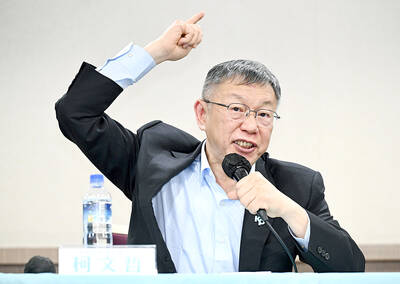
On Thursday, former Taipei mayor and founder of the Taiwan People’s Party (TPP) Ko Wen-je (柯文哲) was sentenced to 17 years in prison and had his civil rights suspended for six years over corruption, embezzlement and other charges. Seven others related to the case were also handed prison sentences, while two were found not guilty. It has been a bad week for the TPP. On Tuesday, prosecutors charged Chinese immigrant Xu Chunying (徐春鶯) with suspicion of taking part in Beijing-directed election interference. Xu has strong links to the TPP, which once offered her a party list legislator nomination. Tuesday also


 RSS
RSS