


The world awaits the resourceful art house or Turner Classic Movies programmer who strings together films that tell the story of British history through its royals.
There would be Mrs Brown, with Judi Dench as Victoria. There would also be Derek Jarman’s Edward II, a movie that helped usher in the “new queer cinema” of the early 1990s; Kenneth Branagh’s Henry V; perhaps even Al Pacino’s docu-homage to Shakespeare and Richard III, Looking for Richard.
Certainly, The Other Boleyn Girl, starring Natalie Portman and Scarlett Johansson as the sisters Boleyn, would fit into this monarchy marathon.

PHOTO: COURTESY OF FOX
This story of sibling rivalry and sisterly connection in the court of Henry VIII would precede Elizabeth and its less golden sequel.
Directed by British television director Justin Chadwick, this is a less gripping foray into the territory of Showtime’s highfalutin historical soap “The Tudors.”
Based on Philippa Gregory’s historical novel, the movie trades on something of a casting switcheroo.

PHOTO: COURTESY OF FOX
Portman, who manages a girlish vulnerability even in an action flick like V for Vendetta, is the calculating, bold Anne. The chillier Johansson has yet to find the perfect material. Here she strikes the pose that brought her to the fore in the first place. As in Girl With a Pearl Earring, her Mary is an intelligent innocent navigating a new world.
David Morrissey is impressively disagreeable as the Duke of Norfolk, the Boleyns’ uncle and chief puppetmaster of the family’s fortunes and misfortunes. It is he and father Thomas Boleyn (Mark Fylance) who use the Boleyn children (even son George) as political currency.
The “other” of the title fits each sister depending on her relation to Henry. Initially, it refers to the darker sister, as when Anne celebrates the younger’s nuptials. “I am eclipsed,” she says, seeing Mary aglow and dressed to wed for love (Benedict Cumberbatch as luckless William Carey).
Other times it is Mary. Tossed on his rear in a hunting foray that puts Anne in a dark light, Henry awakens to the light-haired Mary ministering to him. Once he forces the quieter, younger sister to court from countryside, he finds soul mate and friend.
His passion is mercurial. When Anne returns from France, charged with keeping him interested in Mary, who convalesces during a pregnancy, her boldness has been refined in the French court.
She has become his match, and she torments him with that fact till he divorces his wife and changes the course of England and world religion.
Peter Morgan adapted Gregory’s novel. And it’s easy to recognize why the writer of The Queen was drawn to these sisters, their ambitious family machinations and the complex character of Henry.
Unfortunately, that nuance doesn’t find its way onscreen.
Neither Johansson nor Portman convince. Instead of providing a quality setting for their talents, director Chadwick uncovers their limitations. It is not until the bitter end that they appear at all connected to each other.
Glimpses of depth come from Eric Bana as Henry and Kristin Scott Thomas as the Lady Elizabeth Boleyn.
Not as petulant or supercharged as Jonathan Rhys Meyer’s Tudor on the Showtime series, Bana still captures the mood of a man of appetites but also intellect.
One of the finest moments comes from neither Boleyn girl but from Ana Torrent as Queen Katherine of Aragon.
She’s no ingenue. She’s no patsy either. When she warns Henry that he’s fallen under Anne’s spell, her understanding of her husband’s weaknesses, but also his strengths, is real and regal.
Ambition, erotic energy and world history are more than enough reason to return to the monarchs of yore, it seems. Still, one wonders if filmmakers have it right: Will we forever be enamored with Britain’s royal pains?

Just after 6am, I walked up to the ticket gate at Taipei Main Station and entered the Taiwan Railway platform without scanning any ticket; instead, I flashed the Sanrio Fun Rail pass on my phone to the gate worker and was admitted. I found my train and prepared to board. My destination? This very same station. I was embarking on a 13-hour journey on one of two round-the-island trains operated by ezTravel. They run each day, one counterclockwise around the island and one clockwise. They differ in a number of ways from an ordinary Taiwan Railway train and can make for
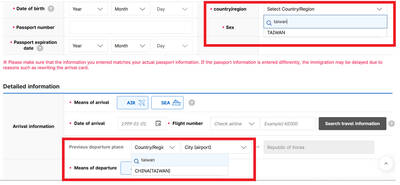
Jason Han says that the e-arrival card spat between South Korea and Taiwan shows that Seoul is signaling adherence to its “one-China” policy, while Taiwan’s response reflects a reciprocal approach. “Attempts to alter the diplomatic status quo often lead to tit-for-tat responses,” the analyst on international affairs tells the Taipei Times, adding that Taiwan may become more cautious in its dealings with South Korea going forward. Taipei has called on Seoul to correct its electronic entry system, which currently lists Taiwan as “China (Taiwan),” warning that reciprocal measures may follow if the wording is not changed before March 31. As of yesterday,
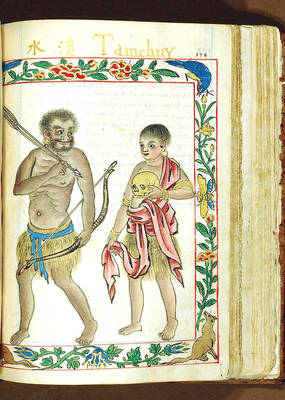
The Portuguese never established a presence on Taiwan, but they must have traded with the indigenous people because later traders reported that the locals referred to parts of deer using Portuguese words. What goods might the Portuguese have offered their indigenous trade partners? Among them must have been slaves, for the Portuguese dealt slaves across Asia. Though we often speak of “Portuguese” ships, imagining them as picturesque vessels manned by pointy-bearded Iberians, in Asia Portuguese shipping between local destinations was crewed by Asian seamen, with a handful of white or Eurasian officers. “Even the great carracks of 1,000-2,000 tons which plied

On Thursday, former Taipei mayor and founder of the Taiwan People’s Party (TPP) Ko Wen-je (柯文哲) was sentenced to 17 years in prison and had his civil rights suspended for six years over corruption, embezzlement and other charges. Seven others related to the case were also handed prison sentences, while two were found not guilty. It has been a bad week for the TPP. On Tuesday, prosecutors charged Chinese immigrant Xu Chunying (徐春鶯) with suspicion of taking part in Beijing-directed election interference. Xu has strong links to the TPP, which once offered her a party list legislator nomination. Tuesday also


 RSS
RSS