


If you like your contempt for humanity served overcooked and oozing fatty blobs of preening, lazy self-regard, you could not improve on Harold Pinter's redo of the 1970 Anthony Shaffer play Sleuth, which Kenneth Branagh has used to remake the 1972 Joseph Mankiewicz film of the same title. (Got that?) The result is that what was once insignificant is now insufferable, though, at 86 minutes, almost an hour shorter.
Jude Law stars as Milo Tindle, a hairdresser and sometime actor who's having an affair with the wife of a famous novelist and full-time sadist, Andrew Wyke, played by Michael Caine. Milo is young, lovely and, because he's played by the talented Law, a pleasant screen presence. Andrew is decades older, wattled and grooved and, because he's played by the talented Caine, equally fun to watch, even when he's as badly lighted as he often is here. Both are less pleasing to listen to, largely because they've been enlisted to enliven a story reeking of mothballs and sexual panic and designed to titillate the audience by putting its two lab rats into an electrified maze. Zap! Zap! Sizzle!
The new Sleuth film follows the general nasty arc of the 1972 screen version, which starred Caine as the bedroom interloper and Laurence Olivier as his wily match. Milo (inexplicably) visits Andrew's estate; Andrew (unpersuasively) coaxes Milo into a crime; Milo (unbelievably) retaliates; and so it goes, amid much twisting and turning of the meta-variety sort.
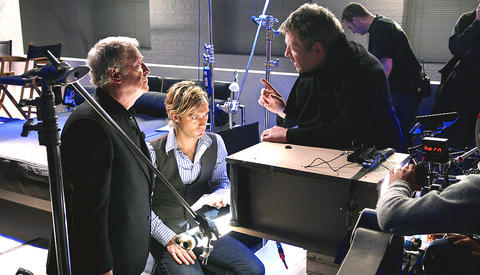
PHOTO COURTESY OF LONG SHONG
"Tell me," Andrew asks in Schaffer's original play, "would you agree that the detective story is the normal recreation of noble minds?" Milo, or really the playwright, replies, "Perhaps it would have been truer to say that noble minds are the normal recreation of the detective story." Pinter more or less recycles these lines, thereby erecting a bridge between him and Agatha Christie, whom, depending on your view, Shaffer either robbed or parodied.
This version of the film cuts out chunks of complication and inserts surveillance cameras in and around Andrew's manse, which adds screens within screens (some in green-hued night vision) though nothing of actual thematic interest. The performers tend to deliver the airless, self-consciously synthetic dialogue like untutored violinists dutifully sawing away to the steady tick-tock of a metronome. On occasion there's a flourish of realism as one or the other approximates a human being rather than a dramatic contrivance. This happens infrequently, mostly when the two men are raising their voices and intimately grappling with the story's tiresome sexual dynamics, which suggest a link between sadism and homosexual desire. Here a brandished gun comes loaded with symbolic import, not just bullets.
Branagh can be a fine film actor, but at this point in his screen career it's safe to say he has no feel or facility for cinema when he's calling the shots behind the camera. Almost every setup looks wrong: poorly considered, awkwardly realized, ugly. (The cinematographer Haris Zambarloukos has done fine work elsewhere.) Branagh fiddles with the lights, tilts the camera and hustles his hard-working actors upstairs and down and back again and into an elevator as small as a coffin built for one. He embellishes the screenplay's every obvious conceit and word, hammering the point until you feel as if you're trapped inside the elevator with Milo and Andrew, going up and down and up and down, though nowhere in particular.
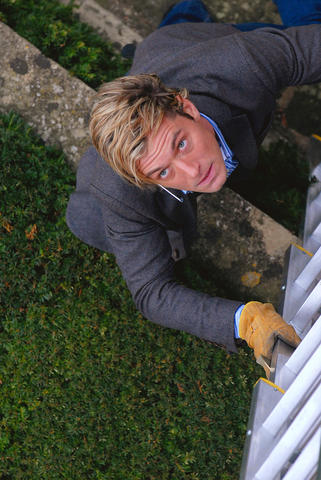
PHOTO COURTESY OF LONG SHONG
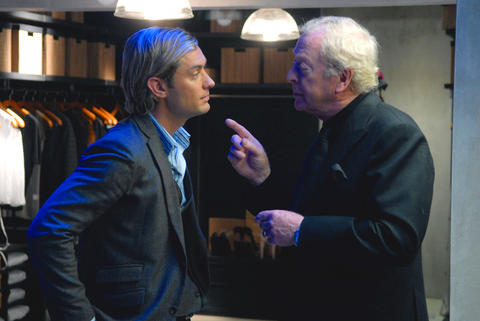
PHOTO COURTESY OF LONG SHONG
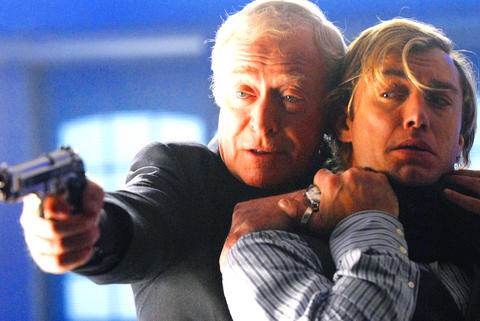
PHOTO COURTESY OF LONG SHONG
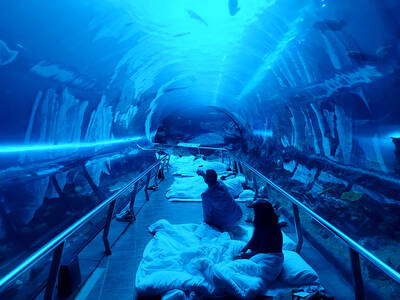
We lay transfixed under our blankets as the silhouettes of manta rays temporarily eclipsed the moon above us, and flickers of shadow at our feet revealed smaller fish darting in and out of the shelter of the sunken ship. Unwilling to close our eyes against this magnificent spectacle, we continued to watch, oohing and aahing, until the darkness and the exhaustion of the day’s events finally caught up with us and we fell into a deep slumber. Falling asleep under 1.5 million gallons of seawater in relative comfort was undoubtedly the highlight of the weekend, but the rest of the tour

Youngdoung Tenzin is living history of modern Tibet. The Chinese government on Dec. 22 last year sanctioned him along with 19 other Canadians who were associated with the Canada Tibet Committee and the Uighur Rights Advocacy Project. A former political chair of the Canadian Tibetan Association of Ontario and community outreach manager for the Canada Tibet Committee, he is now a lecturer and researcher in Environmental Chemistry at the University of Toronto. “I was born into a nomadic Tibetan family in Tibet,” he says. “I came to India in 1999, when I was 11. I even met [His Holiness] the 14th the Dalai

Following the rollercoaster ride of 2025, next year is already shaping up to be dramatic. The ongoing constitutional crises and the nine-in-one local elections are already dominating the landscape. The constitutional crises are the ones to lose sleep over. Though much business is still being conducted, crucial items such as next year’s budget, civil servant pensions and the proposed eight-year NT$1.25 trillion (approx US$40 billion) special defense budget are still being contested. There are, however, two glimmers of hope. One is that the legally contested move by five of the eight grand justices on the Constitutional Court’s ad hoc move

Stepping off the busy through-road at Yongan Market Station, lights flashing, horns honking, I turn down a small side street and into the warm embrace of my favorite hole-in-the-wall gem, the Hoi An Banh Mi shop (越南會安麵包), red flags and yellow lanterns waving outside. “Little sister, we were wondering where you’ve been, we haven’t seen you in ages!” the owners call out with a smile. It’s been seven days. The restaurant is run by Huang Jin-chuan (黃錦泉), who is married to a local, and her little sister Eva, who helps out on weekends, having also moved to New Taipei


 RSS
RSS