


In the tradition of Lord of the Rings (LOTR) and Harry Potter, The Golden Compass gives us yet another visually stunning fantasy universe to deal with. As with LOTR, the source material for the film is taken from a book, in this case Philip Pullman's His Dark Materials series. Though intended for young adults, it is philosophically complex and involves a vast array of characters. Its transition to film posed the same problems of composition and technology as LOTR, and it has received the same intelligent and loving treatment from the production team behind the venture.
Abridging the story to less than two hours is a miracle of compression by director Chris Weitz, but this shorter screening time, along with the news that New Line Cinema waited to gauge reception before going ahead with the subsequent books, suggests hesitancy about throwing big money at this lesser-known series. This and the cutting may explain some of the film's flaws - especially the ending, which is glibly upbeat and a truncation of the book.
Fortunately, Compass' virtues overcome its flaws. The cast is splendid; Nicole Kidman is in a role for which she could have been made - the coldly calculating, ambitious, emotionally predatory Marisa Coulter. This complex creation will be a major selling point for the second part of the series, The Subtle Knife, which she has already signed on for. Daniel Craig, who plays the enigmatic Lord Asriel, Coulter's antagonist through most of the series, will also be back.
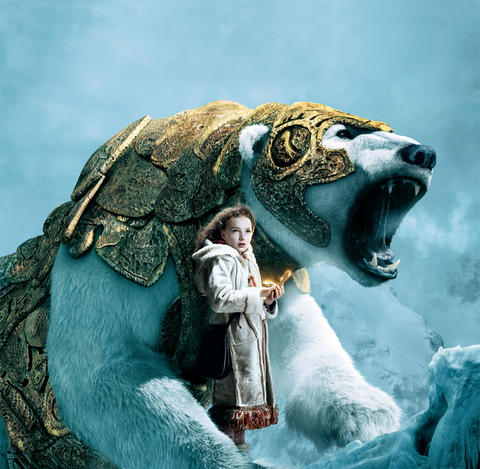
PHOTOS: COURTESY OF LONG SHONG
The Golden Compass tells the story of Lyra Belacqua (Dakota Blue Richards), who lives in a world similar yet different from ours and her efforts to save her friends who have been taken away for vile experiments in the frozen wastes of the north through a process of "intercision." The experiments are carried out by the Magisterium, an organization that bears some resemblance to the Catholic Church. On the way she meets and befriends a bear, Iorek Byrnison, voiced in a rumbling baritone by Ian McKellen, who becomes her champion and an itinerant aviator Lee Scoresby, played by Sam Elliott. Needless to say, her efforts are successful.
The interaction between actors and CGI figures is flawless, an essential element in making The Golden Compass watchable, for in Lyra's world, every human has an animal daemon - an attendant spirit - who accompanies them at all times. This clutter of CGI characters could have fatally undermined the story had the director given in to the temptation of using them in a cute or cartoonish manner. As it is, they serve usefully as a sounding board for the thoughts and emotions of the characters to whom they belong. A scene in which Kidman comes to blows with her golden monkey daemon as she is torn by contradictory emotions regarding Lyra is as good a piece of psychological drama as you are likely to find in a big budget movie.
The process of "intercision" is an operation that separates the daemon from the person, with a consequent loss of free volition on the part of the person - it is the loss of that person's soul. In contrast to Pullman's books which have a serious philosophical theme and have been viewed by some as an attack on aspects of the Catholic Church and the Christian faith, the film's hints at theology are never fully brought to the surface.
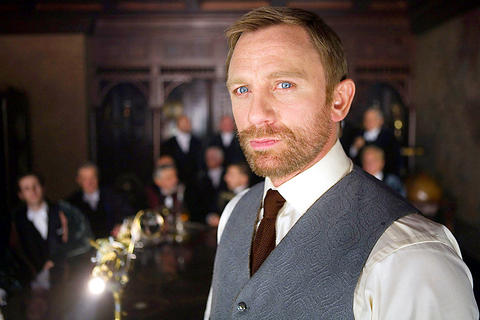
PHOTO: COURTESY OF LONG SHONG
Pullman was influenced in the writing of this series by the poems of William Blake and Milton's Paradise Lost, from which the title of the series His Dark Materials, is taken. In an interview with Pullman on fan Web site bridgetothestars.net, Weitz said, "They [New Line Cinema] have expressed worry about the possibility of HDMs' [His Dark Materials] perceived anti-religiosity making it an unviable project financially ... . All my best efforts will be directed towards keeping HDM as liberating and iconoclastic an experience as I can. But there may be some modification of terms. You will probably not hear of the 'Church,' but you will hear of the Magisterium."
This cowardliness in the face of pressure from organizations such as the Catholic League in the US, which has accused Pullman of being the "new face of atheism," is sad. Nevertheless, it must be said that the philosophical thinness of the film probably owes more to the demands of the medium than to Weitz's and New Lines' desire to avoid confrontation with the kind of militant and intolerant religious organization that is criticized in Pullman's books.
Inevitably, the book is boiled down to its simplest components, but even then, there is so much story to tell that the film has a galloping pace in which the philosophical underpinnings of the book get lost or hopelessly confused. This is hardly surprising, as cinema is increasingly something akin to illustrated companions of much-loved books.
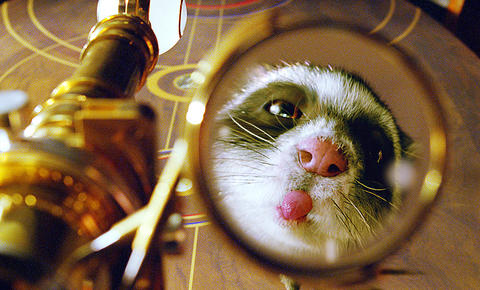
PHOTO: COURTESY OF LONG SHONG
In The Golden Compass the author tries to represent philosophical world views. The pictures themselves, while very splendid, are less effective in giving the audience a true sense of what the book is about. Reliance is placed instead on iconic visuals. For example, the polar bear character Iorek Byrnison, a CGI creation, is the center of a set-piece battle sequence which is alone worth the price of admission. It is rather unfortunate that only people who have read the book will understand just exactly how he comes to win it.
For all that, Weitz must be congratulated on fitting so much into so little space, even if this roller-coaster ride might have benefited from a few slower moments. For the most part, plot point follows plot point in such tight succession that there is hardly time to draw breath, and little time for surprise or delight to register. Still we must hope that the film will act as "bait," in the words of Bill Donohue, president of the Catholic League, and bring more readers to a series of books that deserves to be more widely known.
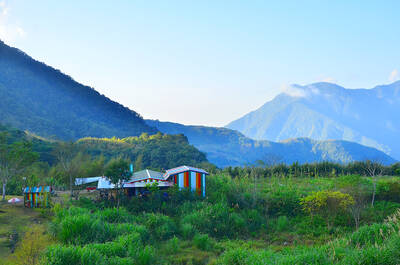
If one asks Taiwanese why house prices are so high or why the nation is so built up or why certain policies cannot be carried out, one common answer is that “Taiwan is too small.” This is actually true, though not in the way people think. The National Property Administration (NPA), responsible for tracking and managing the government’s real estate assets, maintains statistics on how much land the government owns. As of the end of last year, land for official use constituted 293,655 hectares, for public use 1,732,513 hectares, for non-public use 216,972 hectares and for state enterprises 34 hectares, yielding

The small platform at Duoliang Train Station in Taitung County’s Taimali Township (太麻里) served villagers from 1992 to 2006, but was eventually shut down due to lack of use. Just 10 years later, the abandoned train station had become widely known as the most beautiful station in Taiwan, and visitors were so frequent that the village had to start restricting traffic. Nowadays, Duoliang Village (多良) is known as a bit of a tourist trap, with a mandatory, albeit modest, admission fee of NT$10 giving access to a crowded lane of vendors with a mediocre view of the ocean and the trains

For many people, Bilingual Nation 2030 begins and ends in the classroom. Since the policy was launched in 2018, the debate has centered on students, teachers and the pressure placed on schools. Yet the policy was never solely about English education. The government’s official plan also calls for bilingualization in Taiwan’s government services, laws and regulations, and living environment. The goal is to make Taiwan more inclusive and accessible to international enterprises and talent and better prepared for global economic and trade conditions. After eight years, that grand vision is due for a pulse check. RULES THAT CAN BE READ For Harper Chen (陳虹宇), an adviser
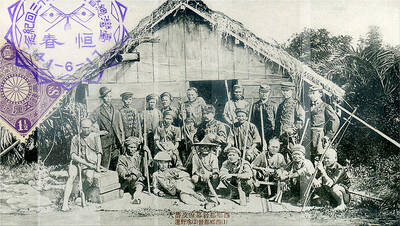
Traditionally, indigenous people in Taiwan’s mountains practice swidden cultivation, or “slash and burn” agriculture, a practice common in human history. According to a 2016 research article in the International Journal of Environmental Sustainability, among the Atayal people, this began with a search for suitable forested slopeland. The trees are burnt for fertilizer and the land cleared of stones. The stones and wood are then piled up to make fences, while both dead and standing trees are retained on the plot. The fences are used to grow climbing crops like squash and beans. The plot itself supports farming for three years.


 RSS
RSS