


After This Our Exile (父子), a meticulously told drama about a deadbeat father, was the big winner at the Hong Kong Film Awards, clinching best movie and best director for Patrick Tam (譚家明).
In a major upset, Lau Ching-wan (劉青雲) won best actor Sunday for the little-known movie My Name Is Fame (我要成名), beating heavyweights like Hollywood stars Jet Li (李連杰), Chow Yun-fat (周潤發) and former Cannes best actor winner Tony Leung (梁朝偉).
Gong Li (鞏俐) from Memoirs of a Geisha and Miami Vice was named best actress for playing an empress who helps stage a coup in famous Chinese director Zhang Yimou's (張藝謀) imperial epic Curse of the Golden Flower (滿城盡帶黃金甲). Gong didn't attend Sunday's ceremony.
Hong Kong director Tam made a triumphant return after a 17-year-break with After This Our Exile, the painstakingly told downfall of a hot-tempered cook, who pimps and forces his son to steal after losing his job, his home and his wife.
Tam, part of Hong Kong's new wave cinema in the 1980s, quit directing after making My Heart Is That Eternal Rose (殺手蝴蝶夢) in 1989 because he wasn't happy with his work, turning to teaching and movie editing instead.
Tam's early work was beautifully shot but thin on substance.
Making his comeback, the director strove to perfect both form and content. The director's cut of After This Our Exile is a stunning 160 minutes.
In testimony to his improved storytelling, After This Our Exile also won Tam a best screenwriter prize Sunday.
Asked about the trend of Hong Kong filmmakers working in China and the decline of the local industry, Tam said: "If you want to revive the Hong Kong cinema, the most important thing is to raise the creativity and quality of Hong Kong film industry workers. Whether you're working with Hollywood or China isn't the most important point.''
Tam's best movie and best director wins Sunday were impressive because he beat respected Hong Kong counterpart Johnnie To (杜琪峰), who was nominated twice in both categories for the gangster movies Election 2 (黑社會:以和為貴) and Exiled (放逐). But perhaps the biggest surprise of the night was Lau's best actor win. He won for playing a faded movie star who finds new life by mentoring a budding actress in My Name Is Fame, a film that generated little attention amid the new trend of Chinese epics.
Although Lau was the least well-known among the best actor nominees, he's a veteran actor whose work dates back to 1984.
Lau, who raised his trophy forcefully in celebration, joked about his relative obscurity with his fellow nominees in his acceptance speech.
"I have to thank actors who are senior than me ... like brother Tony Leung, brother Aaron Kwok (郭富城). I will work hard to continue your legacy,'' Lau said, even though both actors are his contemporaries.
Kwok's loss in the best actor category was another surprise because he won the prize at Taiwan's Golden Horse Awards (金馬獎) in November for playing the father in After This Our Exile.
Ten-year-old Goum Ian Iskandar (吳景滔), who played the son in After This Our Exile, cemented his status as one of the industry's hottest child stars. After winning best supporting actor at the Golden Horse Awards, he won the same prize in Hong Kong.
Goum struggled to hold up both trophies when posing for photographers backstage. He said his mother has promised to buy him a Nintendo Wii video game console as a reward.
China's Zhou Xun (周迅) won best supporting actress for playing the innocent lover of a prince in The Banquet (豪門夜宴), which was inspired by the Shakespeare play Hamlet.
The lifetime achievement award went to entertainment mogul Run Run Shaw (邵逸夫), who founded the famous Chinese movie studio Shaw Brothers with his siblings and later launched the local TV station TVB.
On the Net: Hong Kong Film Awards official Web site: www.hkfaa.com.
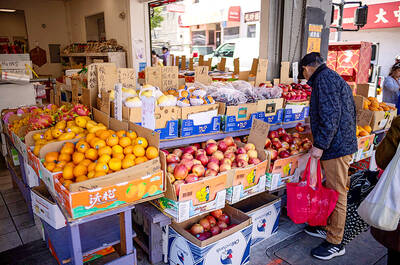
Ajay Verma, a consultant gastroenterologist at Kettering general hospital in Northamptonshire, says our gut is a “complex machine.” “It is constantly providing us with the nutrition we need, initially to grow and develop, and then for us to survive, thrive and repair from injury and illness.” How can we keep it functioning well? Put simply: “Make sure what you put into it is balanced, and that you clear out its waste products adequately,” Verma says. “In a general gastroenterology clinic, the most common conditions we see are irritable bowel syndrome (IBS), gastroesophageal reflux disease, inflammatory bowel disease and constipation,” says Nisha
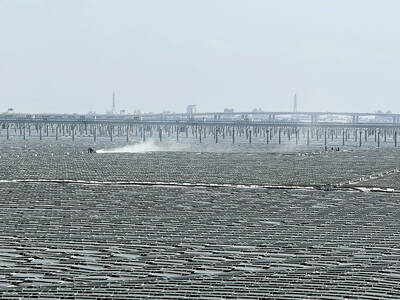
The arithmetic is straightforward and uncomfortable. By the end of 2025, Taiwan had committed itself to a 50-30-20 electricity mix — half natural gas, 30 per cent coal, 20 per cent renewables. The Ministry of Economic Affairs’s (MOEA) own monthly energy reports tell a different story. Natural gas reached 47.8 per cent of generation last year. Coal stood at 35.4 per cent, comfortably above its target ceiling. Renewables came in at 13.1 per cent, well short of the 20 per cent Taipei had pledged a decade earlier. Installed renewable capacity reached roughly half of the 12 gigawatts (GW) the government

Last week US President Donald Trump was asked by a reporter whether he would speak on the phone to the President of Taiwan. “l’ll speak to him. I speak to everybody. We have that situation very well in hand,” Trump said. This marked the second time in a couple of weeks he had said he would talk to the President of Taiwan. In 2016 he famously took a call from then-president Tsai Ing-wen (蔡英文), when he was president-elect. Despite warnings that the apocalypse was nigh because of a phone call, the world quickly forgot about the conversation between two democratically-elected presidents.
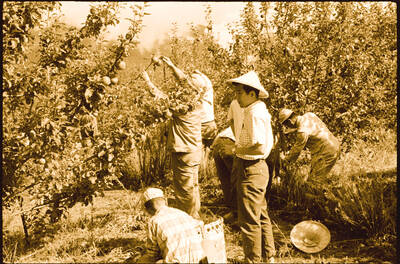
May 25 to May 31 Few believed that apples could be cultivated on a commercial scale in Taiwan’s high mountains. When horticulturalist Cheng Chao-hsiung (程兆熊) first proposed the idea in 1955, both American and Taiwanese colleagues dismissed it as implausible, arguing that temperate fruit could not be reliably grown on a subtropical island, especially on rugged terrain. However, it was this terrain in the Central Mountain Range where many Chinese Civil War veterans were resettled in the late 1950s. With limited job prospects and no family in Taiwan, they were placed on cooperative farms aimed toward self-sufficiency. Some say the conditions


 RSS
RSS