


In the recording studio at Taiwan Colors Music (角頭音樂, TCM), Puyuma musician Hao-en (昊恩) strummed a blues guitar tune that was heartbreakingly beautiful while R&B singer Jiajia (家家), though a bit worn out from the tight publicity schedule for their recently released debut Blue in Love (藍色情詩篇), chattered cheerily.
"We never thought we would have our own album released. ... We write and play music just to have fun," said Hao-en, a self-taught guitar prodigy who has been traveling with Jiajia and their AM Band (AM樂團), which has featured talented Aboriginal musicians such as Samingad (紀曉君) (Jiajia's older sister) at art and music festivals in Japan, Singapore, Hong Kong, China and France.
Their story began at the Nanwang Village (南王部落) situated at the foot of Nanwang Mountain (南王山) near Taitung City. It's a tranquil Puyuma village where music is present in every aspect of life. The youths hum Aboriginal folksongs, ancient tunes and Japanese melodies learned from elders, many of whom can speak two or more Aboriginal tongues, Japanese and even sing in Latin — a legacy left by the priests from Italy and France.
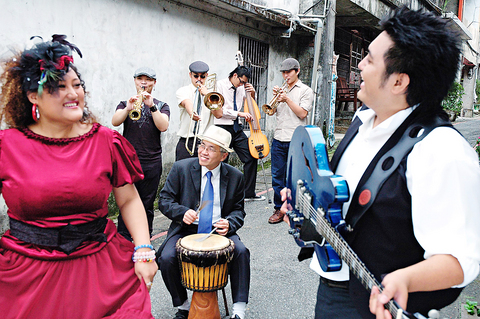
PHOTO COURTESY OF TCM
Their great talent in languages and openness to foreign influences springs from their geographical and historical setting.
The lively spirit of Puyuma people can be seen reflected in these two musicians. Born into a pastor's family where the lady of the house played piano and guitar, Hao-en grew up with choral music and picked up the guitar at age 14. Playing the then popular minge (民歌) at a steakhouse in Taitung in his teens, the young man drew his musical nourishment from playing the blues with a like-minded group whose members included award-winning singing policeman Chen Jien-nien (陳建年).
His niece, Jiajia, was also raised in a musical family, her grandparents devoted to preserving ancient Aboriginal tunes and folk music. "I was a noisy baby who made sounds all the times before even knowing how to speak," said Jiajia, now a 24-year-old blessed with a spirit-filled voice on a par with that of Lauryn Hill.
In 1999, the duo starred in the debut album by folksy Aboriginal ensemble AM Family (原音社) [the name refers to the fact that the group could play music all night with the simple A-minor chord] and later formed the offshoot project AM Band with Puyuma musicians, many of whom were family.
Their philosophy of life is reflected in the music. In Blue in Love, produced by Hao-en, listeners are spared flashy lyrics and emotional indulgence, and quietly drift into simple and direct sounds of the pair's contemporary compositions fused with blues, jazz, gospel and traditional folk music.
Unlike the majority of Aboriginal musicians, who take their work as a symbol of their cultural identity, the pair's sound marks a return to the music itself, to share their thoughts and feelings in the hope of touching people in a direct way.
"Few Aboriginal musicians are out there telling their own views and emotions since we are all too busy communing with ancestral sprits and are too caught up in traditions. To me, we are the living extensions of our cultures and I think we should give the identity-seeking music a break and start to live life.
"Back in the old days, our elders had no boundaries in music. When they heard the gu zhen (古箏) or the mouth organ, they would be like 'wow, they really go well with our music' and adopt the sounds into their own music. But now, it seems that you need a certificate to prove you are an Aborigine," lamented Hao-en.
"One of the reasons for me to make the album is that I hope Jiajia can earn the appreciation she rightfully deserves. Compared to Samingad who takes one step at a time, Jiajia is quick, flexible, smart and a natural-born artist. She really is a talented musician who deserves a much bigger stage," said Hao-en.
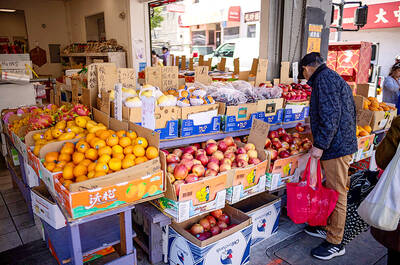
Ajay Verma, a consultant gastroenterologist at Kettering general hospital in Northamptonshire, says our gut is a “complex machine.” “It is constantly providing us with the nutrition we need, initially to grow and develop, and then for us to survive, thrive and repair from injury and illness.” How can we keep it functioning well? Put simply: “Make sure what you put into it is balanced, and that you clear out its waste products adequately,” Verma says. “In a general gastroenterology clinic, the most common conditions we see are irritable bowel syndrome (IBS), gastroesophageal reflux disease, inflammatory bowel disease and constipation,” says Nisha
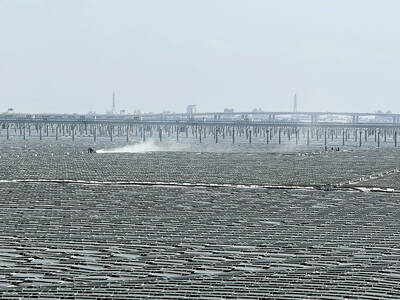
The arithmetic is straightforward and uncomfortable. By the end of 2025, Taiwan had committed itself to a 50-30-20 electricity mix — half natural gas, 30 per cent coal, 20 per cent renewables. The Ministry of Economic Affairs’s (MOEA) own monthly energy reports tell a different story. Natural gas reached 47.8 per cent of generation last year. Coal stood at 35.4 per cent, comfortably above its target ceiling. Renewables came in at 13.1 per cent, well short of the 20 per cent Taipei had pledged a decade earlier. Installed renewable capacity reached roughly half of the 12 gigawatts (GW) the government

Last week US President Donald Trump was asked by a reporter whether he would speak on the phone to the President of Taiwan. “l’ll speak to him. I speak to everybody. We have that situation very well in hand,” Trump said. This marked the second time in a couple of weeks he had said he would talk to the President of Taiwan. In 2016 he famously took a call from then-president Tsai Ing-wen (蔡英文), when he was president-elect. Despite warnings that the apocalypse was nigh because of a phone call, the world quickly forgot about the conversation between two democratically-elected presidents.
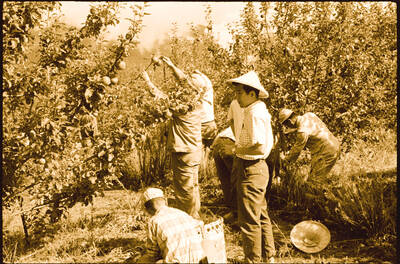
May 25 to May 31 Few believed that apples could be cultivated on a commercial scale in Taiwan’s high mountains. When horticulturalist Cheng Chao-hsiung (程兆熊) first proposed the idea in 1955, both American and Taiwanese colleagues dismissed it as implausible, arguing that temperate fruit could not be reliably grown on a subtropical island, especially on rugged terrain. However, it was this terrain in the Central Mountain Range where many Chinese Civil War veterans were resettled in the late 1950s. With limited job prospects and no family in Taiwan, they were placed on cooperative farms aimed toward self-sufficiency. Some say the conditions


 RSS
RSS