


The union of Brian De Palma and the murdered woman known as the Black Dahlia should have been a marriage made in movie heaven or, preferably, hell. A master of modern horror, De Palma has a flair for the frenzy of violence, specifically when visited on the female body, which makes him seem an ideal fit for this spectacularly cruel crime. At their finest, his films are marvels of virtuosity, alive to the contradictory, at times disreputable pleasures of the movies. Blood runs through his work, but so does juicy life. In The Black Dahlia, though, that life has been drained from the filmmaking, much as the blood was drained from the victim’s body.
On Jan. 15, 1947, a housewife pushing a baby carriage saw what she thought was a store mannequin lying in a weedy lot in South Los Angeles. This waxy white shape was the neatly severed body of a 22-year-old woman named Elizabeth Short. Betty, as she was often called, had moved from Massachusetts to Southern California to look for work and to meet her absent father. What she found was nice weather and lots of men who were probably hoping for more than a smile in exchange for a hot meal. She was restless and broke, and wore her hair and clothes black, which is how she earned her nickname. It was the kind of moniker that later looked particularly striking emblazoned in newspaper headlines.
You meet Betty Short (Mia Kirshner), or at least an idea of her, only briefly in The Black Dahlia. Like the James Ellroy novel on which the film is based, the story mostly turns on the violent ups and downs of two detectives hot on the case, Bucky Bleichert (Josh Hartnett) and Lee Blanchard (Aaron Eckhart). In the boxing ring where they mix it up on behalf of their superiors, the men are called Mr. Ice and Mr. Fire, respectively, for their wildly different temperaments. (Given the performances, Mr. Droopy and Mr. Hammy would be more fitting.) When not chasing leads, Bucky and Lee like to play house with Lee’s girlfriend, Kay (Scarlett Johansson), a plush blonde with a throaty laugh and battle scars.

PHOTOS COURTESY OF FOX
The first novel in Ellroy’s LA Quartet, a series of pulpy page-turners that begin in the early 1940’s and end more than a decade later, his Black Dahlia is dedicated to his mother, Geneva. He was just 10 in 1958 when she was murdered, and her body dumped, like that of Betty Short, by the side of the road as if it were garbage. His mother’s unsolved murder haunted him, and it led to an early, obsessive interest in Betty Short. Like the other books in the quartet, including LA Confidential, made into a 1997 film by Curtis Hanson, The Black Dahlia hurtles along, propelled by that obsession and by rage. There’s craziness in this book: it feels as if it were written by a man possessed.
De Palma can be a director of dazzling creative lunacy, but there’s little craziness in this restrained, awkward film. With the diverting exception of Hilary Swank, who plays a slinky degenerate named Madeleine Linscott, the leads are disastrous. Johansson and Eckhart are actors who need as much help from their directors as they can get, the kind of help that De Palma, as the uneven performances in his films indicate, cannot always provide. Eckhart flails about, mistaking volume for passion and inviting regrettable comparison to Russell Crowe running amok in LA Confidential. Johansson tries to fashion her character by flourishing a cigarette holder; Hartnett, who provides the narration, flounders on the shallows of his interpretation.
Only Swank delivers the goods. Her character, a rich brat out of Raymond Chandler by way of Ellroy (think The Big Sleep, but creepier) lives with her whack-job family in one of those mansions that serves as a tomb for its inhabitants and a monument to their ambitions. De Palma obviously enjoys hanging out with this decadent brood, whose demons read as symptomatic of the city it calls home and whose pathologies prove nuttily entertaining.

But if he seems right at home among the Linscotts, De Palma is ill at ease when he spends time with most anyone else. His best work here, which notably involves none of the principals, is a fantastic shot that moves up from street level to peer over the roof of a building where some crows are ominously cawing. Behind the building on the next block, a woman with a carriage pauses to look at something in a lot, before breaking into a shrieking run. This is bravura filmmaking, reminiscent of some of De Palma’s other grand flourishes, in that you are both aware of the image’s self-conscious artificiality (you can almost feel the director hovering nearby) and captive to its emotional impact.
The ability to draw you into a film while simultaneously making you aware that you are watching a movie is an important element in some of his most successful work. This helps explain why he’s better when playing within the strict confines of genre, and in the key of pop, than when trying his hand at heavy reality, as he did in the lugubrious Vietnam drama Casualties of War. Reality weighs similarly heavy on The Black Dahlia. Betty Short was a real woman who was slowly and brutally tortured to death. Her story may have the makings of great pulp fiction, but there is nothing playfully cinematic or campy about it.
The murdered woman simply doesn’t inspire De Palma to unhinged creativity the way she did Ellroy. That said, there are tantalizing glimpses of another film interpretation in the short scenes featuring Betty Short. During the investigation, some audition reels turn up, with her trying out for a role. As Kirshner, wearing torn stockings and streaked mascara, reads for the part, looking into the camera with her spooky, clear eyes, you see need and desperation and why a frightened young woman with no resources beyond her looks might have relied on a body whose very vulnerability would finally betray her. Every so often, an off-screen male voice asks Betty a question, needling and provoking her until she crawls toward the camera like a sacrifice.
And the man behind the voice? Why, De Palma, of course.

Ajay Verma, a consultant gastroenterologist at Kettering general hospital in Northamptonshire, says our gut is a “complex machine.” “It is constantly providing us with the nutrition we need, initially to grow and develop, and then for us to survive, thrive and repair from injury and illness.” How can we keep it functioning well? Put simply: “Make sure what you put into it is balanced, and that you clear out its waste products adequately,” Verma says. “In a general gastroenterology clinic, the most common conditions we see are irritable bowel syndrome (IBS), gastroesophageal reflux disease, inflammatory bowel disease and constipation,” says Nisha
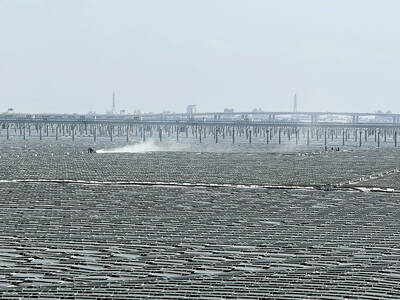
The arithmetic is straightforward and uncomfortable. By the end of 2025, Taiwan had committed itself to a 50-30-20 electricity mix — half natural gas, 30 per cent coal, 20 per cent renewables. The Ministry of Economic Affairs’s (MOEA) own monthly energy reports tell a different story. Natural gas reached 47.8 per cent of generation last year. Coal stood at 35.4 per cent, comfortably above its target ceiling. Renewables came in at 13.1 per cent, well short of the 20 per cent Taipei had pledged a decade earlier. Installed renewable capacity reached roughly half of the 12 gigawatts (GW) the government

Last week US President Donald Trump was asked by a reporter whether he would speak on the phone to the President of Taiwan. “l’ll speak to him. I speak to everybody. We have that situation very well in hand,” Trump said. This marked the second time in a couple of weeks he had said he would talk to the President of Taiwan. In 2016 he famously took a call from then-president Tsai Ing-wen (蔡英文), when he was president-elect. Despite warnings that the apocalypse was nigh because of a phone call, the world quickly forgot about the conversation between two democratically-elected presidents.
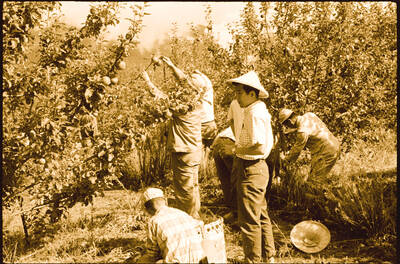
May 25 to May 31 Few believed that apples could be cultivated on a commercial scale in Taiwan’s high mountains. When horticulturalist Cheng Chao-hsiung (程兆熊) first proposed the idea in 1955, both American and Taiwanese colleagues dismissed it as implausible, arguing that temperate fruit could not be reliably grown on a subtropical island, especially on rugged terrain. However, it was this terrain in the Central Mountain Range where many Chinese Civil War veterans were resettled in the late 1950s. With limited job prospects and no family in Taiwan, they were placed on cooperative farms aimed toward self-sufficiency. Some say the conditions


 RSS
RSS