


This is an example of a book that was initially issued by a small publisher (Robinson in the UK) but was then taken up by a gigantic one, HarperCollins, and turned into an international best seller in paperback. But it's also an
example of a fine book that
entirely deserves such elevation to honor and celebrity.
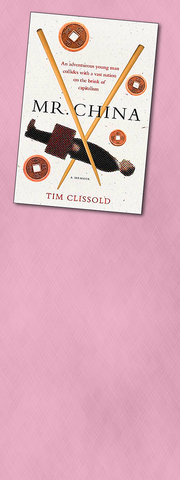
It's about investing in China during the 1990s and late 1980s. If this sounds unpromising to all except businessmen with similar interests, think again. Because although the subject matter is joint ventures, telephonic board meetings, escrow accounts and conditionality, much of the book is in the style of a hilarious
travelogue through wildest China during the period when the current economic boom was just beginning to get under way.
At the start Tim Clissold -- a former student of Jung Chang's (
serving ox's forehead, roasted
razor-blade fish and steamed
rabbits' ears. Before long he's in charge of investment projects worth many millions of dollars.
The material is certainly milked for its comic potential. But
business novices in the China sphere have been devouring this book because it provides an
accessible introduction to their new world. It has just enough of the jargon for them to understand what's happening at those long business lunches, but also give them a
whistle-stop tour through industrial China, warts and all, and in fact with the warts in sharp focus.
No one could say Mr. China lacks variety, or for that matter drama. Halfway through, when investments have already been garnered from pension funds and "high-net-worth-individuals" (rich people) investing a million dollars apiece minimum, the crises begin. A venture involving a factory making vehicle components
collapses because of irreconcilable differences between the managers and imported Western engineers. And in Zhuhai (Macau's smaller-scale version of Shenzhen) an
employee absconds to Las Vegas and issues some fraudulent letters of credit. The local anti-corruption agency demands a car and "some working capital" before it will help, and eventually a court rules against the company, despite the crucial evidence being some
obviously altered photocopies. The total loss is US$10 million.
So Clissold goes to the French Alps to recuperate and has a stress-related medical crisis diagnosed as a heart attack. Flown back to the UK, however, he's given a couple of aspirins by the hospital doctors and sent home.
I'm sure this book is a
wonderful introduction to doing serious business in China. But it also contains much material on Chinese life in general, things that will make you laugh, cry, and
finally stand back in mute
admiration. The disasters aren't by any means Clissold's last word. But he learns how life is run in China (concluding "One thing was for sure: if you played by the rules you were finished"). But by the end his admiration even for some individuals his company has
forced out of work is high.
There are some interesting digressions -- on written Chinese, Macau, floods, crucial historical interactions between China and foreigners, and so on. But at its heart this is a lively and amusing account of some of the dealings in China of one important American investment company. "There were some global giants who had invested more," Clissold writes, "but not many." Furthermore, they had invested in poor areas as well as the eastern coastal region. One Sichuan bank, for instance,
delayed remitting their investment of US$15 million while they double-checked -- "it was the largest transaction they had ever handled and they assumed there had been a clerical error."
China may prove slow to change -- chops are valid even if the person who uses them has no authority, Clissold discovers -- but so is Wall Street. "Cut the pay-roll!" its moguls scream from afar. But this proves impossible -- with no social security, what are those fired supposed to do, the company argues, especially when one targeted employee shows up with dynamite strapped to his waist.
The book's climax concerns a Chinese business partner who tries to open a new factory in competition with their joint
venture. As in the finale of an opera, everyone pitches in -- government, police, striking workers, lawyers, the book's leading figures -- until ... well, it would be wrong to give away too many details of what by this time is a gripping drama.
The book ends with some rather hurried thoughts. The joint ventures of the 1990s have largely been replaced by wholly owned operations, Clissold points out. And by allowing the automobile the same dominance it has in the US, the "seven or eight men and one woman" who constitute the core Chinese leadership could, he considers, threaten the very
sustainability of life on the planet -- a paradoxical conclusion when he has been investing in vehicle components for so long.
Tim Clissold feels like a top-rank writer, but he's clearly a very successful businessman too. In a way it seems a pity that he isn't applying himself full-time to authorship. Maybe he will, but perhaps he needs the source material his other working life provides. Or perhaps he simply can't survive without the high-risk, the immense potential rewards, and the sheer adrenaline rush doing business in China so
obviously gives him.

Just after 6am, I walked up to the ticket gate at Taipei Main Station and entered the Taiwan Railway platform without scanning any ticket; instead, I flashed the Sanrio Fun Rail pass on my phone to the gate worker and was admitted. I found my train and prepared to board. My destination? This very same station. I was embarking on a 13-hour journey on one of two round-the-island trains operated by ezTravel. They run each day, one counterclockwise around the island and one clockwise. They differ in a number of ways from an ordinary Taiwan Railway train and can make for
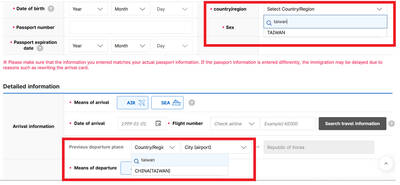
Jason Han says that the e-arrival card spat between South Korea and Taiwan shows that Seoul is signaling adherence to its “one-China” policy, while Taiwan’s response reflects a reciprocal approach. “Attempts to alter the diplomatic status quo often lead to tit-for-tat responses,” the analyst on international affairs tells the Taipei Times, adding that Taiwan may become more cautious in its dealings with South Korea going forward. Taipei has called on Seoul to correct its electronic entry system, which currently lists Taiwan as “China (Taiwan),” warning that reciprocal measures may follow if the wording is not changed before March 31. As of yesterday,

The Portuguese never established a presence on Taiwan, but they must have traded with the indigenous people because later traders reported that the locals referred to parts of deer using Portuguese words. What goods might the Portuguese have offered their indigenous trade partners? Among them must have been slaves, for the Portuguese dealt slaves across Asia. Though we often speak of “Portuguese” ships, imagining them as picturesque vessels manned by pointy-bearded Iberians, in Asia Portuguese shipping between local destinations was crewed by Asian seamen, with a handful of white or Eurasian officers. “Even the great carracks of 1,000-2,000 tons which plied
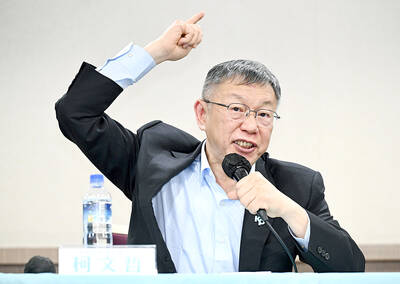
On Thursday, former Taipei mayor and founder of the Taiwan People’s Party (TPP) Ko Wen-je (柯文哲) was sentenced to 17 years in prison and had his civil rights suspended for six years over corruption, embezzlement and other charges. Seven others related to the case were also handed prison sentences, while two were found not guilty. It has been a bad week for the TPP. On Tuesday, prosecutors charged Chinese immigrant Xu Chunying (徐春鶯) with suspicion of taking part in Beijing-directed election interference. Xu has strong links to the TPP, which once offered her a party list legislator nomination. Tuesday also


 RSS
RSS