


During the opening weekend of the city's fourth biennial, some 7,500 international art patrons milled up and down Auguststrasse, a storied street in the former East Berlin that starts poetically at one end with St. Johannes Evangelist Church and terminates at the other with the Old Garrison Cemetery.
But visitors were not simply making their way to and from a museum or some smartly retrofitted warehouse, the usual location for a big contemporary art survey. They were waiting in the cold spring air to enter private apartments, an office, a ballroom, a shuttered school, a former horse stable, the church, the cemetery, and the white-walled galleries of the Berlin Biennial's organizer, the KW Institute for Contemporary Art.
Inside this unusual array of sites, on peeling walls in several cases, or in someone else's living room, they viewed works that ranged from ominous -- Mircea Cantor's chilling video of a deer watched by wolves inside a stark white gallery; Robert Kusmir-owski's reproduction of a boxcar headed for the concentration camps -- to droll, like Aneta Grzeszykowska's deadpan family photo album, from which she digitally removed every single image of herself. The biennial, which runs through May 28, was a focus of intense art-world curiosity in the months before its opening in late last month -- not least because this year's curators, Maurizio Cattelan, Massi-miliano Gioni, and Ali Subotnick, are art stars in their own right.
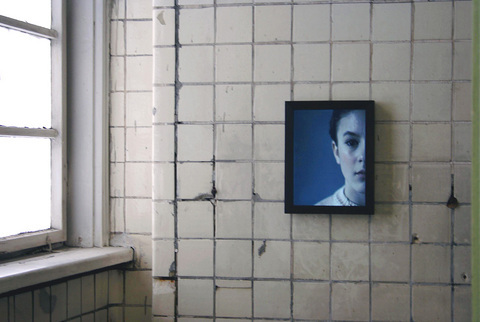
PHOTO: NY TIMES NEWS SERVICE
Apart from his renowned and darkly ironic artworks, Cattelan is internationally known for his curatorial partnership with Gioni and Subotnick, which famously spawned The Wrong Gallery, a sardonically named tiny exhibition space that closed last July in New York. (It moved on to the Tate Modern in London for a three-year run.) Together, the three publish books and articles, give lectures, open their nomadic galleries, and organize exhibitions on both sides of the Atlantic.
The question in the art world was, What would they do? Something clever and subversive? There was every reason to believe they would, when, six months before the biennial, they opened a gallery at 50A, Auguststrasse with a suspiciously familiar name: the Gagosian Gallery.
"We thought the real Gagosian might close us down," Subotnick said, laughing as she sat with Cattelan and Gioni at the KW Institute the night after the biennial opened. "But he never contacted us."
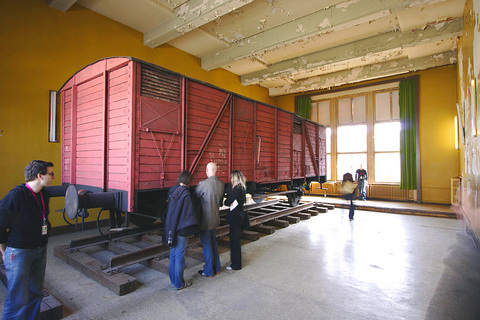
PHOTO: NY TIMES NEWS SERVICE
By using the Gagosian Gallery's international brand name in a humble space and highly local context, Gioni said, the curators sought to "create a kind of tension between the global and the local."
This was all part of their questioning of "what a biennial can be," he said.
By rough estimate, there are now some 200 biennials around the world. With so many similar festivals filling interchangeable white galleries, their usefulness is a subject for colloquiums and dinner conversations from Venice to Istanbul to Sao Paolo. Are they here to capture trends or to advance artists' voices in a larger social dialogue? Do they promote international understanding or local interests? Are they bully pulpits for curators turned ideologues, or are they simply there to tap the art market's stopwatch till the next survey of hot new things draws the attention of an ever expanding universe of collectors?
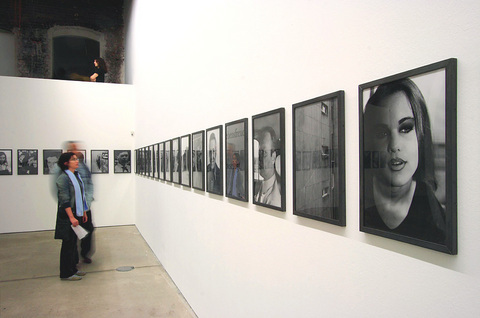
PHOTO: NY TIMES NEWS SERVICE
With a budget of about US$3 million from the German Federal Cultural Foundation and nearly two years to prepare, the curators had ample resources to come up with an answer of their own. Typically, they broke the standard biennial rules, focusing neither on new trends nor on the latest crop of artists.
"You know, we say art doesn't go bad, it doesn't rot like food," Gioni said. "Art used to be about making something eternal. Now it's about a product with programmed obsolescence, almost with an expiration date."
"But what we came to understand in Berlin were the incredible layers of history and all the different ways that artists work and show here -- not just in institutions, but in temporary spaces, apartments," he said.
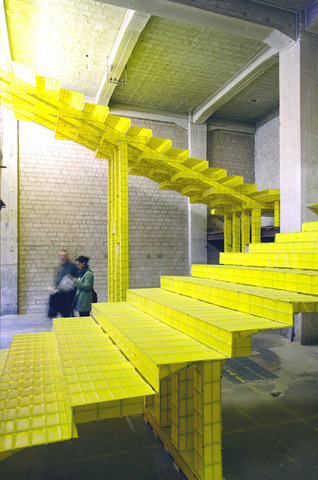
"We realized that we could build a show out of the whole street, with artists from many generations, a show whose spaces capture 250 years of life, not just the vacuum of a gallery's white cube, as if nothing came before."

This is the year that the demographic crisis will begin to impact people’s lives. This will create pressures on treatment and hiring of foreigners. Regardless of whatever technological breakthroughs happen, the real value will come from digesting and productively applying existing technologies in new and creative ways. INTRODUCING BASIC SERVICES BREAKDOWNS At some point soon, we will begin to witness a breakdown in basic services. Initially, it will be limited and sporadic, but the frequency and newsworthiness of the incidents will only continue to accelerate dramatically in the coming years. Here in central Taiwan, many basic services are severely understaffed, and
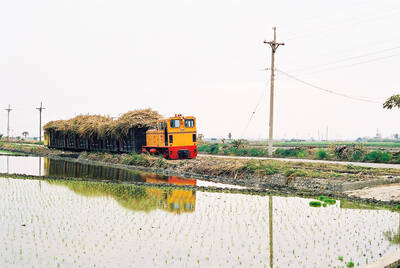
Jan. 5 to Jan. 11 Of the more than 3,000km of sugar railway that once criss-crossed central and southern Taiwan, just 16.1km remain in operation today. By the time Dafydd Fell began photographing the network in earnest in 1994, it was already well past its heyday. The system had been significantly cut back, leaving behind abandoned stations, rusting rolling stock and crumbling facilities. This reduction continued during the five years of his documentation, adding urgency to his task. As passenger services had already ceased by then, Fell had to wait for the sugarcane harvest season each year, which typically ran from
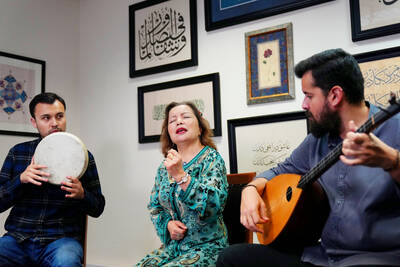
It is a soulful folk song, filled with feeling and history: A love-stricken young man tells God about his hopes and dreams of happiness. Generations of Uighurs, the Turkic ethnic minority in China’s Xinjiang region, have played it at parties and weddings. But today, if they download it, play it or share it online, they risk ending up in prison. Besh pede, a popular Uighur folk ballad, is among dozens of Uighur-language songs that have been deemed “problematic” by Xinjiang authorities, according to a recording of a meeting held by police and other local officials in the historic city of Kashgar in

It’s a good thing that 2025 is over. Yes, I fully expect we will look back on the year with nostalgia, once we have experienced this year and 2027. Traditionally at New Years much discourse is devoted to discussing what happened the previous year. Let’s have a look at what didn’t happen. Many bad things did not happen. The People’s Republic of China (PRC) did not attack Taiwan. We didn’t have a massive, destructive earthquake or drought. We didn’t have a major human pandemic. No widespread unemployment or other destructive social events. Nothing serious was done about Taiwan’s swelling birth rate catastrophe.


 RSS
RSS