


Four years after choreographer Lin Hwai-min (林懷民) transfixed audiences with his meditation on the ancient art of calligraphy in Cursive, the Cloud Gate Dance Theater is ready to take its fans into the spiritual heart of calligraphy again with tomorrow night's world premier of Cursive III, the final chapter in Lin's trilogy.
Cursive III is based on kuang cao (
"The best metaphor for wild cursive [calligraphy] is the dance of ink on white paper," Lin said in a telephone interview on Wednesday.

"The whole idea [of Cursive III] is about nature," he said.
When we think of calligraphy, he said, we think of nature's calligraphy, of water tracings.
Martial arts
"Traces of rain water on walls. If there is a gap in the roof, traces of water will eventually come in and leave their mark," he said. "When we talk about calligraphy in Chinese, we know there are certain rules you have to observe. When you train dancers in taichi, martial arts ... there are certain parts of the body that you have to observe," he said.
"But in wild calligraphy you break the rules, you let it go," he said. "When the brush is full of water you just let it go, you feel from the gut. When the brush is dry you have to have more control ... In terms of choreography, you let it go and then come back. In and out rules," he said.
Lin began work on Cursive III by having his 24 dancers improvise. For five weeks, he just sat back and watched. He said he didn't care what they did as long they did it with power.
The choreography and movements in Cursive III are different from the first two pieces, Lin said. Cursive was very fast, with lots of martial arts kicks. Cursive II was more measured, with a lot of slower movements.
"In wild calligraphy there are so many fast movements, so violent, but then it closes with very slow movement," Lin said.
"We have fast, slower and very slow," he said. "You have to be very strong so you can move very fast -- and very slow."
Much has been made of the training the company's dancers went through for the first two works in the trilogy -- the years of martial arts, taichi and qigong exercises, as well as meditation and calligraphy classes to help them develop mastery over their bodies and their breathing.
All this, of course, in addition to their normal dance classes.
"It's a mental discipline. The dancers take calligraphy [lessons] every Thursday afternoon when they are in Taipei. For five years already," Lin said, so they can "appreciate the movement itself, the meditation itself."
Cloud Gate's training program has helped the dancers achieve an unusual degree of control over their bodies and the strength for both very fast movements and excruciatingly slow ones as well.
Follow the master
In Cursive and Cursive II, Cloud Gate used slide projections to create backdrops of calligraphic masterpieces and those specific characters were then used by the dancers as inspiration. But since the idea behind Cursive III was the spontaneity of wild calligraphy, something different was needed.
The five weeks the dancers spent improvising may seem like a long time, but that was nothing compared to the time it took to get what Lin wanted for the Cursive III set, which is deceptively simple -- just a 10m long strip of rice paper.
Behind the scenes
A factory was commissioned to experiment, design and produce the special rice paper, while different recipes for ink and waterproofing agents were tried until Lin got the results he wanted.
"It took 10 months work to produce the paper," he said. "There are three patterns."
A solution of ink and water will be poured onto the top of the paper, with the balance of the mixture and the flow of the solution constantly changing. It will take the entire performance for the ink to work its way to the bottom of the paper.
"If you go backstage you'll see these thin tubes, 12m long, that feed the water and the ink onto the paper. We control it from backstage," he said.
Lin says the ink has its own "breath," its own speed, its own energy -- just like the dancers moving in front of it.
While the backdrops are disposable, the company isn't going to just throw them away. It has already auctioned off one of the ones done in rehearsals on eBay for NT$90,000 and plans to use the rest as fundraising gifts.
"We'll give away the paintings to those who donate NT$100,000 -- minimum -- to Cloud Gate," Lin said. "They can come backstage after a performance and choose the one they want."
The music for Cursive III is also a departure from that of the first two works. The score, by Jim Shum and Liang Chun-mei (
"In the end, the music is a collage of sounds -- waves, wind, flowing water, cicadas, some wooden instruments -- anything to do with chi," Lin said. "I went to Thailand and I heard the most beautiful cicada sound in Chiang Mai. So someone went to record the sound and we started from there."
Again Lin returned to the theme of nature in the piece.
"It's all about water and ink, the vegetation that made the paper, the breathing," he said. "In the end, calligraphy is about water, vegetation and breathing. Everything breathes on stage."
When asked how long the program is, Lin laughed.
"We timed it the other day at 68 [minutes] and the next time at 75. It will be about 70," he said.
"When you're doing wild calligraphy you do not control time," he said.
A long journey
"At the end of Cursive, I realized that it was just the beginning of a long journey," he said, returning to the discussion of the training and techniques the dancers had begun to study.
"Now there is Cloud Gate language -- no one else is moving this way. In the end you have to have an individual, unique language to speak," he said.
But when asked if this new language would be his legacy, Lin said that he wasn't interested in developing a "school" of dance, like the Martha Graham technique or Jose Limon.
"I care about a unique, fresh choreography. I'm interested in choreography, not in a system."

This is the year that the demographic crisis will begin to impact people’s lives. This will create pressures on treatment and hiring of foreigners. Regardless of whatever technological breakthroughs happen, the real value will come from digesting and productively applying existing technologies in new and creative ways. INTRODUCING BASIC SERVICES BREAKDOWNS At some point soon, we will begin to witness a breakdown in basic services. Initially, it will be limited and sporadic, but the frequency and newsworthiness of the incidents will only continue to accelerate dramatically in the coming years. Here in central Taiwan, many basic services are severely understaffed, and
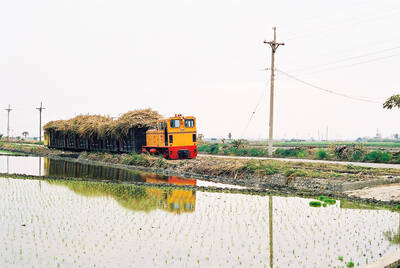
Jan. 5 to Jan. 11 Of the more than 3,000km of sugar railway that once criss-crossed central and southern Taiwan, just 16.1km remain in operation today. By the time Dafydd Fell began photographing the network in earnest in 1994, it was already well past its heyday. The system had been significantly cut back, leaving behind abandoned stations, rusting rolling stock and crumbling facilities. This reduction continued during the five years of his documentation, adding urgency to his task. As passenger services had already ceased by then, Fell had to wait for the sugarcane harvest season each year, which typically ran from
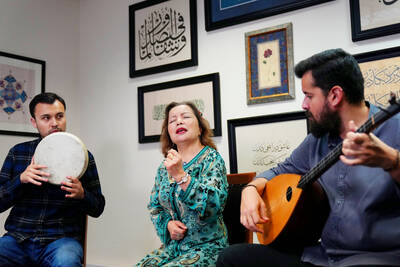
It is a soulful folk song, filled with feeling and history: A love-stricken young man tells God about his hopes and dreams of happiness. Generations of Uighurs, the Turkic ethnic minority in China’s Xinjiang region, have played it at parties and weddings. But today, if they download it, play it or share it online, they risk ending up in prison. Besh pede, a popular Uighur folk ballad, is among dozens of Uighur-language songs that have been deemed “problematic” by Xinjiang authorities, according to a recording of a meeting held by police and other local officials in the historic city of Kashgar in
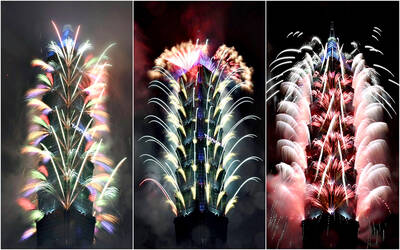
It’s a good thing that 2025 is over. Yes, I fully expect we will look back on the year with nostalgia, once we have experienced this year and 2027. Traditionally at New Years much discourse is devoted to discussing what happened the previous year. Let’s have a look at what didn’t happen. Many bad things did not happen. The People’s Republic of China (PRC) did not attack Taiwan. We didn’t have a massive, destructive earthquake or drought. We didn’t have a major human pandemic. No widespread unemployment or other destructive social events. Nothing serious was done about Taiwan’s swelling birth rate catastrophe.


 RSS
RSS